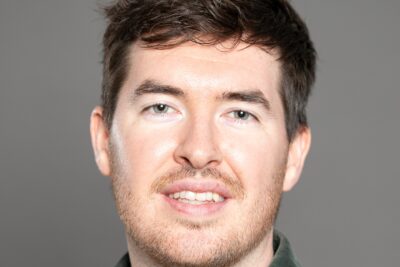
This is the full transcript for Episode #353 of the Wild Business Growth podcast featuring Dylan McDonnell – Celiac Disease & Gluten-Free Restaurant Menus, Foodini. You can listen to the interview and learn more here. Please note: this transcript is not 100% accurate.
[00:00:00] I’m a nightmare.
[00:00:16] We are back.
[00:00:19] I promised myself I would not do like a corny voice here, but here we are. We’re back. I have to just apologize right off the bat here. It has been so long. It has been a minute. I thought heading into the holidays, looking at potential guest lined up, it was. Like, maybe, you know, I’d take a, a week or two off over the holidays, spend more time with family.
[00:00:45] Then we go into January and by then there was three different cancellations due to the flu. Jamie got a little sick. We had some big client launches. We had, and this is the the best excuse in the world, Indiana won a national championship in football and we went to the game. Anybody wants to talk? To me about that.
[00:01:05] Oh, we’ll talk about that forever. Anyway, next, you know, and it turns into like almost a two month hiatus, which is not cool at all. That sucked. So thanks for hanging in there. I’m so sorry it’s been so long and I am so excited to be back. I cannot wait to share the wild entrepreneurs that we have for you this week and coming up.
[00:01:26] So without further ado. Welcome back to Wild Business Growth. It’s your place to hear from a new wild entrepreneur every single Wednesday morning. I, I know, I know asterisk there recently, turning wild ideas into wild growth. And this is episode 353, and today’s guest is Dylan McDonnell. Dylan is the founder and CEO of Foodini, the dietary intelligence platform.
[00:01:52] Now that sounds really cool. Really intelligent. What they actually do is think customizable menus for restaurants and even at stadiums for when you’re somebody who is gluten-free or has celiac disease like Dylan does, or any number. Of allergies. It makes things so simple from the restaurant, from the vendor side, as well as for the end consumer side as well.
[00:02:18] In this episode, we talk Harry Houdini, we talk Houdini, we talk what it’s actually like to have celiac disease and even in a foreign country and start a business from that experience and all the travel and food recommendations and drink recommendations you could ever ask for. It is the big D. Enjoy the show.
[00:02:48] All righty. We are here with Dylan McDonnell, the man who goes by dmac. No, I’m just kidding. Has anybody ever called you that? They have actually, funnily enough, yeah. Yeah. It’s not the first time I’ve heard that one. Dmac, the famous, uh, NBA star turned, uh, FINI, the man behind Houdini, founder and CEO of Fini.
[00:03:06] Super, super cool company. Dylan, I won’t call you DMAC the entire time, but now I have to call you that, uh, to start this off here. Dylan, thanks so much for joining. How you doing today? I’m great. Thanks a million for having me on. Of course, of course. And thank you for making it this far. You’ve, you’ve made it farther than most, but, uh, before we get into Houdini and all things about your awesome journey, so something that jumped out to me about your journey is like, you, it, it’s such a business that has a personal tie to your, your personal story and your health story.
[00:03:33] And shout out, uh, one of my best friends, Jason has celiac disease and so. Through his journey, I’ve come to learn a little bit, you know, about that experience and a day in the life from the eating lens. I guess you can call it that. But for starters, can you just kind of ground us here by sharing like, in the simplest terms or simplest way to look at like what is celiac disease and what does it actually mean for your body?
[00:03:55] I suppose there’s a slight delineation between like a food allergy and celiac disease. So celiac disease, uh, essentially is where your body negatively reacts to gluten. The problem with continuing to eat gluten is when you have celiac disease, it actually continues to e away at the VII in your intestine.
[00:04:12] And so the damage it actually does to you can can have quite long-term ramifications. And there are celiacs who are completely asymptomatic and don’t even know they’re celiac, and there are Celiacs who, if they have a cru. Of, or you know, of cross contact, you know, could get violently ill, but in both cases the damage is being done to the gut regardless if you have celiac disease.
[00:04:34] Um, so that’s kind of how I would carve it out versus a food allergy where it tends to be more just you get sick or slash going to anaphylactic when you die, but the longer term ramifications are a bit different. Yeah. And there’s many types of. Gluten free these days, and we’ll talk about, obviously it’s becoming more and more popular.
[00:04:51] Some people even choose that route as kind of a, a health choice when needing, but it’s a bit more serious on the, the celiac side. You said, you mentioned the term vi I, what are, what’s vi i the easiest way, the way it’s always been described to me. I’m a non-medical professional, by the way. You sound great though.
[00:05:04] I sign me up. I’m a lawyer by trade. Uh, but, uh, VI are the. They’re described to me as like these things in your intestines that absorb all the good from your food. So they’re what takes, if you’re eating healthy food and nutritious food, those are the things that bring the good into your body. And again, if you have celiac disease and you keep eating gluten, they get shorter and shorter and shorter and shorter to the point that then they.
[00:05:27] Disappear and they can’t grow back. And so then no matter how, what quality of food you’re eating, you essentially can’t absorb the good from healthy food. So that’s kind of how it’s been articulated to me. And for those of you just listening on audio, imagine jazz hands or jazz fingers as the embodiment of Exactly, yeah.
[00:05:46] I just, the visual demonstration. So that’s a great rundown. What’s been your personal experience with finding, even finding out that you had celiac disease in the first place? Quick history as you, the accent portrays Irish. I was born in Philly though, so I’m a sneaky American. Yeah, I knew it was a Philly accent.
[00:06:03] Ah, yeah. Well listen, it’s been a rough few weeks for us and the world, unfortunately, so I’m not shouting it from the rooftops, but uh, yeah, no, uh, so moved back home when I was five and then between like ages five and 10 was just quite sick all the time and my parents couldn’t figure out what was wrong with me.
[00:06:20] This is in an era, you know, 20 plus years ago where. Gluten-free celiac disease. These were not words that were commonly, you know, known or used. Um, it took, yeah, four or five years of, of a lot of different doctors and, and health people to even trigger maybe it is that, and to test me for it. So finally, anyway, when I was around 10, they, they figured it out and, and I got diagnosed Celiac.
[00:06:42] And the good since then is obviously I stopped eating gluten and so I stopped getting sick. The food back then was way worse. Always like. It was honestly really horrible stuff, like, uh, but it’s, a lot of innovation has happened and now the products are far, far improved. But I think the difference has been that, like eating at home now is pretty okay.
[00:07:01] You can go to the grocery store, you can find the stuff, you can prepare your stuff, it’s fine. But it’s been, dining out is, has been always the biggest problem. But in terms of trying to figure out where you can go, but equally when you do get anywhere, like trying to get that transparency on. Is it gluten-free?
[00:07:18] And again, we talk to, I talk to gluten a lot ’cause it’s the one that impacts me, but obviously there is a whole range of hundred, you know, different allergies that people are, are, are allergic to and a lot of different diets people follow. And for all of us, it’s the same problem in terms of where is the information and transparency as to what is in this food so I can understand if it’s safe for me.
[00:07:37] That was, I suppose, the inspiration point or the, or the problem point that, uh, I kind of set off to solve for. Well, you’re not kidding how much it’s changed over the years. Like, um, there’s a place by us that is a gluten-free bakery, which I think if you hear gluten-free bakery, if you heard that 20 years ago, you get that’s like an oxymoron or something like there, there’s no way.
[00:07:56] Um, and it’s like an amazing place with great views and has gluten-free poptarts, which are delicious. But what was going through your mind and your family’s mind, your parents’ mind when you were like, you were constantly sick and, and no one knew why I mean that? That’s horrifying. I think like I remember my poor mother was like baking me like the most healthy.
[00:08:17] Homemade brown bread. You can imagine like they’re thinking like, how can we give them good nutritious food? And like you would consider, well if I put all these great ingredients into this like lovely homemade, homemade bread, like this will surely help. Irony of irony being, it was like literally the worst thing I could have been being fed, but no one knew or no one could know, um, at that point in time.
[00:08:36] So. Uh, I think for me, again, I was young. Right. You’re, you’re still young. Hold onto to that still. Thank you. Thank you for the reminder. I appreciate. I think we’re probably around the same age, so I can definitely say that. Yeah. Yeah. I, alright. I could, so yeah. Well, let’s, let’s take young. I like that. Uh, I was very young.
[00:08:51] Obviously. I do remember it being a challenging time and being really frustrated and, and. Not understanding why this was happening. I think my parents were very much in the same boat. I don’t think any parent liked seeing their, their, their child sick. Yeah. I would, I would say there was, it was a big, it was a challenge to try and figure out what was the cause and then probably a lot of relief once there was like a, just a, a line in the sand diagnosis and then it was just.
[00:09:14] Navigating the challenge from there on in terms of, okay, we know what the problem is now we just need to find a way to live with it. I think that’s probably how I would articulate that.
[00:09:25] So let’s get to Fini. Are you a huge Harry Houdini fan? Uh, I am now. It’s it’s a brilliant name, just a visual that goes with it. And I mean, what a what a what A strong image, but Houdini, so super awesome. Cool Company ties back to the story that you were just saying. What was the, the point that in your mind, it went from like, there should be a solution out there to, I’m, I’m gonna be the guide to get the ball rolling on this.
[00:09:53] I think the point was when I realized how big the market was. So the problem I articulated is when I lived with all my life, but you kind of assume that it’s just you and a few others. You know, you come across the odd person, this and that, but it’s not like I was seeking it out or, or, or looking for the other people to just, I was like, I’m just trying to get by myself.
[00:10:10] You know? Uh, and I assumed it was a very small cohort of people who had the small, had the same problem. And then I started doing, when I kind of. Was thinking more and more on this. I did some research into just how big the market is and was just completely blown away. Like in the US you have 33 million Americans with a diagnosed food allergy, one in 10 diagnosed, right?
[00:10:30] You have another nearly 50 million who have a food intolerance, meaning. They’re dairy intolerant, they’re lactose intolerant. They’re whatever they, they, if when they eat a certain food, it disagrees with them and they have a negative reaction, but it’s not an allergy per se. And then you have another 70 million Americans who follow a lifestyle diet.
[00:10:47] Your vegans, your vegetarians, your keto, your low fodmap, your low carb, you name it, seed oils, da, da, da. A huge, huge, huge proportion of people that need this information. And there was a complete lack of this information. And so I think I realized. There was a big problem. There was a big market, and then having had no tech background, no medical background, no nutrition background, I decided that naively that I was gonna be the right person to solve for it and, uh, set off to the races and no background as in a, a famous or infamous escape artist as well.
[00:11:19] So you brushed up on all that? Yeah, yeah, yeah. Although I’ve got out of one or two pines in my day, so maybe, yeah. Not to brag. The, the concept is really cool. There’s clearly a lot of people that need help with it. But it’s also, at least at that point, it’s pretty abstract of like, how do we actually help people here?
[00:11:34] So how, how did you start to put together your, I dunno if you call it a platform or app, but your solution, uh, on the tech side. What did that start to look like? Yeah, we started ’cause there’s been genesis of the approach we’ve taken, right? Yeah. Shout out Phil Collins. Sorry, go ahead. We started very much through the consumer lens, right?
[00:11:54] It was like, I’m a consumer, I have a problem. How do I solve for this? I want an app that’ll show me where I can eat and what I can eat when I get there. So started by working with some restaurants, getting the information I needed from them. Structure it in our backend and then having this consumer discovery app that a consumer could download and be like, ah, I’m gluten-free and vegan and I have a peanut allergy save.
[00:12:14] Here is where I can eat in this city. And, and crucially what I can eat when, when you get there, because there were already apps that like pointed you in the right direction. Like, like think of it as Yelp for food allergy. Someone would leave a review and said, I went to this restaurant and they had a gluten-free option, but.
[00:12:31] For me, it was like that wasn’t enough. It’s like, I wanna know specifically, there’s a hundred items on this menu, which 15 of them are in fact gluten free, which which can be modified to be Meg gluten free, which are not like I, that was the level of detail that I felt was required. In particular, again, for anyone who has an allergy, where again, if there is even one ounce of of error here, that person could, could be on the ground and, and be in a bad situation if they don’t get their EpiPen.
[00:12:57] So that was kind of the phase one, let’s call it. But go on. You have a question on that? I’m, I’m curious what it actually looked like, uh, you know, if you were to use this in the early days, like what, what value people are getting from it. So you, you started talking about the different. I guess allergy qualifications of food items from that standpoint.
[00:13:13] But what was, what was your strategy to get something that like appeals to restaurants and other vendors that you’re working with? That’s a perfect follow on question because the re I have to say, you, you teed me up perfectly. Yeah. Well, because what we realized is that the feedback from the consumer was unbelievably positive.
[00:13:30] They were like, this is exactly what the tool we need in the, in the way we need it. Like amazing. And we were like, great, now let’s just go and get more restaurant data. The problem was getting the restaurant data. So to your exact point, we weren’t big enough at that point in time to be like, we have 10 million people on an app that are looking to discover you.
[00:13:49] Like we were in early store, we were like, how do we convince these restaurants? They should work with us to give us the data we need to provide the service to the consumers. So what we realized was that for restaurants, the biggest pain point was mainly in their own ecosystem. Customer walks in the door of a restaurant and says, ah, is in the line, and they have a shellfish and a sesame allergy, and they’re about to get to the top of the line to talk to a 16-year-old wait staff person who started yesterday, who hasn’t the first iota.
[00:14:16] About what a food allergy is. Not in mind the menu or allergy makeup of this venue’s menu. And so we realized that we needed a solution to solve the problem in situ in for restaurants. And so we launched a web app solution, which essentially allows for, if you’re walking to restaurant, there’s a QR code on the physical menu or on the menu board or, or depending on the experience saying allergies, dietary needs scan.
[00:14:38] Here you scan web app. So no app to download, create dietary profile. Vegan, gluten-free. We have 150 options. So pick your mix of whatever, uh, uh, for you save. And instantly that restaurant’s menu ought to customizes to the consumer. Here’s what we can eat. Here’s what we can eat with a modifier. And what that modifier is.
[00:14:58] Here’s what we can’t eat, so that the interaction with the server becomes, hi, I am, I’m Celiac, and I would like to order. This versus, hi, I’m Celiac. What can I eat on the menu? Uh, because nearly all mistakes happen in that human interaction, where unfortunately, staff true a lot of the time, no fault of their own, just don’t have access to that information or haven’t been trained on it.
[00:15:21] And again, I keep using gluten as the, as the easy example. But you can imagine how complicated this gets when people are talking about sesame and soy and every sort of different allergen you can imagine. And so, yeah, that’s kind of primarily our, our, our main product today is that kind of in-venue, QR solution.
[00:15:35] We also integrate in their website. So where you, like nearly every person with a dietary need will. We’ll look at a menu before they make the decision to go to the restaurant in the first place. So where they have their normal menu, we will put an allergy dietary menu and when someone clicks that, it generates the exact same experience as in venue.
[00:15:51] So again, that consumer has has that transparency in advance. And so yeah, we’re primarily today a B2B company ’cause we focus on working with restaurants and food service partners who want to be able to communicate this information in an accurate and, and personalized and, and best. Class way to their guests.
[00:16:10] Yeah. That’s super cool. Uh, it also sounds, at least at the start, like a super big learning curve. If there’s, if there’s, you know, 150 different options and you know, you have to train, you know, each restaurant, each customer that you have, you have to train them on that. So how have you simplified that whole, like of the process?
[00:16:28] Well, we started with just, there was nine, and then every day we’d get emails from consumers being, I’m allergic to strawberry, I’m allergic to kiwi, I’m following a keto diet, dah, dah, dah, dah. It became kind of clear to us that to truly solve the consumer problem, we needed to have the full breadth of all the different requirements that the consumers have in terms of the good for us, and what we figured out is.
[00:16:52] We don’t need to train the restaurants on and how we had to build our system. You talk about the earnings, we don’t need to train the restaurants on all of those things. All we need from restaurants. Accurate menu and recipe and product information. Send us your menu, send us your recipes. Send us the products that you buy from your supplier.
[00:17:11] And we do all of that tagging work. So we then essentially tag everything at the ingredient level for the 150 different things, and then it just automatically. Customizes again to the consumer based on their preferences. So the restaurant doesn’t need to figure out whether there’s sesame in the sauce or not.
[00:17:26] We do that for them, and that’s how we came around it. We have to do it for them. This is something I’m probably gonna say on every podcast from here on out, but, uh, at the time of this recording out, just got back from, uh, Indiana’s National Championship game in Miami, uh, and went to iu, big IU family. The reason I’m saying that, otherwise, thank you.
[00:17:44] The reason otherwise, just to celebrate over and over again is that. I noticed on your website that it’s not just restaurants that you’re working with, that actually you have solutions for stadiums and events too. And it just thinking back to like. Monday night at Hard Rock Stadium, you forget if you haven’t been to a stadium in a while.
[00:18:01] Just like how integral food is to like that experience. And you know, we got in there well before the game started and we’re sitting there and everybody’s got different foods and you know, like my parents wanted nachos, I wanted a chicken sandwich also, sorts of thing like that. And on your site there’s some like really, really cool solutions that you have for large scale venues like that.
[00:18:19] Can you share what you, what you guys have whipped up in that kitchen? It’s funny, I, I’m a massive sports fan as well. Too many sports, too many teams, but. For me, that has been a massive pain point. The amount of times I’ve been in stadiums and you have these like limited pockets of time, halftime, or between innings or between quarters, whatever it might be, where you’re, you’re gonna go get food and there is a massive stadium, there’s a hundred concession stands, they’re all over.
[00:18:45] There’s a line already at all of them, and I’m just trying to figure out like which one has the thing for me. A lot of times I’d have to line up, get to the top, ask the question. Someone would go running ho in best case scenario for a binder or something where this information might exist. Hopefully. No, actually you can’t have anything here.
[00:19:02] Okay, great. Now half of halftime is gone. Let me try and walk another mile down the road and see if there’s, so this kept like this was a real pain point. And for stadiums in particular, I’m a nightmare because. There’s again, for them, there’s limited amount of time to make money during in these rush times.
[00:19:20] And if Dylan the Celiac is at the top of the line asking the poor 16-year-old casual part-time person what he can eat and they don’t know, and we’re going through this back and forth, the line isn’t moving. And all of a sudden, half the back of that line are just gonna give up and go back. So there’s a real use case in particular in these high density environments for the, like, uh, the likes of a stadium.
[00:19:40] So anyway, what we essentially do at stadiums is it’s kind of like what we do for restaurants except on rides. In that we will take the hundred concession stands, we’ll map them all in the same way we would for a restaurant menu, recipe products, get that in our system. And then the only difference is before when a customer scans a.
[00:19:58] You know, let’s say on the, on the ballpark website, uh, allergies, dietary needs, we’ll actually map the whole stadium for them. So we will say, of the a hundred Concession You, and they create their profile, gluten-free, dairy free vegan, we’ll map the whole stadium and say, in descending order, Dylan’s takeaway stand is 10 options for you.
[00:20:16] John’s is nine, dah, dah, dah, dah, dah, da, da, da, all the way down. And when they click on each one, they’ll see exactly what they can eat there as well. So think of it as like a discovery solution within the stadium. Showing them not just where there’s options, but specifically what they can eat at each one as well.
[00:20:31] Uh, and the use case there is it. Now Dylan knows, right? I’m gonna go straight to exit three 12 where I can see there is a stand that has this option for me. I don’t have to randomly wander and hook for the best that is, uh, game, pardon the pun, game changer. I think back to the game Monday and we.
[00:20:51] Obviously national championship’s a very unique case. Like you’re never gonna get into a stadium two hours before the game and have time to like walk around and see where things are. Like my mom, my Aunt Mindy and I, we did a, a lap around the entire stadium just because we had so much time before just to see like, alright, what food options are here, what food options are here, and when you don’t usually have that time window, I can just see how valuable that is to know exactly where the thing you exactly want is.
[00:21:16] Especially if it’s, you know, between quarters, between halves, uh, between periods, like you were saying before. I, I don’t think I’ve ever been early to, to anything. I, I, I’m the guy who’s hoping that he doesn’t miss the first few minutes. I’m, uh, the anthems are, are, are always, are always missed. It’s just, uh, yeah.
[00:21:32] Last minute. So anyway, I think that the main point there is that like, similar to pe like you guys got early and explore you at the time. Nearly everyone who has an allergy dietary will review what the food scenario and the place they’re going to is before, because if, if they can’t find it, they’re, they’re left with a choice.
[00:21:52] Do I go and chance it and hope for the best? Or maybe I’ll just eat at home before, maybe I won’t spend my money at the stadium. Let me just get dinner at the restaurant a mile away, or, you know, cook before I go. Like, these are the things that go through the minds of people who, where they get the wrong food, they’re gonna get very sick and it’s gonna ruin the entire experience for them.
[00:22:10] Just a different mindset. For someone who doesn’t experience it on a daily basis, you know? Yeah, and that’s a great look into the consumer mindset, like the final end consumer mindset. But for your customers like these restaurants and stadiums and venues like that, can you share a little bit about like why partnering with you?
[00:22:28] Like partnering with FINI is actually just a great thing for the business overall as well? No, it’s great question. Love this one. No, no problem. You fed me that one. No, I’m just kidding. Five main things, one, attracting customers. Like I said, either 173 million Americans have a food allergy dietary need. If they don’t know or can’t understand what they can eat on your menu, they’re most likely not gonna come in the first place, or they’re gonna walk out the door once they get in there.
[00:22:53] Show them the information, they will come and this is the most loyal consumer you’re ever gonna get. We find it so hard to find places that can cater to us and where we have a good experience that when we do, we keep going back again and again and again. I, in the same three lunch spots around here in Santa Monica every day because they’re the three that I’ve, of the 10 that took care of me and I keep going back.
[00:23:15] Two, um, then is. Operations, I mentioned the line management, blah, blah, blah. We see about a 60% reduction in the number of questions being asked to staff when they use our technology. That’s extremely significant in terms of like busy areas, but also the knock on impact of that is we see a massive reduction in mistakes.
[00:23:36] People now are referring to a single source of approved truth between our dietician team, uh, and you know, the kitchen instead of. Staff who have not been trained on this information. So we see a huge reduction in, in in risk data. We can tell a restaurant last month at X location, a thousand people used the platform.
[00:23:57] 40% were gluten-free, 25% were vegan, 10% were keto. You don’t have any keto options on your menu. Like you’re not, you don’t understand like your, your, your market or you didn’t have this understanding of your market. Here’s how you can optimize your menu, da, da or, or market to these consumers to attract more of them in.
[00:24:14] And then the last is, and it’s less of a. Benefit, it’s more of a, of a requirement is regulation is coming. So California has just passed a law mandating allergen labeling for any restaurant group with 20 more locations in the country where at least one is in California. Other states are now beginning to kick this off.
[00:24:32] Michigan just went. New York has had it in the process for a while. Europe has had this for a decade, where every restaurant you can’t open a hotdog stand without labeling for the major allergens. The US will get there over the next few years. It’s behind the times, but it’s going to happen. The California regulation was the first domino to fall.
[00:24:51] This is now going to become mandated in the majority of states in the next few years. Yeah. Well, it’s super exciting for your business and for consumers and everybody in your fini sphere as well. Looking back, you know, past few years, what would you say has been the biggest driver of Houdini’s growth?
[00:25:08] Other than a lot of hard work and grind, you can, you can say that. I’m wondering if any, anything else jumps into your head as well? I, I’m gonna give kind of two answers. Regulation in recent times is huge. We have now gone from being what some people unfortunately consider a nice to have ’cause maybe they don’t understand.
[00:25:28] Just the amount of risk they’re taking on by not doing this properly, but to something that is now a requirement in California. Thankfully a big state and soon to be in other places. So that’s been a big driver. But honestly, I think net net it’s like. The scale of the consumer problem, like we’ll get on calls.
[00:25:46] We’ll sometimes get on a call with a big restaurant group or with a tech partner or something, and you know, they don’t have an allergy, the family doesn’t have an allergy. They’re kind of coming along, but they don’t really get it. We’ll, come on another call and it’s a food allergy mom. The mom of a kid who has a peanut allergy and a tree nut allergy, and my God, they, they’re nearly pitching our business back to us by the end of the call.
[00:26:05] Like they’re so passionate about, they understand that literally this is a life and debt issue for their kid who maybe is nine years old, soon to be a teenager, soon to be a bit out of their reach and doing their, you know, outward friends and not in as controlled of an environment. And they’re terrified of like, what can happen if this child isn’t extremely diligent in, in minding themselves.
[00:26:26] And so. The scale of the genuine significance of the problem, I think has been the biggest driver. ’cause it’s real. It’s not bullshit. We’re not trying to save 10 cent for people on a banking transaction, like we are truly trying to protect people from something that could kill them or make them very sick and it’s widespread.
[00:26:47] The core of how important this is has been the thing that even when things ha, you know, there’s always rejection and nose along the way, but that. Truth, I think is what’s managed to keep the cart on the track, so to speak. Well, it’s a beautiful thing that so many, you know, more and more people with allergies or food related, uh, diseases like this are, the world is becoming much more, what’s the word, nav?
[00:27:10] Navi. Nable, edible. Yeah. Um, and there’s more and more options available and more and more tools like the genius one that you’ve created, um, to help navigate all of that. So, so thanks for all you’re doing for so many people. No problem. I’m, I’m solving my own problem at the same time, so I’m being selfish as well.
[00:27:27] I won’t take all, I won’t take too much credit.
[00:27:32] Well, you talked about the scale of the problem. I wanna switch gears a little bit and dive into the scale of your travels because, um, you know, so I like to dive into the, I call it inspiration, creativity, kinda the mound, the mind of the founder. Looking at your background, uh, it’s pretty cool. You said you’re born in Philly, grew up in Ireland.
[00:27:52] I know you spent some time in Australia now. Santa Monica, all incredibly far away places from each other. Um, so you got a couple frequent flyer miles under your belt, but too many from my liking at, uh, well, well, well, let’s talk about that. So how have you been able to adjust and kind of. Get up to speed and kind of run your life, get on your life and business after moving to a place that’s like so far apart from, you know, the previous place you’re at.
[00:28:21] One of, uh, a strength of mine is definitely, I’m very adaptable. I can fly by the seat of my pants when I need to. Uh, I think a lot of the earlier travel was, you know, moving to Australia in the first place was a lifestyle decision. Originally at that point in time, I was, I was still a lawyer, uh, still living in that world and.
[00:28:38] I went there to experience something new. I’d been, you know, obviously I’d, I’d spent a lot of time in the States, but I’d really lived properly and worked properly only in Ireland. A actually, it’s funny, the travel I did on the way to Australia, I took three months off on the way to Australia. I did a month in, in la Funnily, I did a month in Japan and I did a month in Bali, and I actually think it was in Japan that the seed for the idea.
[00:28:59] Kind of really took off because I was, I remember being in Japan and you can imagine how with a language barrier, trying to figure out, like trying to proactively ask people about gluten-free and Sure. Oh my, it was actually, it was actually comedy, uh, and through no fault of anyone’s just like a complete language block.
[00:29:16] And I remember being so frustrated, oh my God, I really am so easy. I’m not even a fussy celiac. I’m like, I’ll eat anything once I know I can eat it. And it just was so hard to navigate there specifically that by the time I got to Australia, I think that idea had been in my mind. But fast forward when, when I, I started the company in Australia, as you mentioned, more so just ’cause it was where I was living.
[00:29:38] But over the course of time I realized that if this was going to be a big company, it needed to be in the us. And once that truth permeated into my mind and I, I accepted it as fact. It was just a matter of, well, I gotta go. So now where am I gonna go? Okay. West Coast makes the most sense because a lot of our team are still in, in, in Australia.
[00:30:00] Okay, I’m gonna go there. I just made the decision and went with it. So I think to answer your question in short, again, I’m an adaptable person and you have to be, I just did what I have to do to, to make it work. So let’s get to the, uh, the sex, drugs and rock and roll of, uh, of those journeys. Uh, now what’s your, I mean, all very different places, obviously.
[00:30:19] California, Australia. There’s some similarities weather wise, but like what sticks out to you as maybe like a favorite place you’ve been and then maybe a place that you’re like, you know, I don’t miss that aspect as much. I, I’ll tell you this for a fact, Sydney, if you just wanted, like if you didn’t have family or friends around the world and you didn’t care geographically where you lived, I think Sydney as a city is the best.
[00:30:41] Work-life balance, lifestyle you could ask for. The weather is beautiful. The people are great. The beaches are amazing. If you’re like an outdoorsy person at all, like, it’s an amazing place to live. So I miss and I lived, uh, on EE Beach, which is just down from Bondi Beach. Uh, I lived there for, for two years and I loved it.
[00:30:59] Absolutely loved it. So I miss that a lot. That is so funny. You just described my friend to a T so shout out a good friend Mike Orden went to college with him, you know, big IU fan as well. I’m just gonna throw that in. But he actually, oh man, this was probably, oh, it was right before COVID started in the us.
[00:31:16] He applied just randomly for a job at Canva in, uh, Sydney. And he got it. And so he just moved from New York to Sydney and he was there for a few years and we’d always ask like. Like, man, like you’re really far away. Like it seems awesome. You’re really far away. Like, do you love it? Like, what’s it, he’s like, if my family and friends were over there with me, it would be the perfect place in the world.
[00:31:40] Like, that was exactly how he described it. It’s just over time, obviously if your family is somewhere else or your friends are somewhere else, then it, it wears on you now and then, but he, he lived right by Bondi as well, and Oh my God. Yeah. Same thing. If, if I could pick up Sydney and drop it into North America, that would be done.
[00:31:57] That’d be a pretty heavy lift, but yeah, it would. And just on Canva, what an amazing company. And Melanie Perkins, the founder. Extraordinarily impressive lady. Yeah, he got a good one there. Continue. Yeah, totally. She’s, she’s been on the bucket list for this podcast for a while. She’s, she’s, that company is unbelievable.
[00:32:12] She’s awesome. But, all right, so then the, the other side of it, what’s, what’s somewhere that you’ve lived, I’ll let you say travel too as well, that maybe didn’t live up to what you expected of it. Lived nowhere. Really? I, I like la, I like Sydney. I liked Dublin. Obviously I like Philly. Even though that was more as a kid.
[00:32:28] I’ll give you US City ’cause we did it a, a a a a, uh, and, sorry, this, maybe this is, I shouldn’t go down this. No, I’m very curious. I remember doing the Southern States road trip a few, uh, maybe seven or eight years ago. We flew from Ireland to six Irish guys. We did Dallas, Austin, Houston, new Orleans, Nashville.
[00:32:47] Memphis, Jackson, Jackson, Nashville, Atlanta, new Orleans was the one we’d been looking the most forward to. I think, and maybe it’s just ’cause it wasn’t Mardi Gras or whatever, but it didn’t meet the expectation I had for it. Austin loved Nashville, loved. Memphis was the dark horse. We expected nothing of Memphis and it was amazing.
[00:33:05] New Orleans came up a little short, and actually it’s one of the reasons why I’m like, I need to go back to Mardi Gras. ’cause so many people speak highly of it. And maybe it was just the days we were there. You know yourself. There’s a lot of reasons why, but. That was a place that disappointed me a little bit in the US at least.
[00:33:21] Yeah, that’s totally fair. Uh, so my family going back four generations is from New Orleans, but No, no, I’m kidding. I’m kidding. I’m from Cleveland. I was scared. You were gonna say Cleveland without gonna have to have an argument. Don’t say anything but New Orleans. No, I, I could totally see that. I’ve only been.
[00:33:37] And it was from my buddy’s bachelor party. So like I got the full bachelor party experience and obviously we pretty much stayed on Bourbon Street the entire time. So like, it was awesome. But we also, you know, we’ve heard from other people it’s like you, like you really don’t want to venture too much outside of that area.
[00:33:51] And then there, I mean, we, we have friends that went to Tulane and like, they loved it and, and like it, no, it’s seems like an awesome city overall. But yeah, it’s definitely all you kind of see and hear about it is just focused on that. And the tourist trap thing. So, so I, so I get you on that, but what a trip you had.
[00:34:05] And I’m with you on Memphis too. ’cause uh, I mean obviously Beal Street Food’s amazing. And then Beal Street Live music, uh, unbelievable. Like, I’m personally someone who likes that music style, like the blues. I like that better than the Nashville country stuff. So like, I thought it was cooler than Nashville even.
[00:34:20] But yeah, really, really cool. Uh, and now we have your travel recos, but
[00:34:29] so have a couple quick. Goofy segments here. This one’s called the unusual, so pet peeves, quirks, weird talents, does not have to tie to Houdini at all. Quirks. What’s something a little bit quirky about your personality that maybe your friends, family team, somebody calls you out for, but it’s just who you are?
[00:34:44] It makes you, you. I’m a very, uh, nearly positive to a fault person, I think is, uh, I get, I get a lot of like. Quite smiley, quite like I, I’m, I think you need to be, honestly, as a founder anyway, like you need that kind of glass, glass half full mentality. But I think I maybe have it to a fault. Like I’m a, like we will find a solution to the problem.
[00:35:05] Like there it will all be okay. Like that is very much my mentality and my attitude and I think that’s both professionally and personally. So that’s one I, I get a bit from people in terms of that, like nearly too positive. Sometimes I’m in the same boat as that there like. Max, why are you like, why are you so po?
[00:35:23] Why are you so optimistic all the time? Like I, I don’t know, but I’d rather be optimistic than not. So that’s my attitude as well. Yeah. Yeah, positively. All right. What is a pet peeve? You have something that kind of ticks you off a little bit, but really it’s not a big deal. Being late, but I’m also bad at it myself.
[00:35:39] So, uh, it’s one of these weird ones where I’m like, I get a bit. I like that there’s that little bit of annoyed when people are running late, but then equally I run late, probably more than other people run late, so then I get annoyed at myself. So, yeah, let’s go with that. I’m realizing you and I are more and more the same person, so I I get shit for running late all the time too.
[00:35:57] But you’re, you’re right. Like when, if you’re on the other side of it, like you understand why people get upset, but also it’s, as an entrepreneur, it’s really hard to. Like, so many things go like up and down every day. There’s got so many things to manage. It’s really hard to, uh, be, you know, it’s like some people like to be 10 minutes early to everything.
[00:36:15] Like it’s just, yeah, it’s a lot. So, all right. And then weird talents or party tricks. What’s something that you’re, you’re good at, but it doesn’t impact your business at all. It’s just like, Hey, this is a cool thing I can do. Does drinking count? Sure. Yeah. Ties into my next question. Go ahead. Yeah. Yeah, yeah.
[00:36:31] How long have you been an alcoholic? No, Irish. We’re solid. We’re, we’re able to tuck away a few points and, uh, definitely social person and like to go out and socialize with, with friends. When I can find the time is probably the biggest blocker and barrier there. Yeah. Talent is definitely a talent too.
[00:36:47] I’m good at maximizing the spare time. I have to try and put some fun stuff in there. Like you work a lot of long hours. I don’t have all the time in the world to carve out, but when I do, I’m like, right, we’re doing something good. We’re doing something fun. We’re going to a game. We’re going out where I’m rarely found sitting on the couch doing nothing.
[00:37:06] All right, well you called it. Let’s wrap up with, uh, another drinking question, and then it’ll lead into rapid fire q and A. You ready for it? Go for it. All right, let’s get wild. Personally, I’m a big beer fan whenever I think of Ireland, and the one time I was in Dublin and well, you know, we did one of those paddy wagon tours that went all, all out around everywhere.
[00:37:22] Cliff to Mo and all that. Anyway, I think of beer and of course you think of Guinness and Guinness, you know, the tour and all that stuff. And I heard that you’re a big cider fan. What, what’s, what do you think is the best brand of cider in the world? It’s an interesting one. Yeah. ’cause to your point, I’m like that weird Irish man that can’t drink beer because the weird Irishman sounds like a series of novels or something.
[00:37:43] Yeah. Well listen, there’s plenty of weird Irish men. I can assure you that those would be some good novels. I, yeah. Cider was, I drank a lot of it when I was younger. Like ERs was a big brand at Home. Orchard Thieves Magners. Um, I drink less of it now. I think I just got sick of it. ’cause it was the only thing I could drink when I was younger.
[00:38:00] Honestly, seltzers, alcoholic seltzers, like the high Noons and Whitelaw were a game changer as a gluten-free person. ’cause it was finally like a widespread drink that was everywhere that wasn’t a whiskey cook, but wasn’t, you know, a glass of wine. It was like that kind of same strength as a beer that was widespread and easy.
[00:38:16] So that honestly has been a game changer. But I would say traditionally Buller uh, Buller’s was probably the main and my favorite brand of cider traditionally. To answer your question. Yeah, great point on that. What do they call the ready to drink category or whatever the Yeah, yeah, yeah. Like, I rarely have cider, but we went a few months ago and I’ve actually mentioned on this podcast before, ’cause I loved it so much.
[00:38:36] There’s a place, uh, not too far from us in New Jersey. So if you’re ever in New Jersey looking for, to rekindle your love with cider, it’s a place called Burnt Mills Cidery. And they just have like, I mean, we’re there on like a nice autumn day. It was really cool. It was packed and they had, I don’t know, like 12 different varieties of cider and it was so good.
[00:38:54] And my favorite was like, uh. Cranberry chai flavor. Like it had like a spice to, it almost tastes like a strong Belgian beer. It was, it was so good. Oh, nice. Okay. So, you know, so next time you’re in the middle of, uh, New Jersey, that’s your place, but okay. Irish food. What, what do you think is the most like underrated Irish food?
[00:39:13] The fact that we just have potatoes and veg with everything. Like our dinners growing up were like meat potatoes, two veg. Fish, potatoes, two veg stew, potatoes, veg and meat in a pot and stew it Like that was what we, and I honestly create, like, I miss it in terms of like the quality of that kind of meal was, was very high.
[00:39:31] So that’s honestly the, the simplest answer you think like shepherd’s pie, um, that, you know, I’d rate highly and others, but I think if you think Irish food, you just gotta think a meat or fish. Potatoes and vegetables, but good quality. Oh yeah. Um, huge potato fan as well. Uh, we were, my dad was just joking about this over the weekend.
[00:39:49] My late grandpa Henry used to always, like, the potatoes were always the favorite part of any meal. And he had like this always kind of like this and it would be like that potatoes. And he’d, um, you know, as he got older that like, he loved it. He wasn’t even Irish, but a big, uh, big fan potatoes nonetheless, any meal of the day.
[00:40:06] So, other food question I’m wondering about is like. This doesn’t have to be tied to Irish food at all, but just in general, what do you think is the best, like gluten-free or gluten-free safe food out there? What’s the tastiest. Pasta or spaghetti by a mile. They’re like, oh, in terms of gluten-free alternative, well, it’s actually you took that a different direction, but that’s an even better question.
[00:40:29] I’ll answer both. Mexican is really good for, for gluten-free because corn, like once you just get the corn tortilla or whatever, so Mexican is good. High food is good. When you think cuisine. Japanese is pretty grand as well, like sushi itself for the most part. Well, you can’t have the soy sauce but the tamari sauce, but put them over there.
[00:40:48] But yeah, in terms of gluten-free alternatives, the bread has come a long way. The pizza base have come a long way. The burger bones have come a long way. But in terms of the closest to like what is the one you can most likely trick a non-gluten free person into thinking is not gluten. Is real is like non-gluten free would be the spaghetti, I think is the strongest alternative in terms of the r and d and how far the product has come.
[00:41:11] Yeah, that’s phenomenal. You, you added a question to my question and, and answered ’em both so, so thank you for that. You’re welcome. And there’s have to, in Jersey City there’s a gluten-free brewery. Oh, departed Souls is the name that my friend Jason, who I mentioned at the start. Loves their beer as well, like gluten free beer.
[00:41:27] And I, I’m ama like when I tried it side by side, like you would never guess. Um, so it’s pretty imp impressed stuff too. It’s departed Souls and Soul is S-O-L-E-S, so that’s in Jersey City. So anyway, I’m cur, I’m curating a whole travel trip to Jersey for you, but yeah, it sounds like, it sounds like Jersey.
[00:41:43] Last one you mentioned you’re a big sports fan as well. What’s your all time favorite sports memory? Paul, there’s a lot. Mate, this is a dirty question. This is the hardest question you’ve asked me. I’m going to go with. The Rider Cup in Paris in 2018. I dunno if you’re a golf fan, that’s the tournament between Yeah, the US and Europe.
[00:42:07] Every, every, uh, every two years. And I’ve been to like massive soccer man, United Games, you know, rugby, world Cups, tennis Open. Like, I, I, you know, I’ve been to a lot of, a lot of big games and events, but for whatever reason, this event was just incredible. It was the weather, it was the. The banter between the American fans and the European fans.
[00:42:31] It was the, the tournament itself and how it played out and, and beating them and beating them. Beat meaning Europe, beating the American. Oh, I’m familiar. Yeah, yeah, yeah. It was just incredible. It was such an amazing event. I’m actually, I’m really looking forward to the, the Ryder Cup. The next one. We obviously won again.
[00:42:49] Uh, there. Uh, recently last September, but in, in New York. But the next one is on, in Ireland in Adair manner in, in September 20, 27. And I will be there if I have to tunnel in underground to get into, uh, really looking forward to, there you go. You’re gonna build the, the new channel that connects, uh, Santa Monica to Ireland.
[00:43:10] That would be an easy build if that’s what it takes. That’s what I’ll do. No, that’s, that’s awesome. Heard that the, the friendly trash talk at the Ryder Cup is unmatched. That’s really, really cool that you’ve been, and that, and that you’re going. So, Dylan dmac, the Celiac, as you said, that sounds like a superhero.
[00:43:27] You call, you said Dylan the Celiac. Uh, really, really just an absolute blast talking to you and learning from you. Big fan of what you’re doing. Thanks again for, for making time for this and for, for all you do. So, uh, I know if anybody wants to learn more, they can do so at Fini. Uh, which is spelled as you think it is, fini.co.
[00:43:44] And then I know you’re on LinkedIn. Is there anyone, anywhere else that you wanna. Shout out, people can connect with you. Yeah. The, the website and LinkedIn are definitely the two best places. I think in, in, in kind of closing love to, to, to connect and talk with people who either have the problem on the consumer side or, or also work in either restaurants or, uh, place that serve food or in food tech platforms that we partner with a lot.
[00:44:05] Uh uh, and ultimately, it’s funny, I think the team of our conversation as it went, whether we were talking about food or drinking it, it all comes back to, I think like. Being social and going out for food with your friends, going out for drinks, with your friends, for, with your family, with your coworkers. I think it’s such a like critical fabric to how we live as like human beings.
[00:44:24] I really think it’s like really important to us and our social development we’re, yeah. Ultimately for, for me, my, I think my biggest goal is just trying to take away the friction point between all the people today who might be a lot, who might be listening, who feel like they can’t engage. As they would like to because they’re scared or nervous or don’t have the information to just wanna find a way to make that thing that so many people take for granted accessible to, to everyone.
[00:44:51] Uh, and that like an allergy or a dietary shouldn’t hold someone back. So that’s kind of, I suppose how I would wrap, wrap up what we’ve talked about, given that it kind of seems to play in nicely. Once again as the common thread throughout the interview, uh, you read my mind about the questions because we typically wrap up with final thoughts and I don’t think you could wrap it up any better than that.
[00:45:09] So we’re gonna stop right there. But thanks so much, Len. Really appreciate it. That means a lot. Not at all. Thank you so much for having me. I really enjoyed the chat as well.
[00:45:19] Thank you, Dylan. Thank you Houdini. Thank you wild listeners for tuning in. If you wanna become a wild viewer, wild watcher, TBD name as well, you can watch these video episodes @MaxBranstetter on YouTube. That’s YouTube, the channels @MaxBranstetter If you wanna learn more about the podcast or max podcasting, anything in this ballpark, you can do so at MaxPodcasting.com.
[00:45:45] That’s MaxPodcasting.com for all things. End of sentence for all things. Until next time, let your business run wild. Bring on the bongos!!