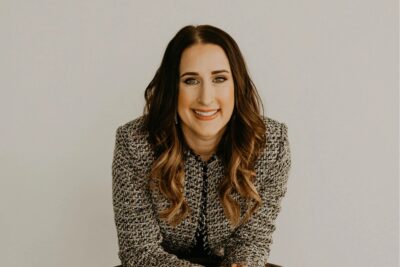
This is the full transcript for Episode #281 of the Wild Business Growth podcast featuring Camilla Opperman Morse – Shared Kitchen Gymnast, Founder of Nimbus. You can listen to the interview and learn more here. Please note: this transcript is not 100% accurate.
Camilla Opperman Morse 0:00
I was completely running around like a headless chicken
Max Branstetter 0:17
Yellow! Welcome back to the Wild Business Growth podcast. This is your place to hear from a new entrepreneur every single Wednesday morning who’s turning Wild ideas into Wild growth. I’m your host, Max Branstetter, Founder and Podcast Producer at MaxPodcasting, and you can email me at to save time with your high-quality podcast. This is Episode 281 and today’s guest is Camilla Opperman Morse. Camilla is the Founder and CEO of Nimbus. Nimbus, the really love that word really, really innovative, shared kitchen company, who combines rentals as short as hours long to long term rentals for all types of food businesses. They have food events as well. And in this episode, we talk the challenges of getting started as a food company as a kitchen company expanding to multiple locations as well as multiple cities. Teaser alert, gigantic lessons from gymnastics that Camilla has taken the business from her all-star gymnastics career. And of course, everything from grilled cheese to cookie dough to Indian food. It is Camillamadingdong. Sorry. Enjoyyyyyyy the showwwwwwww! Aaaaaalrightyyyyy we are here with Camilla Opperman Morse, Owner of Harry Potter’s Nimbus 2000. No, just kidding. I couldn’t resist. But, Founder and CEO of Nimbus. Nimbus kitchen is one of the one of the coolest shared kitchen companies out there. So we’re going to talk all things kitchens and food and entrepreneurship. Camilla, thank you so much for joining all the way from Hogwarts. How you doing today?
Camilla Opperman Morse 2:07
Thank you for having me. And this interview is off to a great start with the humor. So I’m very excited to be chatting with you.
Max Branstetter 2:14
Thank you, likewise as well. Usually people roll their eyes and try to sign off right away with the first edge. But I think we’re at a good pace. So I’ll see what other Harry Potter references I can. I’m probably not as well versed Harry Potter, as you know, a Nimbus 2000 owner, but we’ll we’ll see where it where it takes us to the Quidditch World Cup hopefully. But before we get to Nimbus, so your food journey actually started with a little bit of grilled cheese. Can you share some of that tasty journey?
Camilla Opperman Morse 2:44
Yes, absolutely. So in college, I ran my school’s late night snack shack, and a lot of that was making 25 cent grilled cheeses for drunk college students. But it was a very incredible experience started setting the menu shopping for the ingredients cooking on the line. I loved everything about it. It was really my first foray into structured hospitality. Food had always been a big part of my life. Growing up my family had dinner together every single night. So no matter how late we got home or how busy we were, we set aside at least an hour to sit together as a family enjoy a home cooked me on that foundation of food and the experience of food with the people that I love was really core to my identity. So when I went to college, it felt like a natural extension of that. To run this late night snack shack, eat a lot of grilled cheeses. I had a lot of cookie dough and red solo cups. It was not a particularly healthy part of my life, but it definitely set the foundation for what I’m doing at Nimbus. Now.
Max Branstetter 3:40
I feel like grilled cheese and cookie dough and red solo cups. I mean that’s what college is all about. So so thank you for providing that for so many for so many Ivy Leaguers at that but
Camilla Opperman Morse 3:51
if you go on a red solo cup, you’re doing college wrong. That’s how the
Max Branstetter 3:55
country song goes. But how did you go from like just someone who likes some late night munchies to like I want I want to actually, you know sell this to fellow students.
Camilla Opperman Morse 4:05
Freshman year I went to in college, it’s called The Buttery. That’s what the late night soundtrack was called. I went to the buttery almost every night, and I loved the experience. I was eating the food all the time. I was there with my friends, it was just the default place where we hung out in the evenings. And so sophomore year when I was looking for an on campus job I thought this was just a natural extension I’m here every night anyway, I’m eating the food, why not make this something a little bit more professional or why not earn some money while also enjoying the perks of the buttery and so join the buttery and quickly rose to become the manager of the space and did that all the way through my senior leaves my senior year I’m actually going back to campus today and I’m planning on stopping by the buttery to see if some of the menu items I put on are still part of the experience. I can circle back next week and let you know if if the camel ama still exists which disgustingly was an Eggo waffle with cookie dough melted on top is just the peak of health
Max Branstetter 5:01
I’m starting to get the hint that your secret ingredient is cookie dough seems like cookie dough in everything.
Camilla Opperman Morse 5:08
I do love cookie dough. It’s quite fowl. And now especially that I work with really professional chefs who are making incredible meals the fact that I still default to cookie dough so much is not particularly it’s pretty disgusting, but it is quite delicious.
Max Branstetter 5:23
I love that name Buttery for two reasons. One because my buddy and college roommate Alex and I used to always joke you know, like, during the X Games, how like when they talk about like crazy, you know, like tricks guys are doing and they’re like, oh, gnarly, sick. One of them that they always said for snowboarding that I thought was so funny was buttery. Like always. That was always a good time. And the other reason is that it reminds me of the late night foods/ice cream shop. I went to IU Indiana University and it was called the Crimson Creamery. So Buttery, Creamery and makes sense. I know Crimson is like definitely mortal enemy word for you as a Yale grad, but is IU crimson and cream a little bit different.
Camilla Opperman Morse 6:03
I love that every school has the late night snack shack, it’s just a core tenant of going to college.
Max Branstetter 6:09
It is it’s the staples as part of the core curriculum. So what did you learn? In addition to seeing how many ways you can make cookie dough, one of the main food groups, what did you learn from that experience at the buttery or buttery that you think helped you today in terms of being in like the food business space? It’s
Camilla Opperman Morse 6:29
a really good question. I learned a lot of empathy of what it’s like to actually cook in a restaurant or in a foodservice environment. Standing over that stove. Flipping grilled cheeses, you have this line that’s getting longer and longer, longer, you’re trying to move as quickly as possible to get those grilled cheeses out the door as quickly as possible. I think you learn a lot of empathy when you’re in a service job like that. And it’s something that I can speak to our customers at Nimbus. Like I can speak to that experience and kind of empathize with them from that standpoint. I also think just from a purely operational standpoint, when you’re so busy in a late night snack shack, where there are 50 students trying to order 50 different things from you, you have to get really good at process. And so a lot of that experience that I had there of streamlining our processes, understanding how we could move more quickly through the line, how we can produce these grilled cheeses more efficiently has translated into what I’m doing at Nimbus, not necessarily cooking, but just always iterating on processes and trying to get more efficient.
Max Branstetter 7:28
And is there a tip from that that like, no matter what type of food business or I guess, just business overall you’re in? Is like a good like, rule of thumb in terms of processes and efficiency.
Camilla Opperman Morse 7:41
Yeah, I think in general, you should always be questioning your processes, just because something has worked for the last year or the last two years doesn’t mean that needs to be the process moving forward. And so that mindset of always iterating and seeing how you can get just one inch better. Or you know, in the case of making grilled cheeses two seconds faster at making the grilled cheese, those efficiencies compound over time and end up having really large impacts on your buttery speed, but then also your business as a whole.
Max Branstetter 8:11
It all goes back to the buttery speed. And maybe you’ll succeed at the X Games with that approach as well. Camera lamb Kapalama let’s you’re gonna regret that
Camilla Opperman Morse 8:24
was one of my nicknames, but
Max Branstetter 8:27
one of them. Okay. There might be a whole separate segment later, but let’s get to Nimbus. So as we joked about at the start, it is a Harry Potter broom manufacturer. No, it’s not. It’s a really, really cool, innovative, you know, disruptive, shared kitchen space. Let’s start there. For anybody who’s not familiar with a shared kitchen or cloud kitchen like those kinds of new age. Harry Potter factories. What is like your definition? Absolutely.
Camilla Opperman Morse 8:58
So I’ll set the stage for people who don’t know the industry in order to legally sell food to customers. You have to cook in commercial kitchen space that is built in a certain way, and is inspected by the Department of the health or the Department of Agriculture, and has certain sanitary standards, which is great. We as consumers want to make sure that our food is coming out of clean spaces that is maintained properly. That is exactly what Nimbus is. We’re a co cooking infrastructure business. So we operate those commercial kitchens that we rent to food businesses hourly, monthly and annually to run their production and to promote their products. The really basic thing that we’re solving here is the f&b industry is really tough. renting out a commercial kitchen is astronomically expensive in major kitchens or excuse me major markets like New York City. Building a commercial kitchen yourself is very time consuming. It’s capital intensive. And even once you have a commercial kitchen space, there’s so much that goes into running that kitchen. Outside of the cooking itself. There’s pest control, and there’s H vac maintenance and there’s grease trap Cleaning, it’s really difficult to run a restaurant or a food business. And so Nimbus comes in to solve all of those problems. We’re operating the turnkey infrastructure, both the back of house commercial kitchens, but then also the front of house event spaces, that allows food businesses to launch their products to expand to new markets, and ultimately get in front of new customers and thrive without necessarily building those spaces themselves.
Max Branstetter 10:23
grease trap cleaning sounds like one of those honorable jobs. That’s like, probably nobody wants to do, but it’s like, super important. It’s like, you gotta you know, it’s like, you should get a medal for doing that.
Camilla Opperman Morse 10:32
I cannot express to you the smell of a grease trap as it’s being cleaned. It is one of the most disgusting things. But yeah, it’s super important. And I think a lot of people don’t realize that there are all these nitty gritty details that go into running these kitchens beyond obviously, cooking the food. And that’s really what Nimbus does. It takes all of that gross stuff that food businesses don’t want to think about so they can free up the mental space to create beautiful products and get great food to customers.
Max Branstetter 11:01
My dad talks about he, like one of his first jobs in high school, he worked at Burger King. And he still like he said, like the grease gets so thick, especially when you’re working in like fast food, places like that, that like you come home and just the entire house smells like grease. Now all of a sudden, it’s like you like you need to you should just walk through a carwash. Basically, we’re getting very vivid here.
Camilla Opperman Morse 11:23
Very vivid, it is a very tough industry. And what we’re trying to do is just make it that much easier for the businesses that are coming into our spaces. So
Max Branstetter 11:32
what was the jump here? How did you go? I know there’s a lot of steps we’re skipping over but like what what was the key insight that took you from like, grilled cheese cookie dough camera, lamb a connoisseur, shout out alliteration to Nimbus like being born?
Camilla Opperman Morse 11:47
It’s a great question. I did not go into hospitality out of college, I was working in supply chain operations. I knew I always wanted to get back to food. But I wasn’t quite sure how that would ultimately play out. When I was about 25, I decided I was going to take the leap. And then I was going to start a food business. And I was looking high and low in New York where I live in New York City for a commercial kitchen space. And I was just coming up short, everything I found was incredibly remote or very dirty, it had that really thick grease smell at all times or didn’t have air conditioning. And you can imagine in New York City where a bunch of stoves are on and it’s 100 degrees, what that feels like. And I just felt like there wasn’t really a viable solution for me. And I was having a conversation with my then boyfriend now husband about how bleak that landscape was, and how worried I was about trying to launch a commercial kitchen in that kind of area, excuse me launch a food business in that kind of commercial kitchen. And he looked at me and he said, Why would you mind for the gold when you can provide the picks and the shovels to all of those people mining for the gold? And it was like this light bulb moment where I was like, Okay, that makes so much sense why start the food business when I can provide the infrastructure for those food businesses. And that’s really how Nimbus was born. That was in 2019. And you know, flash forward five years, we have four locations around New York City, we are just announced that we are launching in Chicago in May of this year as well. So we’re going multimarket. And it’s pretty wild, looking back on that journey of how we’ve been able to expand since then.
Max Branstetter 13:20
Well, congrats on that. So we got breaking news off the press here expanding to Chicago, shout out. My buddy Spense who moved to Chicago a couple years ago. So I think you you followed Spense and you’re like, let’s make sure he has a Nimbus close to him as well. So thank you for helping them out there. What what is that expansion journey been like for you? Like how do you how do you go from this one idea to like, now multiple locations and multiple huge cities? Yeah,
Camilla Opperman Morse 13:44
I think every entrepreneur thinks that their their founding story is quite dramatic. And certainly we are no exception, decided to take the leap to found Nimbus full time in the summer 2019 spent the better part of the next six months searching for a space for us to build our first kitchen facility, found a space signed that lease in January of 2020. I was so excited. We got all of our plans. And we’re set to start construction in March of 2020. And then COVID hit. So we kind of had to put paws on all of our plans, I sat on my hands for you know, the next six months trying to figure out what I was going to do how we could pivot our business plan, actually get these kitchens up and running in the age of COVID or pre vaccine COVID. And eventually, we were able to start construction, build up the space and then launch that first facility in January of 2021. So the first year was quite tumultuous. But we were able to get open which was great. And we pretty quickly thereafter signed the lease for our second location. We knew there was a lot of demand for the space. We had launched with a wonderful partnership with DoorDash. They were actually our first customer in the space. So we knew that there were these external validators of not only are there small food businesses that are coming in and using our space, but then also this large delivery platform that is also willing to interact with our product in a really mean Thankfully, way. So we signed our second location, with the idea of bringing DoorDash into that space as well, they did launch with us at our downtown Brooklyn location. And we operated the two facility footprint for about a year and a half, about six months ago, we had the opportunity to double our footprint here in New York City. And it was kind of this burn the boats moment of, you know, it’s working with these two kitchens that we have, there’s this opportunity to take over two fully built locations, which, you know, we had built facilities one and two, ourselves, it was a very time consuming process, we could double our footprint in a matter of weeks. And we made the decision that we were going to move forward double our footprint. And here we are. Now with four facilities in New York City did that expansion about six months ago, it’s been really seamless, we filled one of the spaces already, we’re almost at 100% capacity at the other. So there’s been a lot of demand for these spaces. As we look to that Chicago expansion. We are at this point where we’re almost at 100% capacity here in New York City. We know that Chicago is an incredible food hub, both from a small food business maker economy, but then also from a Michelin star, really innovative standpoint, and everything in between. And we know that there’s also this demand for this commercial kitchen space. So we’re taking over a former culinary school in Chicago, it’s 19,000 square feet. It’s an absolutely beautiful space fully built. And in an incredible neighborhood River North is such a hub for music and entertainment and food innovation. And so we’re really excited to be bringing what we felt here in New York to the Chicago market in May.
Max Branstetter 16:34
Yeah, cool. Congrats again on that river North is just awesome. And it’s a perfect, like, it makes sense. There’s so many great restaurants there. And so it makes that feels like a really natural expansion from like moving on, in addition to the New York City, you talk about DoorDash. And then I know that which obviously DoorDash is what’s the word omnipresent. Like they’re everywhere, these days, and only, especially over the past few years, like delivery services have just absolutely skyrocketed. And convenience is off the charts. And then I know some of your customers are the more I guess call them traditional restaurants, if you can call Jersey Mike’s a traditional restaurant like so there’s some really, really cool customers like that, too. So you have kind of a mix there from your like, I guess direct customer standpoint, like the actual restaurants or delivery services that are that are partnering with you? What is it that they are getting out of this Nimbus relationship besides like endless Harry Potter references?
Camilla Opperman Morse 17:31
You know, I think going back to what we were talking about earlier of that legal requirement for commercial kitchen space, these food businesses are legally locked into producing out of these kitchens, they’re very expensive to either build themselves or rent in a city like New York or in Chicago. And so we’re providing them with a significantly less expensive route to expansion, whether it’s their first location, and they’re launching out of our space, and it’s a really capital light way for them to test the market. Or if they’re looking to expand their delivery radius or get closer to the end customer for their catering orders, they’re able to do that in Nimbus in a very de risked and capital light way, they can get started with us for a few $1,000 as opposed to truly hundreds of 1000s of dollars to build out these kitchens themselves or commit to a 10 year lease that isn’t necessarily something people want to do particularly in a COVID, a post COVID world where people don’t know what the future is going to look like. And so we’re a much more flexible, affordable way for people to expand. Beyond that we have this host of operational support services that we provide, like the grease trap cleaning, or handling trash removal or control. Yeah, and so these businesses who used to be so bogged down with the pure operations of running the physical space don’t need to staff up to do that anymore. And so they’re able to save a lot of time and money on the actual operation because we’re taking so much of that off of their plates.
Max Branstetter 18:58
Yeah, this is a huge benefit. I mean, I’ve never started a restaurant restaurant myself besides like, you know, as a kid we differentiated because instead of a lemonade stand, we had a Capri-Sun stand. So which I can’t even pronounce now. So it shows you how great that was.
Camilla Opperman Morse 19:11
How much were you selling those Capri-Suns for? That’s brilliant. I
Max Branstetter 19:15
would imagine it was a little bit less than your camera lemmas. Yeah, it was definitely in the single or double digit sense probably. But no, we definitely couldn’t wait we had a monopoly on the Capri Sun market. Now I’m about to get sued by Capri-Sun but or Capri-Sun if you’re Italian, but no, that’s great.
Camilla Opperman Morse 19:36
I think you could go either way their sponsor him. Yeah,
Max Branstetter 19:39
exactly. Appreciate it. But I gotta imagine that like there’s so many considerations and it’s so daunting when you do want to start a restaurant and like one of the biggest things is like the actual cost and the actual space and like finding those you know, getting funding getting your whole life savings together plus investors, everything like that. I’m not even starting a restaurant I might start a Capri-Sun stand soon. But I’m stressed out just thinking about that. So that’s a huge help that you’re providing. On the flip side of that, what is it for for like the end consumer that’s, you know, buying from DoorDash or Jersey Mike’s that probably unbeknownst to them, like, is using Nimbus? What’s like the benefit? Like what’s, what’s some perks of, you know, consuming this way,
Camilla Opperman Morse 20:22
something that we think is really important is having transparency between the restaurants that are using the back of house spaces and that end consumer. So in all of our locations, we have consumer facing event spaces, where we host in person activations to bridge that gap between the two parties. So we’re doing cooking classes, dinner parties, pop ups, tastings, any sort of food related event that you can think of, we’re hosting within Nimbus is four walls, and we really see Nimbus as a destination for food innovation. So of course, we have Jersey Mike’s in two of our locations here in New York City and very large national QSR. Chain, we have DoorDash, using our Brooklyn space, again, a very omnipotent or omnipresent excuse me, they I guess maybe they are omnipotent.
Max Branstetter 21:08
Yeah, I forget what that one means. But it sounded good.
Camilla Opperman Morse 21:12
Yeah, they know everything about us, and they’re everywhere. Which is definitely true. But we also have small food makers in our space, so nascent entrepreneurs who are just starting out producing their products, and launching to the public for the first time out of our four walls. And so we really see Nimbus as a way for customers to get a first look at those kinds of concepts, whether it is a really incredible salsa or a miso hummus, or, you know, the best homemade cookies are not homemade, but they taste homemade cookies that you can think of, you know, we really see Nimbus as a way for customers to engage with those kinds of brands. And at the same time, also order from and enjoy the brands that they know and love, like Jersey Mike’s or some of the really large brands that are operating on a platform like DoorDash going
Max Branstetter 22:02
off the word operating. So like what is this like for you and the team to actually like, run these kitchens, make sure they’re clean, make sure they’re not only like, you know, best suited for like the next customer that’s coming in. But like there’s a wide range of customers that you have even in like a given day, like how do you keep it, things go and ship shape, you know, spick and span, as they say like that. It
Camilla Opperman Morse 22:24
is an incredibly operationally intensive business. And I don’t think that that can be underestimated. We have a fantastic team on the ground at each of our facilities that is running the show there. They are doing anywhere between 102 100 tasks a day. And we have very clearly laid out all of those things that they are doing. And we have very clear SOPs, standard operating procedures around how they should do them. To make sure that the space runs smoothly. I won’t bore you with you know, the nitty gritty details of can
Max Branstetter 22:55
we do the the first SOP like word by word can you just you know, use the rest of the time he was gonna be great. teach
Camilla Opperman Morse 23:00
everybody how to clean a toilet properly, I’m sure your listeners would be thrilled.
Max Branstetter 23:04
That’s up there. Yeah.
Camilla Opperman Morse 23:07
But you know, it’s everything from cleaning toilets, to checking in with our members and making sure that they are wearing hair nets, so their pair isn’t falling into their food and everything in between. So it’s not only running the infrastructure, but then it’s also making sure our members have all of the tools and all of the reminders they need to make sure that they’re running food safe operations. And in each of our facilities, we have dozens of food businesses using the space so it does involve constant checking in with our member base from our on site team to make sure they have what they need. And the equipment is working properly and food safety practices are being followed to make sure that to your point the space is running spick and span or in good working order.
Max Branstetter 23:51
And do you get are your your kitchens, subject to the same like cleanliness and quality procedure like I forget what the official terminology is called, but like the ABC, the dreaded that you see around New York and other cities.
Camilla Opperman Morse 24:03
So we have inspectors on site almost daily. It is one of the joys of running a commercial kitchen, we have inspectors both from the Department of Health, and then also the Department of Agriculture. They’re there and they inspect Nimbus as a facility. And then they also inspect every single one of our members. And so on any given day, we will have inspectors from one or both of those agencies coming in and making sure that the facility is clean that food safety practices are being followed. And that’s why we take those measures so seriously and why we have such strict SOPs because of course, we want to make sure that we have a safe kitchen and we’re giving food businesses the platform to run their food businesses in a safe way. So
Max Branstetter 24:43
you thought after being done with school, like you’d be good with grades and now it’s like no, like grades are more important than ever. Yes,
Camilla Opperman Morse 24:51
we have. If you come to one of our locations, you can see all of the letter grades from all of the businesses that are operating out of our space and I’m happy to report is all A’s,
Max Branstetter 25:01
perfect straight A’s, all around
Camilla Opperman Morse 25:03
30 days for Nimbus members?
Max Branstetter 25:07
What is the value of the funding that you’ve received? Because I know you went like the funding route as opposed to just trying to bootstrap everything?
Camilla Opperman Morse 25:16
Yeah, I mean, candidly, it would be close to impossible to bootstrap this business, because building out a commercial kitchen is so expensive. So unless you’re somehow able to, you know, miraculously materialize a fully built commercial kitchen and somehow cough up a security deposit to rent that space without fundraising. You know, you do have to go out and raise capital, we have only raised from angel investors. So we have never gone the quote on traditional institutional venture capital route. And we have had really incredible investors that we fundraise from back in 2019. And then again, over the years, as we’ve continued to expand, and that funding really went towards building out facilities one and two. So that first location in the Lower East Side, which was really our proof of concept, does this business work is our thesis that there’s demand for these kitchens. True, of course, we prove that out pretty quickly. And then we built out facility too, as well. So most of that investment went into building the physical spaces, we’ve run a very lean operation. And so from a corporate side, and because now we’re cashflow breakeven, we don’t really have to fundraise to keep the ongoing operations going. But I think moving forward for us, depending on how quickly we plan on expanding beyond what we have in New York, and what we’re opening in Chicago next month, we will continue to look up potential funding sources to to continue expanding our footprint.
Max Branstetter 26:39
Yeah, it makes a lot of sense. Well, literally makes sense. But yeah, those startup costs just seem insane. And I’m like kicking myself, like if only I kept that Capri-Sun stand going, like imagine, you know, where? Exactly, it really, really missed opportunity there. But back in the like, the days when you were more focused on funding and like working on relationships with those angel investors and like getting started, how much of your day to day was like focused on like that funding side versus any other aspect of the business? Oh,
Camilla Opperman Morse 27:13
my gosh, I was completely running around like a headless chicken. To be honest, it was managing the construction process for that first space, running the sales process to try to get customers in the door, plunging the toilets. And then also somehow in between all of that taking those investor calls, you know, just minutes after plundering those toilets. So I think one of the My biggest learnings is trying to find that balance between running the day to day details of the business itself, and then also stepping back to see the bigger picture, have those strategic conversations and bring in capital for the business. I think a lot of our success has been from the fact that I was so involved in those early days, and the whole team was so involved in the early days in the day to day operation. And we didn’t just raise, you know, hundreds of millions of dollars that we could put Band Aid solutions or pay for Band Aid solutions. We had to be really smart about our cash because we haven’t raised very much money. You know, I think a lot of our successes due to that and the operational efficiencies we’re able to find from from those early days of kind of doing it all.
Max Branstetter 28:15
So big picture. What do you think is like the single biggest driver to the success and growth and expansion of Nimbus so far, and it can’t You can’t say being great friends with Hermione. Oh, stop at some point.
Camilla Opperman Morse 28:34
We love it just sprinkle the puns throughout the entire beach. Right? That’s what I do. It’s the through line here. One, first and foremost, it’s our flexible rental model and our diverse revenue streams because of that. So we offer both short and long term kitchen rentals. And so we have food businesses coming in for four hours at a time. We have food businesses in our space for four years, everything in between. Because of that we’re able to work with concepts across the industry. We have delivery businesses, we have catering businesses, we have meal prep companies, grocery delivery brands, chefs using the space for recipe development, a lot of our competitors are only focused on long term kitchen rentals and are so only servicing those delivery concepts like the Jersey Mike’s in the world, which certainly play a part in what we’re doing at Nimbus. But we’re able to work with such a wide range of businesses because of our flexible rental model. So that’s been really key for us the successes is the strength of the business model. And then I think something that has been really important as well is our measured growth. And part of that is because we haven’t raised hundreds of millions of dollars like most of our competitors have, who by the way, a lot of them are now out of business. We have had to be very careful about how we grow and we’ve had to focus on our unit economics to make sure that we’re building on a strong foundation. So we’ve always been focused on making sure that the facilities themselves are profitable from launch. If we can’t be profitable at a low cost. Usually, we have no interest in opening that location. And we’ve had to go through all of our expenses with a fine tooth comb to make sure that we’re only spending on things that really matter. As opposed to, you know, just throwing money out there was throwing spaghetti at the wall and seeing what seeing what sticks. So I think that measured approach to growth and our operation has been really key to our success. And the key to our longevity.
Max Branstetter 30:23
I appreciate the food pun within a food episodes spaghetti on the wall, it’s never been more relevant than a kitchen story. And if you are a content entrepreneur who loves spaghetti, what I’m about to say has never been more relevant to you CEX: Content Entrepreneur Expo is taking place May 5-7, 2024. In my favorite city, my hometown of Cleveland, Ohio, it features the top names in all of content entrepreneurship. So if you are someone interested in building a content business, or you are already doing so yourself, use the code MAX100 to register at CEX.Events for $100 off any in-person ticket. This has absolutely nothing to do with spaghetti. Except Cleveland is an awesome food town as well. So you can get fantastic spaghetti everywhere you look pretty much. So that’s CEX.Events and use the code MAX100 for $100 off any in-person ticket. Now, from spaghetti flipping and flopping and sticking to the wall. Let’s get to gymnasts tumbling. We’d love to switch gears a little bit. Because there’s another aspect of your career which is really fascinating and inspiring and lots of business ties as well. And that’s gymnastics. So you had an incredible career as a gymnast captain of the Yale gymnastics team, same here if you were all American number of different ways. They’re just incredible career there. I’m somebody who can barely touch their toes. I haven’t tried recently. So we’re pretty much on the same level one day you’ll get there. What was your like go to like, favorite event or exercise? Like what what was your jam there?
Camilla Opperman Morse 32:16
I absolutely loved floor exercise. So for those I mean, some people know gymnastics intimately. Some people don’t. It’s the big blue square that you dance around.
Max Branstetter 32:26
It’s like explain it to Nickelodeon fans
Camilla Opperman Morse 32:29
Blue square that you prance around on and do tumbling I the reason I loved floor so much was it was a performance. So not only were you out there executing on incredibly difficult, acrobatic, or kind of flips for a layperson, but tumbling passes for those who understand gymnastics. But it was also this performance of showing both the crowd but then also the judges your personality. And I felt that floor was a place I could really let my personality shine through I had so much fun competing floor. I’m actually going back to campus today for a gymnastics alumni meet, go Bulldogs. And I’m so excited to watch the team compete. It’s it’s such an incredible sport. And it was so formative to my entire life until I graduated. And I think a lot of the learnings I had from gymnastics growing up have obviously translated to business as well.
Max Branstetter 33:17
So what are some of those? Like what are your go to best business lessons from gymnastics?
Camilla Opperman Morse 33:24
I think the the importance of grit is the biggest one. In gymnastics, there is a 0% chance that you will hit a 10 No, every single time, you’re going to fall on your face multiple times a day, you’re going to break your ankle, and you’re gonna have to push through that there are so many wrenches that are thrown into your plans. And there’s so many challenges that you have as a gymnast, but you have to keep getting up and keep going with a smile on your face and continue trying your best. And I think I mean, I think that’s for sports in general. But that grit and that tenacity that I had in gymnastics over the course of my 20-year career has really translated to Nimbus, where there are so many problems that we have every single day and every startup faces problems and they feel like their life ending, but you just have to keep going. And you know that there’s going to be a way through. And that is something that gymnastics really taught me all
Max Branstetter 34:19
this, like, I know it goes back to like timing and prioritization as well. Like, I mean, any sport takes up a lot of time, but just from my note, you know, like friends and like acquaintances, people in high school middle school that did gymnastics like they were spending so much like a crazy amount of it was like they had no free time. You know, it’s like they go they do gymnastics after school or all weekends. Like that’s a crazy amount of time commitment there. Can you speak a little bit to like, how that shaped your career.
Camilla Opperman Morse 34:48
If I have children, I will not let them do gymnastics because it’s such an intense it’s five hours a day, five days a week at a minimum. And even if you do that, you might not even be that good. I kind of think Every any other sport, if you’re training 25 hours a week, you’ll probably be pretty good in gymnastics. That is not the case.
Max Branstetter 35:06
Yeah, that’s what they say about Quidditch to
Camilla Opperman Morse 35:10
knew you’re gonna slip on the run. And you know, I think, because I had such limited time growing up, both because I was training 25 hours a week, but then also because I was very serious about school and very type A and wanted to make sure I got straight A’s. I took so much of the free time off of the table, I was either doing gymnastics, or doing my homework or playing piano, I also play piano. That was all I did, I didn’t really hang out with friends. You know, the reason I kept persevering and all of those things is I thought that being great at gymnastics, and being a great student, and being a great piano player was very important. And so I was willing to put in the time. So now with Nimbus, you know, building the best shared commercial kitchen out there and revolutionizing the cooking industry is very important to me. It’s something that I deeply believe in. And so I’m willing to put in those hours, I think, and you mentioned the word prior to prioritization, I think that relentless prioritization is also really important. There are 1,000 things you can do as an entrepreneur, and 1,000 shiny objects that you can chase. But figuring out what’s the most important thing that you can do today to move the business forward has always been really important. And that’s something that I had to do with gymnastics, I didn’t have enough time in the day to do all of the things. So you have to sacrifice and you know, maybe put something to the side. So you can pursue, you know, something else. You
Max Branstetter 36:29
don’t have to reveal all your secrets here, but just most of them. What does prioritization look like for you today? Like, how do you tackle like, Okay, this is actually going to move Nimbus forward, I
Camilla Opperman Morse 36:39
have the Notes app in my phone, it’s very rudimentary. And I have a list of what I need to accomplish today, what I’m planning on accomplishing tomorrow. And then anything else that I that I have to do that’s kind of longer term, and I’m constantly looking at that list. And it’s an iterative process, I might set out to say, Hey, I’m, you know, going to write the press release for our Chicago launch today, and then decide, okay, this isn’t actually the priority for the business, I actually have to address these health and safety concerns that the Department of Health brought up, which is obviously a higher priority for business. It’s important. Yeah, it’s business critical, right. And so I think the ability to go through that list and constantly rejigger the order of those tasks is something that’s very important, and something that I do on a daily basis, and then something that the entire Nimbus team does on a daily basis, we actually post what we’re planning on doing that day, and what we accomplished yesterday in a public Slack channel every single day. And if I see that somebody’s focused on something that might not be a priority, I’ll ping them on the side and say, Hey, this actually can be that deprioritize, can you please focus on XYZ? And sometimes my team will ping me and say, Hey, I noticed you’re planning on doing this thing? Why don’t I take that off of your plate? Or why don’t you deprioritize that to focus on the actual task at hand, or whatever is most business critical. So we’re always learning and iterating as a group, which is really helpful to have that transparency across the organization.
Max Branstetter 38:02
Gymnastics, it goes back to, I mean, it’s obviously extremely, like first and foremost physical, but also hugely mental as well. So there’s great lessons there. And then like the other part of things, as you mentioned, with piano is like the musical side, those are the three sides of the brain, you got physical, mental and musical. But no, what is it from like, spending a lot of time with piano as well. And like thinking musically, and creatively, that has been a lesson that’s also kind of flowed well to business as well.
Camilla Opperman Morse 38:32
I think that creativity is very important. I think something that’s also interesting, and I think a lot back and this also ties into gymnastics, but I used to participate in piano recitals, which were very stressful, you know, you’re in a big room up on the stage playing the piano and the realization, and it took me a while to get there. But the realization that if you make a mistake, a lot of the time people don’t know, and it’s much better to continue going through the song or the performance in gymnastics, or in the case of Nimbus. Just keep going and persevering and kind of slightly change course, based off of that mistake, but, you know, move on, as opposed to pausing and freaking out, you know, was a really big lesson for me. I think a lot of the times you get in your head as an entrepreneur and you think, oh my gosh, everybody knows this mistake I made, or everybody knows that, you know, I didn’t mop the floors properly or what have you. But at the end of the day, people don’t actually focus on those kinds of things. And I think as long as you continue pushing forward, people are much more interested in the bigger bigger picture than that minutiae.
Max Branstetter 39:36
Yeah, it makes me think of when my wife and I got married when we were doing wedding planning. That’s one of the big pieces of advice we heard that came through totally as well as like you stress about every single detail and then the day of like, nobody’s going to know if there’s like one little thing that you didn’t get to during the planning process or like was a little bit different than you plan it’s so it’s so funny how that translates so well to business and piano recitals.
Camilla Opperman Morse 39:58
Absolutely, yeah. It’s our you exit. Getting on the broader vision. Of course, a lot of that is that attention to detail and making sure that those details stack up appropriately. But if there’s something that’s slightly off, it’s not business ending and it’s not worth the emotional stress to be ruminating on that at all times.
Max Branstetter 40:17
As if we weren’t caught in by that way we I mean, me corny enough throughout this entire interview, let’s wrap up with some Rapid-Fire Q&A. You’re ready for it?
Camilla Opperman Morse 40:25
Oh, a little nervous. But yeah, let’s do it. It’s just
Max Branstetter 40:29
as nerve racking as like a gymnastics meet a piano recital. You gotta have like, really good posture and make sure you hit all the notes. Don’t improvise at all now. All right, Let’s Get Wild. What was the hardest class that you took at Yale?
Camilla Opperman Morse 40:42
The name is so embarrassing, but the mental lives of babies and animals. It sounds really easy, but I took it as a freshman. And I had no cognitive science background, and I had no business being in the class. It was quite difficult.
Max Branstetter 40:53
I knew you were gonna say that exact class. No, that’s, that’s a great one.
Camilla Opperman Morse 40:58
I took a physics class my freshman year as well, that was quite difficult. I’ve decided I don’t like physics.
Max Branstetter 41:04
college physics, especially at Yale cannot be the easiest thing in the world. But as we were joking about before, before we hit record, some people confuse your maiden name with Oppenheimer. So maybe there’s you know, maybe there’s like an alternate path you could have gone there. Exactly. What is the most delicious smell that you’ve ever smelled? And a Nimbus kitchen
Camilla Opperman Morse 41:25
cookie dough being baked? So cookies I should
Max Branstetter 41:29
Wow. Yeah, the seats for that one and minute one of the interview. What is your favorite type of cloud? Like actual cloud in the sky besides always like, besides besides just an image? I’m not going to let you say Nimbus
Camilla Opperman Morse 41:46
will do an iteration of Nimbus, a cumulonimbus,
Max Branstetter 41:49
that’s a that’s a fan favorite. Speaking a fan favorite. What is your favorite This is a two parter favorite Harry Potter book and favorite Harry Potter movie.
Camilla Opperman Morse 42:01
Oh my gosh. I almost want to say the first for both just because it was so formative to my childhood. And I think I actually really liked Harry Potter because my brother my older brother, he’s a couple years older than me was also obsessed with Harry Potter and I just wanted to be like him. And it was something that we experienced together. My dad read us the stories going to bed. We went and saw the movie together. And so I think those memories inform that. That perspective. Back
Max Branstetter 42:28
to you know, we talked a lot about cookie dough, but I feel like grilled cheese needs more love. What’s the secret to making really tasty grilled cheese late night or not? Okay, so
Camilla Opperman Morse 42:37
we did something at the buttery called the manwich, which was a grilled cheese with buffalo chicken tenders inside of it. And that extra protein with the crunch was really delicious. I know this is controversial. But what I did at the buttery to streamline operations, I put the grilled cheese and melted the cheese slightly in the microwave, and then finished the grilled cheese on the grill to get the crisp and that made sure that the cheese was actually melted. I
Max Branstetter 43:03
don’t blame you at all. I think melted cheese is always better. And so I think anyway, you need to melt it totally cool. But it’s so funny how this ties together. We started talking about you know how much Yale and IU have in common which you know, I had to make you stop talking about that so much but we had a late night food truck right outside. Roy’s one of the you know, the top bars in Bloomington called the Big Cheese and one of their famous grilled cheese. I mean, you can imagine this place was super packed to 3am. One of the famous option was grilled cheese with buffalo chicken on it. No. Yeah, man, which goes Midwest,
Camilla Opperman Morse 43:36
which goes Midwest exactly back to the alliteration. And then
Max Branstetter 43:40
not that this is a realistic scenario. But if you were on death row, and your last meal could be a New York City restaurant. Where would you pick the meal from?
Camilla Opperman Morse 43:52
It’s so funny. You asked this because I was having this conversation with friends last week. And I was telling them it’s so hard for me to decide because I don’t have a favorite food. I don’t have a favorite restaurant. I love it all. It has to be in New York City restaurant, there is a hole in the wall Indian restaurant called Patiala. It’s at like 34th and ninth, I think right by the Lincoln Tunnel. And it is so good. Super nondescript, truly divine. If I could choose any meal and it didn’t have to be in New York City restaurant, I’d have a home cooked meal for my mom but for going New York City restaurant, it’s potty Allah.
Max Branstetter 44:25
Oh, that’s a good both good answers. I gotta try it. We love Indian food. So that sounds delicious. But also home cooked meal for mom is always the like, that’s like, I think that’s like the big thing you’re most like homesick about freshman year of college is just like a really good home cooked meal. I remember how excited it was to get my mom’s home cooked meal when I came back for that first break.
Camilla Opperman Morse 44:43
It’s truly amazing. She she’s the best cook and we used to have like these very elaborate meals and so I feel very lucky that I grew up with that and eating her amazing food every single night.
Max Branstetter 44:54
Perfect. Well next time we’ll do a top chef or Iron Chef cook off between your mom and my mom and you know that will be the opposite. But no, we Camilla. Camilla. So I butchered your name at the end there. Camilla, thank you so much for coming on. Just lucky that you made time for us today and really, really enjoy all things Nimbus and beyond. Where is the best place, the best place? Where’s the best fillet, the best place for people to try out or to or to learn about Nimbus as well as to connect with you online if they want to.
Camilla Opperman Morse 45:30
NimbusKitchen.com, @NimbusKitchen for all of the social handles, give us a follow. We’d love to see you there. Of course, feel free to stop by any of our locations here in New York City. We’re in SoHo, Midtown, Lower East Side, and Downtown Brooklyn, and soon to be Chicago River North. So we’d love to see you in person. And if you want to connect with me, you can find me at Camilla Opperman Morse on LinkedIn.
Max Branstetter 45:52
Awesome. And last thing, Final Thoughts, stage is yours. It could be your second or third favorite nickname, it could be a quote, words to live by, whatever you want. Send us home here.
Camilla Opperman Morse 46:03
Oh my gosh, what a way to end the episode. I have many nicknames, and I’m not going to disclose those on here.
Max Branstetter 46:10
I think fortunately for you, I think you’ve already disclosed the most embarrassing one. So that was Camillama
Camilla Opperman Morse 46:16
or Camillamadingdong. But words to live by, I think, just in general. And this is something that we always talk about as a team is there’s always a way, there is always a way to move forward or to figure out a problem. Even if somebody’s telling you. No, there’s a way to find a creative solution to solve whatever problem you’re trying to solve. So I think that’s something that’s really important and something that we’ve instilled across the company.
Max Branstetter 46:43
When there’s a will, there’s a way, as Donkey said in Shrek. Thank you so much, Camilla, for coming on – I’m not going to use any more embarrassing nicknames- for coming on the podcast, sharing your fantastically nimble Nimbus story and beyond. And thank you, Wild Listeners, for tuning in to another episode. If you want to hear more Wild stories like this one, make sure to subscribe to the wild. That sounded like I was wrapping there, make sure to subscribe to the Wild Business Growth podcast on your favorite podcast app. And also subscribe to the video versions on YouTube. That’s YouTube @MaxBranstetter. You can also find us on Goodpods where there are great podcast recommendations and people. And for any help with podcast production, you can learn more at MaxPodcasting.com and sign up for the Podcasting to the Max newsletter. That is of course, of course, where podcasting meets entrepreneurship, and the worst puns known to humans and wizards. You can sign up at MaxPodcasting.com/Newsletter I also I don’t know if you heard that but I spit all over my mic when I tried to say slash. Until next time, Let your business Run Wild…Bring on the Bongos!!
Related Posts
Rob Mattson – Wild Business Growth Podcast #360: Walking the Earth, Aircraft Carriers, 2ndLap Podcast

Kat Cole – Wild Business Growth Podcast #359: AG1 CEO, Cinnabon President, Hooters Girl