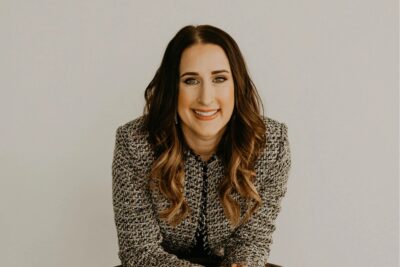
This is the full transcript for Episode #288 of the Wild Business Growth podcast featuring Kordel France – Sense of Smell in Machines, Theta Diagnostics. You can listen to the interview and learn more here. Please note: this transcript is not 100% accurate.
Kordel France 0:00
Collect as much data as possible about certain hypotheses. Use that data to construct your product.
Max Branstetter 0:21
The Wild-ific Method which rolls off the tongue. Welcome back to the Wild Business Growth podcast. This is your place to hear from a new entrepreneur every single Wednesday morning who’s turning Wild ideas into Wild growth. I’m your host, Max Branstetter. Who just pronounced his last name wrong. I am now Max Brenstetter. Founder and Podcast Producer at MaxPodcasting. And you can email me at to save time with your high-quality podcast. This is Episode 288 and today’s guest is Kordel France. Kordel is the Founder and CTO of Theta Diagnostics. And this interview is absolutely mind-blowing. He and team are working on developing and improving sense of smell in machines. Yeah. So this covers all things AI, robots, robotics, sense of smell inspired by dogs with what we can learn from dogs and their incredible sense of smell. And some of the really impactful and even life changing or life saving impact that sense of smell in machines can provide. It is Kordel from France. No, just kidding, he’s American. Enjoyyyyyy the showwwwwww! Aaaaalrightyyyy we’re here with Kordel France, Founder of theta diagnostics, one of the companies that is really, really shaking up the AI and robotics space. And I know there’s like a billion, trillion companies that say that these days, but we’re going to talk about robots and senses, which I think is pretty cool. And all sorts of other things. But Kordel, thank you so much for joining, how’re you doing today?
Kordel France 2:16
Doing well, Max, thank you for having me on the show. And thank you to your listeners in advance.
Max Branstetter 2:20
Yeah, of course, you know, not not as many guests. Thank the listeners right away. So thank you know, so thank you for for thanking, and now we’re having a full thank-off here. But no. Really excited to get to all you’re doing in the robot space. But before that, AI is obviously everywhere these days, the last time that we had a guest that was like really, really focused like blogging all this stuff on AI was actually back in episode 98. So it’s been a bit Janelle Shane AI weirdness. And that was talking about just like, all the weird quirks of AI at the time. And now obviously, there’s still a lot of quirks with AI. But now it’s like, there’s this crazy, seemingly revolution of like, all the applications of AI. So we’d love to hear from your from your origin story, what what was the first time that you even heard or like came across this term of artificial intelligence.
Kordel France 3:13
The first time I came across the term of artificial intelligence was I was in sixth grade, I think, so long time ago. But up until then, it was robotics for me. And my first exposure to robotics was when I was just a toddler. So I actually grew up on a farm. And my father had some software that he put on to our tractors that allowed them to steer themselves. And so there’s, there’s no human interaction, you’re just sitting in the seat, right? That is a toddler. That’s something out of a sci fi movie, you’re seeing this big machine act on its own and move on its own. And I kept asking my dad, I’m like, How do I work on this? How do I contribute to this, you know, as a kid, and he said, You got to be good at math, right? You got to be good at stats and look at all these things for robotics. And so that was the accelerant for me to kind of get into AI and get into robotics actually started from agriculture, which is kind of funny. But yeah, from there, it’s I feel like the definition of AI changes as time goes on. But I first got exposed to the term, probably we’re in sixth grade.
Max Branstetter 4:12
So you started out literally farming AI. Now many people can say that. Yeah, that’s a good way to put it. Of those aspects of like, math and statistics. And I’ll physics even, I don’t even know I’ll those arms of, I guess stem we’ll call it that branch up into AI. Which one of those is like your bread and butter?
Kordel France 4:35
I’d say it’s a combination of statistics and physics. Well, if you look at artificial intelligence, it’s really all built on mathematics and statistics and computer science principles. Those are the three things that really construct artificial intelligence at the most fundamental level. If you incorporate some physics and some engineering, then you get robotics, which is more of a hardware type thing. AI is kind of like the brain. Robotics is kind of like the hardware in the body. And so having a good mechanical engineering or physics backer On allows you to merge both AI and robotics realms together quite well to constitute higher level intelligence. So I say my bread and butter is probably statistics and physics.
Max Branstetter 5:10
So here we are. We’ve already talked farms, we’ve already talked bread and butter, I’m ready to go to Cracker Barrel and celebrate this. But before we do the best apple butter is my wife says. Let’s get to robotics. So this is something you spent a lot of time on, obviously, over overlaps interacts with intersects with AI as well, it sounds like a whole different thing. But where did you start to get the idea that I could actually like, start a business or like have a career in this space surrounded by robots?
Kordel France 5:52
It’s kind of a long answer. But we started a company, my my co founder, and I started a company called Secret technologies back in 2018. And we were focused on building AI models that ran on the device, so no connection to the cloud, which back then was a little bit harder of a problem than it is now. Because you have these big AI models that take up a lot of space and compute power, it’s very hard to compress them to put them on the device. So we started a company around that, and we were quite successful for a while. But as the general field started getting more and more advanced in that running AI models on device became less of a problem, we started looking at other aspects of AI and robotics that might not have had as much of an investment as a moat. And we really wanted to contribute to artificial general intelligence, if you’ve heard that word, which is basically, for lack, there’s several different definitions of it. But for lack,
Max Branstetter 6:41
we’re gonna make you list off every definition one by one here. Perfect.
Kordel France 6:45
Let’s schedule for like, maybe another two and a half hours, perfect, because there’s so much debate about it. In my mind, AGI Artificial General Intelligence is human level intelligence. And if you think about how to build that human level intelligence is largely in my mind, all five senses, I don’t think you can have human level intelligence if you don’t have all five senses. And there’s folks that might not have as acute sense of in one direction or the other, but their other senses are magnified because of the lack of of sense and they might not have. But for the sake of this conversation, you need all five senses for human level intelligence, you could argue that if you’re in Paris, and you’re sitting outside the Eiffel Tower, and you’re eating a crepe, you don’t get the same experience that you get, if you can’t smell the bag that’s being baked in the background. And you’re, you’re hearing the passers by as they talk French as they walked by, right? Like you kind of need all those sense senses to build up an experience that constitutes intelligence. And we were looking around at the other senses that weren’t getting as much investment or attention. So computer vision, hearing, audio learning, speech processing, text recognition, all that stuff, we’re getting a lot of investment, a lot of attention, a lot of really smart researchers in those fields. But the sense of smell wasn’t getting as much of attention. In order to kind of build our mode. As a startup we dealt with we delve more into this and saw that there’s just not as much advancements in those in the field of machine smell, or machine olfaction, as it’s technically called. And we just really dove in from there and started building out a sensing technology and focusing our AI platform around that. As
Max Branstetter 8:15
you’re talking through that I can smell the crepes like there’s nothing about like there’s nothing that compares to good crepe smell, especially in poetry. I’m sure I’m saying that right. But smell smells fascinating. I’m sure there’s, we’ve all heard all sorts of stats of like how it’s the most tied to your memory. And it’s like you can you and maybe you know, some of them. There’s like some crazy high number amount of smells that your brain can can distinguish. There’s all sorts of crazy stuff there. But how do you start to tackle this? Like the the thought of combining smell and machines is truly something out of this world? Like it seems too futuristic to be true. But like you’re doing it and you’re experimenting with it, like how do you start to tackle this big hairy meatballs? People say?
Kordel France 9:01
That’s a good question we took the the first thing we did is look at the state of the art, and try to figure out what sensing techniques are available? And what are the pain points people are expressing or why has the field not advanced the same state as vision or audio or anything else. And a few of those pain points were the current existing smell sensors or slow in response, they took minutes or even hours to get a response of of a reaction of what it’s detecting. They weren’t specific enough. Like for example, smoke detector is not really it’s very looking for on the grand scale of things very, very high concentrations. And we can go much lower, and we didn’t have the resolution that we needed in existing sensors. And then finally, there’s the last problem we were able to assess is that it’s very difficult to break down a smell into its its constituent compounds. So if I’m smelling break bread, I just smelled bake bread. I can’t dissect that to say this is 10% benzene 30% toluene 60% heptane And that’s very difficult for humans. I mean, I can’t do that. Maybe you can, but I was
Max Branstetter 10:04
gonna say those are Yeah, I don’t want to like rain on your parade. But that’s exactly what I was going to decipher there.
Kordel France 10:09
For that, I guess you’re our new test dummy then because we’re going to use you as our base. But
Max Branstetter 10:14
I’ve been called dummy a lot. So that works.
Kordel France 10:18
And so we looked around, and we tried to basically solve those fundamental problems. And we were able to do that. So there’s another thing too, that we looked at, and we use nature as a big inspiration. Dogs have, like 40% of their brains attributed to the sense of smell that can track scents that are miles away, literally, it’s insane. Why can’t we do that as humans? And why have we not replicated that functionality? As robotics become more prolific in humanoid robots specifically become more of a staple in the field, the advancements there are being made in all these other senses, but not in the sense of smell. And so that’s where our particular focus with data is trying to bring out that field. Without
Max Branstetter 10:56
revealing any of your deep secret information, don’t want to get into any legal competitive trouble here. Can you give like a high level explanation of like how smell sensors work? Effectively,
Kordel France 11:12
there’s a chemical reaction that occurs. And that chemical reaction sends a voltage, a very specific voltage back to a processor that basically exceeds a threshold. And then our computer logic says, Okay, I think that there’s this chemical in the air. Each of our sensors is tuned for a specific chemical, each potential to a specific reaction. And we can look at all these reactions simultaneously, merge them together to construct this level of intelligence for smell that basically says, Okay, this is what the air is characterize that around me. Now, that’s maybe I’m not gonna say it’s a simple problem. But it’s a much simpler problem to just put a device in the air and say, what’s around me, what’s what is, what are the constituent parts of the air? How do I track a scent like a dog can? That’s a very, very difficult problem. I don’t think we don’t get dogs enough credit, or any other animal, like moths or ants that actually navigate through the sense of smell or olfaction. Or pheromones. It’s a very difficult problem. And nature’s mastered it. So we’ve looked at a lot of the these natural entities and dogs, moss to try to get inspiration on how do we go from just ambient air detection to tracking a scent. And it’s a very difficult problem. And we’ve it especially like with the aerodynamics of the air, and how things change with different air currents and everything if you have a fan in the room if you have wind. So it’s it’s a very difficult problem to solve that takes a lot of conventional machine learning, to kind of really manifest with the sense of smell looks like,
Max Branstetter 12:43
how do you make that jump? It’s awesome. And it’s super fascinating to hear about like, wow, dogs in I just learned moths, ants are like so good at smell they navigate with that I heard something about like elephants are incredible with that as well from like long distance smelling, which should be like an Olympic sport, by the way. But how do you how do you make that jump from like, animal smell to like, actually infusing those insights into the technology within robots and machines,
Kordel France 13:15
there are several different technologies for the sense of smell. And we try to mirror the exact way that dogs do it. Because dogs can detect some chemicals on a part per quadrillion resolution. That’s insane. Humans are maybe part per 1000 part per million, they might be able to go a little bit better with depending on what the senses smoke detectors are part per 1000, or part per 100 million. So dogs are literally a trillion times better or more smoke detectors. That mean the magnitudes insane, right. So a lot of the existing techniques were maybe good at detecting different compounds in air, but they couldn’t get to the resolution dogs can. And dogs the way they work. They’re fundamentally it’s a chemical reaction that sends an electrical signal to their brain, that part of it’s called the olfactory bulb. And we tried to mirror that exactly what our sensors. Now we’re not quite to the resolution that dogs are with a part per quadrillion sensitivity, were at a part per trillion sensitivity. But we’re several orders of magnitude better than, for example, smoke detectors or, or other sensing techniques on the market. So there’s optical methods where you can actually see the air and be able to break it down into its constituent parts instead of smelling it through a chemical reaction. We have some advantages over that with our sensing techniques. But really, we tried to replicate what exists in a dog’s nose in our sensors at the most fundamental level. That’s a
Max Branstetter 14:39
pretty cool resume booster there to say that you’re working on now that’s a pretty unique thing to tackle. What are some of the potential use cases for this technology? Like let’s say it’s full fledged, everything is working as you envision? What are some really cool ways that this can enhance our world? Our
Kordel France 14:57
current effort right now is To monitor breath. So your breath as you when you exhale gives a multitude of biomarkers or different chemicals that give a general sense of your well being. And there’s so much data in breath that we can diagnose. So our sensors, literally, we built a breathalyzer that can smell different chemicals in your breath that are indicative of different medical conditions. We started with pneumonia, we started with an influenza, just doing a general wellness check. Like if you have a cough, what is it and being able to kind of assess by just breathing into the device. Now we’re going through clinical trials right now for lung cancer detection. So right now, for lung cancer, if you want to be if you if you’re suspected of lung cancer, you have to go under a surgery to get the biopsy. So they literally cut out a piece of your lung to assess it, that’s a very extravagant process, we can allegedly, what we’re trying to do is basically show that our device can smell that you have lung cancer, and basically replace the need to go under the knife, we have a lot to go before then. And there’s a lot of clinical trial data we have to accomplish. But we are effectively as it’s detecting lung cancer over various stages across just a breath sample. So there’s a whole different, or there’s a whole battery of different domains, we can go and go into with the medical industry. But there’s space space is another one. Agriculture, basically energy and the energy industry. So for space, there’s a big machine called the gas chromatography mass spectrometry machine.
Max Branstetter 16:31
Well, I was gonna, I don’t think you pronounce that correctly. Actually. I,
Kordel France 16:35
I probably I mean, I still don’t know what it is for, I think it took me like 18 years, there’s got to be an acronym. GCMS is what we call it. Really think about it as a fridge. It’s a giant fridge that sees different compounds within the air acts kind of like a nose, but does it through optical methods. And they send these up to International Space Station. That’s extremely heavy, right? That cost millions of dollars per kilogram. But they use these these spectroscopy techniques to look for signs of life and other planets, it’s very hard to put that onto a rover or those techniques on to a rover and say go look for signs of life. Our sensors are a couple grams that take way less power, and can detect the same compounds that those machines can. So there’s some interesting applications with space pipeline to fuel leaks, and pipeline detection, and drug detection as well. So at the ports, we’re able to, we’re working right now to develop a device that can smell different drugs at ports to try to triangulate them faster than existing methods to help Homeland Security.
Max Branstetter 17:34
Wow, appreciate you sharing that. And also doing that. I mean, some of those are literally life changing, like life saving potential possibilities here. So it’s really cool to think about it in action. I always go back to with AI and futuristic technologies and robotics. I imagine that those like yourself who are running the companies behind it, have a hell of an adventure, you know, when you’re when you’re talking to potential clients have have kind of convincing people that hey, like this is now like, this isn’t like too far in the future that this stuff’s happening, like, how do you get clients and potential partners on board with
Kordel France 18:15
like,
Max Branstetter 18:16
you know, kind of like this use cases you’re just talking about, but like, explaining that, like, these are real things that we should be considering and trying out and investing in right now. Not, you know, when we’re all 100, and 150 200 years old, a
Kordel France 18:31
lot of it all comes back to the argument for artificial general intelligence, what’s going to get us there faster, it’s going to happen, it’s inevitable. It’s inevitable. There’s so many smart people working on it. But there’s not a lot of investment in all five senses, there’s only two or three of them that are getting very high investment. And there’s a lot of applications that people don’t even think about with the realm of machine smell or machine olfaction in by us educating them on what’s possible with that to say, hey, look, there’s a new sensor out there that kind of makes a lot of these other applications make sense? Now, here’s what you can do, we really, we open up a lot of possibilities that they didn’t even think about before. So a lot of what we do is educational, to try to get people to open up to the fact that there is a whole other realm of artificial intelligence and robotics outside of large language models, outside of chat bots outside of ChatGPT. Those are all very impressive, but at some point, we’re going to have to develop some of these other realms just as just as symmetrically. So a lot of what we do with our clients is education and trying to get them to understand how this is helpful. And a lot of our applications, in addition, aren’t solely synth based or smell based. We merge with other sensing modalities, for example, cameras or hearing or vision to try to merge our sensing techniques with them. So like if you can imagine for example, a dog is primarily using two maybe three sensing techniques. When attracts a scent. The primary one is its nose. The secondary one has its vision. And the third one is its hearing. Now, if you merge all those together, you get a pretty intelligent beam. That’s where we can come in. And a lot of our clients are using us as a secondary sensing modality to cover some of the corner cases that for example, cameras might not be able to cover with their existing techniques. To summarize all this education is a big part of trying to get our clients to understand what’s possible with our sensors.
Max Branstetter 20:24
And then looking back at your journey so far in this space, which they should make a movie about, by the way. But what’s the biggest kind of aha moment or insight you’ve had about building a company and building this technology in this cutting edge space?
Kordel France 20:41
Honestly, probably the biggest aha moment, this comes from like I started my statistics background is to make data driven decisions. As an engineer by trade, and by discipline, I, and all engineers, I would argue, we really want to solve hard problems. And we all have our ideas about how we should solve problems. And as a startup, you don’t have an infinite amount of time, you’re extremely bound by money and extremely bound by time and investment. And you have to act quickly in order to try to materialize something that is actually a value that people want to buy. And if you’re an engineer that won’t has his own his or her own ideas about how to do something that can waste time. So the best advice I can give, or the best thing I’ve learned is to collect as much data as possible about certain hypotheses. And to use that data to construct your product. Don’t if you think it’s a good idea to do machine sensing or machine smell, don’t just think it’s a good idea to go build a product, collect a bunch of data, make sure it’s possible, make sure the market actually wants it, make sure you can get investment, right. There’s some corner cases on this in which you should just you need to basically act instinctively. But I think data driven decisions is the biggest component that’s helped me and helped our company so far. Because we’re we have we’ve constructed our argument, and we’ve kind of ruled out all emotional responses and all, all the things that we think would be cool to do, and built it off of things people actually want and data that’s driven our scientific discoveries and inventions.
Max Branstetter 22:12
Data, Data Data, or some people say data, data data, one of my favorite bits, or a datum, is the way to say that pieces of data to come across my desk is when I see someone subscribes to the Podcasting to the Max newsletter. Or are subscribed to the YouTube and you can subscribe, you can subside, you could subscribe to the newsletter at MaxPodcasting.com/nNwsletter. And if you want to get visual, you can subscribe on YouTube @MaxBranstetter, which I pronounced correctly this time as opposed to the intro of this episode. All right, back to more data and datum and data. So that was a wonderful segue, because we’re going to get to the most data-backed segment in the show’s history. Let’s wrap up with some Rapid-Fire Q&A. You ready for it?
Kordel France 23:09
Let’s do it.
Max Branstetter 23:11
Alright, Let’s Get Wild! As if we weren’t getting wild enough already. If you could be a robot in any movie or TV show in history, who would it be? Sonny from I, Robot. Oh, very sunny answer. What would be the sense that you are most fascinated by other than smell?
Kordel France 23:34
I think drug detection is very interesting. Because there’s one of the five senses. No one of the five senses started they wouldn’t applications. Oh, no, no, that’s
Max Branstetter 23:42
interesting as well, though. Yeah.
Kordel France 23:45
The sense of be most interested is vision just because there’s so much bandwidth that comes in that we make sense of as humans that we don’t really quite understand how we do that yet.
Max Branstetter 23:54
Vision and drug detection. The Kordel France story. Perfect. The memoir. No, but what is it at least to your knowledge, the dog breed that has the best sense of smell.
Kordel France 24:07
I’ve been told in my data shows that it’s the German Shepherd. Well,
Max Branstetter 24:11
we’ll take your word for it.
Kordel France 24:12
I could be wrong, though. I’m not an expert in that I. So I could might very well be wrong.
Max Branstetter 24:18
Well, once it gets into like the quadrillions of whichever qualifier you mentioned it’s yeah, it becomes pretty tricky, but all right, and then last one. If you could only smell one thing for the rest of your life,
Kordel France 24:32
what would it be? Smoke?
Max Branstetter 24:35
Wow, very interesting.
Kordel France 24:37
That won’t get burned alive.
Max Branstetter 24:40
Very, very practical answer. Well, Kordel, thank you so much. This has just been super fascinating. And the word mind blowing gets tossed around a lot but the space here and truly is so thanks for all you do and in all you do to enhance our world. Where’s the best place for people to learn more about theta diagnostics as well as if they want to connect with you online.
Kordel France 24:59
I’m was prolific on LinkedIn, and then our website as well, we just did a revamp on our website and we’ve got a blog coming that will give some more educational insight on exactly what we’re doing and how we’re using AI to or the sense of smell to solve some problems in AI. So connect with us on our website, or please connect me on LinkedIn.
Max Branstetter 25:16
Perfect. And then last thing, Final Thoughts, it could be a quote, a line, the second most talented dog breed and I’m just getting whatever you want, send us home here just kind of words to live by to to wrap this up.
Kordel France 25:27
There is a whole other realm of artificial intelligence outside of chatbots and large language models and machine smell is a very under asymmetrically focused realm. Please, let’s have some more research. And let’s have some more investment. Let’s have some more invention. Let’s try to get that to a point that we can actually materialize the same level of data and technology as other sensing modalities such as vision and hearing.
Max Branstetter 25:56
Let’s do it. You heard the man. Thank you so much, Kordel, for coming on the podcast, sharing your futuristic yet present-istic story. And thank you, Wild Listeners, for tuning in to another episode. If you want to hear more Wild stories like this one, make sure to subscribe or follow the Wild Business Growth podcast on your favorite podcast platform, as well as the video versions on YouTube – which you can get on YouTube @MaxBranstetter. Make sure to subscribe there and tell a friend about all these things, especially one who might just geek out about the sense of smell – who wouldn’t. You can also find us on Goodpods, where there are good podcasts and podcast recommendations. And for any help with podcast production, you can learn more at MaxPodcasting.com. And, sign up for the Podcasting to the Max newsletter. That is at MaxPodcasting.com/Newsletter. And that is where podcasting meets entrepreneurship. And some of the jokes that will make you facepalm or slap your own forehead, who knows. Until next time, let your business Run Wild…Bring on the Bongos!!
Related Posts
Rob Mattson – Wild Business Growth Podcast #360: Walking the Earth, Aircraft Carriers, 2ndLap Podcast

Kat Cole – Wild Business Growth Podcast #359: AG1 CEO, Cinnabon President, Hooters Girl