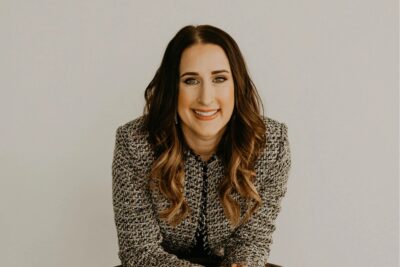
This is the full transcript for Episode #359 of the Wild Business Growth podcast featuring Kat Cole – AG1 CEO, Cinnabon President, Hooters Girl. You can listen to the interview and learn more here. Please note: this transcript is not 100% accurate.
00:00
An unbelievable commitment to quality.
00:19
HeyG1, welcome back to Wild Business Growth, your place to hear from a wild entrepreneur turning wild ideas into wild growth. I’m Max Branstetter of MaxPodcasting. This is episode 359er and today’s guester is Kat Cole. Kat is the CEO of AG1, formerly known as Athletic Greens. AG1, if you haven’t seen them advertised in some form.
00:49
is absolutely seemingly taking over the world in terms of supplements and nutrition and nutrition’s plural. You can tell I don’t work there. uh Vitamins, daily health drinks. It is a fascinating, fascinating company. And in this interview, we talk everything from Kat’s journey from a Hooters girl to up the ranks of Hooters, leading the charge for more and more tasty food brands like
01:18
Cinnabon, Anne’s, Welcome to Moe’s, and everything from how AG1 markets their one-of-a-kind product to how she has been able to help them triple their revenue in recent years. It is K-A-T-1. Enjoy the show.
01:44
Oh, Rady, we are here with Kat Kohl, CEO of AG1. And we’re gonna set a record for things that have three syllables or three letters. Boy, I’m on top of it today. Kat, thank you so much for joining. How you doing today? Great. Thanks for having me. Of course, of course. Thank you so much for making time. know, it’s really cool. I love when whenever I have a guest on I love
02:12
listen to them in other podcasts and looking at their LinkedIn and learn more about their background. Just so I know a couple of questions to ask you and for you, it kept coming back to Hooters and Cinnabon. So two iconic brands, very different realms. So of course I want to talk a little bit about that before everything with AG1. Hooters, near and dear to my heart, we actually have, uh you know, we used to go to Myrtle Beach growing up and there’s some big family
02:36
picture that we have, like including my grandparents and cousins and all, like a huge family picture that for some reason we took outside of the Hooters in Myrtle Beach. So it’s like if you look at in our family lore, you know, the Hooters brand is there. Also, I know growing up, uh I was nervous whenever I was talking to a Hooters waitress there. So let’s hope today I’m able to get over that and as a former waitress yourself, things can be smoother. So on the Hooters front.
03:06
Obviously, there’s so much we could say about the brand there, but what’s something about the Hooters brand or the Hooters business as a whole that you think most people would be shocked to learn? I mean, the big one, look, it’s a very mature brand. was born out of the early 80s. It’s gone through many iterations of the concept, but because it’s known for female waitstaff, there is this assumption that, oh, there are these
03:34
these women, these girls who are waitresses, and then the men run the place. And actually women ran the company. One, like 80 % of the hourly workforce was female. Every person I worked for in my 14 years there, until I worked for the CEO was a woman. So you just think 14 years, assistant managers, general managers, marketing managers, promo managers, regional managers, and I had incredible male mentors in the company as well.
04:03
But it’s pretty wild to think about an entire career of that duration that is predominantly female leadership. And certainly that contributed to not only my story of seeing incredible examples of women in leadership, but many others. My story is not unique. There were a ton of former Hooters hostesses, waitresses who moved up into salary roles, management roles, became franchisees, became executives like I did. I’m one of many.
04:32
actually. So I think that’s the thing that might surprise people. Yeah, it’s really, really cool to hear. And from your standpoint, I saw I think you’re 26 when you got your first VP role there and moving up there. So what do you think made the difference for you to go from, you know, working at one location to actually being like in charge of, you know, training and development across, all these places around the world? Well, first, I think, again, it wasn’t very different from my predecessors there. So
04:59
many of the executives came out of operations, came out of running restaurants. So in that system, it wasn’t exceptional, but it is exceptional when you compare it to many other people in different businesses and different industries. So I just want to give credit where credit is due. Like the business was just a talent machine uh pulling people from the stores into roles where they would shape policy procedure and make decisions that would then affect the employees.
05:29
on the franchise and corporate side. So that should just be noted. It wasn’t all me, but it was me among many others. And so if I look back and think of the me related things that made a difference that were similar when other people got those opportunities as well, uh one was I worked all the jobs, right? Not everyone wants to work all the jobs. I worked all the jobs. I was a hostess, a hostess, a waitress.
05:58
a bartender, a shift leader, a promotions manager, a regional training coordinator, a new store opening manager, a fix it trainer who would go to stores that had problems and uh retrain team members, a management trainer. So that’s part of the outlier element of the people who did move up in the company, including me, is we had the breadth of experience of knowing end to end how the restaurants ran and
06:27
that is required to be exceptional in corporate management at such a young age, right? Because there’s so much when you’re that young. I was 20 when I took my first corporate gig. So I moved to Atlanta and became an employee training manager in the training department and then moved up as the company grew. And as you said, at 26 became one of the vice presidents and then was in various executive leadership roles for six years there. And so what I lacked was experience in years.
06:55
at that level of management in multiple companies. But what I had was unparalleled knowledge of the way the operations worked, what the employees and managers needed, what good looked like from the inside, not just the outside. And that makes a difference if you’re willing to tap into that internal experience as a strength. And I did so worked all the jobs is one thing. The other is I enjoyed working all the jobs. I wasn’t working all the jobs because I felt they were rungs on a ladder to get
07:25
up the ladder. That certainly ended up being the case, but that wasn’t my why. I was working all the jobs for three reasons. One, uh I grew up in a tough upbringing, very poor family on both sides, single parent, alcoholic father, helped raise my daughter or my daughters, my sisters who are like my daughters, I guess. have an actual daughter and son now. And so I needed to make money. And if you can work more different hourly jobs, you have more access to income.
07:54
So it was very self-serving, the reason I wanted to work all those jobs. The second driver of the why is I love to help. Sometimes the way I learned the job was not thinking, oh, if I learned how to be a bartender, I could have two more shifts this week. It was that the bartender had to go home because her son was sick uh or the manager needed help because her assistant manager called out and I wanted to be helpful. So the second of my why is I’m a helper.
08:21
I like to be helpful. like to enable others success. I have since I was very young. And the third is, I uh was curious, like, can I do it? I think I can. Can I do it? No way to know unless I try. And usually when it’s in a moment where someone needs help, it gave me more courage to be not perfect at something because no one would expect me to be perfect because they’re asking for my unexpected help. And so I’m like, can I do it? Yeah.
08:49
It’s probably fine if I’m not perfect. So I needed to make money. I wanted to be helpful. And I was curious to see if I could learn and do the new thing, put those together. And I ended up raising my hand for almost every opportunity that came up, whether it was an impromptu need or something that was more typical, like a job opening or an opportunity to travel and open new operations. Well, the other thing that we didn’t even talk about with Hooters, but they always found delicious was the food. uh, and speaking of delicious food,
09:19
Cinnabon. So I will raise my hand and voluntarily, you if you ever need Cinnabon taste testers, you know, I’m always game for that. But these are kind of quirky questions, but I just have to know first, what’s the secret? how did the team create the Cinnabon smell anytime you’re by a Cinnabon to be like the best smell in the world? It’s funny, you know, people have all this lore around do they pump it through fans and
09:49
It’s just the fact that the ovens are out front. And so when you’re baking all day, fresh baking, I mean, every hour you’re pulling fresh baked cinnamon rolls. It’s like when you bake cookies in your house, right? The whole house fills with that aroma. Same thing, except imagine baking cookies in your house all day, 24 seven. That is what we were doing. They’re all fresh baked. Many of them made from scratch for many, years, hand rolled in the store.
10:18
baked in these ovens right behind the counter. And so that aroma is just getting out everywhere. And there were times that the founders of the concept tested putting the ovens in the back like a normal restaurant. The reason they were in the front to begin with was they just got a small space and so it was an accident. And when they put the ovens in the back, the sales dropped by half. So they’re like, even if we have more space, those things are going out front.
10:46
And it was also part of the theater, right? It helped you see that they were fresh made. You literally could see them going in the oven as raw dough roll and coming out fresh baked. So there was something about the theater that also drove the watch, the awe, the gawking, in addition to the aroma, attracting people. So nothing other than just fresh baking, delicious, uh full of sugar and fat products that you definitely should not be eating every day or very frequently, but.
11:15
iconic, right? Like iconic aroma, iconic product, the cinnamon roll the size of your face. And something that in the 80s and 90s was beloved and, you know, in every mall. And then over the years, even trends of, of consumption and indulgence has changed. People wanted smaller products, more responsible indulgences. We ended up expanding the product into grocery stores where it was just the cinnamon and coffee creamer, just the cinnamon in
11:44
coffee flavors and finding more ways to extend that nostalgic flavor and that delicious aroma, but into things that were less insanely indulgent as the world moved to more conscious indulging. Yeah, that’s actually, and that hints to my last question for now, before we get to AG1, I promise we will get to AG1 in this interview. I guess the distribution or retail strategy, whatever you want to call it, there’s not that many brands that
12:10
come top of mind when you think about like airports and malls and historic like, there are very specific locations that like Cinnabon, Anyands, I know another brand that you you touched over the years. Yeah, fantastic smelling one, by the way. But what went into this, like such like a defined distribution strategy there of like, hey, we need to be in all these airports, we need to be in those malls. And then I guess ultimately, testing out grocery as well. I mean, if you think about any
12:40
business’s distribution strategy. There were a few things that lead to it. And it was certainly true for Cinnabon and the other brands that were in focus brands, the parent company that I led. Cinnabon gets all the love because it was, you know, I was president of Cinnabon in the recession and we turned it around and it’s a really fun contrast comparison to AG1. People like to highlight like from cinnamon rolls to nutritious drinks and supplements. But the reality is we had many brands in between. Jamba Juice,
13:09
uh, Mo’s Southwest girl where we had. Welcome to Mo’s that, you know, my wife, says that all the time. Uh, McCallister’s, Schlotzky’s, had deli soup salad. So we talk about Cinnabon a lot, but my portfolio of brands, I ran the parent company, there were nine presidents and seven incredible brands, some of which were healthy for you. Some where you could pick your, pick your path of more indulgent versus healthy and others like Carvel and Auntie Anne’s and Cinnabon.
13:38
or just pure fun, ah not good for you, but fun for you. The strategy for those brands, if you think about it, is that fact, that the average consumption for Cinnabon, the average frequency of a customer was 1.25 times a year, one visit per year. So if people only come see you once per year, what must be true about your location? You must be around many unique
14:07
visits per year. If it’s the same people every day, like a roadside of traffic patterns going to or from work, you won’t do very well because they’ve already those same people who drive that route every day have already come to see you. They’ve made their one to two visits per year. so airports, casinos, vacation destinations, travel plazas, malls, these are places that
14:38
Individuals don’t go very often, but many people go occasionally. That’s just it. So the snack brands are in high, unique feet, unique foot traffic locations. They do not require the same people going every day. If you contrast that with something like a Mo’s where you would go to lunch every day or a schlotzky’s to get a salad or a flatbread, those, while they might do very well in a mall or an airport,
15:05
perform very well with the same people, office work, travel, commuting, and so different distribution strategy versus say an AG1 that is a daily consumption habit subscription business makes a ton of sense to be online in the most direct to consumer convenient way for people to shop in a way that is the best value for that high frequency consumption habit. If you put those two occasions together,
15:35
very low frequency, sporadic, indulgent occasions, very high frequency health consumption. You have this stuff in the middle, which is grocery. People who shop a couple times, not every day, but it’s once a week, twice a week. So when you’re shopping in grocery retail, you are less likely to indulge, purchase very indulgent things because you don’t want that in your home, shouldn’t have that in your home, right? That’s a special treat. But it might be expensive to buy something you’re consuming very frequently.
16:05
there. But for things like an occasional like muffins, cereals, coffee creamers, grocery and retail makes a ton of sense. It also makes a ton of sense for discovery of a brand. And so we would put some of our restaurant brands, sauces, products, uh well known versions of those items in the freezer section in grocery stores, because it’s a great place to discover the brand or be delighted by a brand you haven’t had in a while if you don’t go to the mall often.
16:34
Whereas AG1, people who are really serious about supplementation and their health are probably likely to go to our website and find their favorite flavor and their perfect subscription package for the best value delivered wherever they want. But we’ve just rolled out in Costco in the last year, in Target just this week, AGZ and AG1 with seven counts and 14 counts, which is a great place for people to grab that in between amount if they forgot it on a trip.
17:03
ah If they want to gift it to a loved one or just try it when they never have that’s easier for many people to do then go to a website with larger portions and a subscription
17:17
Not that I’m full yet, but with that appetizer of Hooters and Cinnabon. Let’s get to the AG1 entree. And as you mentioned, it’s fascinating to compare and contrast these brands. And the previously mentioned brands have seemingly been around forever and iconic and have very distinct personalities. And AG1 now compared to those, it’s like, it’s a baby. It’s brand new. Yet, I mean, in my lifetime, like I’ve never seen any sort of nutritional drink or
17:47
supplement, vitamin, whatever you want to call it, product take off like this. And I know since you’ve been there, there’s been really, really cool, know, tripling of revenue, we’ll call it that we’ll get into all that. But so AG1, formerly athletic greens, I heard that one of the big influences of you actually landing this role in the first place is uh has to do with the podcast. Can you tell us about that?
18:14
I’d been on a few podcasts that were more, you know, had more of a venture capital backed audience, more of startup audiences. And the founder of then called Athletic Greens heard me on two of his favorite podcasts and then asked to be introduced to me because the business was growing so quickly and he was humble enough to know he could benefit from advisors outside perspective to help him on growth, leadership, brand.
18:43
operations. And so he asked for an introduction to someone he realized was a mutual connection that guy made a dear, just incredible human made a connection with us. And the founder asked me to advise him and I just left 10 after 10 years at focus brands was taking time off to be with my little kids post COVID and reshaping that whole business within the restaurant and hospitality industry. So it was
19:11
beautiful timing because I was in this advising era of my life. I’m like, I’m going to advise, invest, work on blogs, books, whatever I can do to share knowledge while I think about what will I do next? Will I operate again? Do I want to start a fund? Will I spend my time in more of a portfolio approach? Really all were considerations in 2021. And then Chris reached out to me and said, look, here’s the things I heard you say. This is what I think I need help on.
19:41
Could you be an advisor? And he didn’t know because the subscription was under my husband’s name that I had been a customer for two years. So I was a huge fan. And actually I had no idea how big the company was and I didn’t know much about the business of the product. I just loved the product. It had helped me so much with my energy, my immune health, my hair, skin and nails after my second child. And I was one of these over-supplementers going to the grocery store, getting a bunch of pills and powders. And my husband called me out one day.
20:11
and said like half this stuff is expired. You don’t travel with it. You travel so much. You don’t keep up with it. Try this. And he gave me a pack of AG1 and I tried it instead and I was able to stick with it. I built a routine in the morning, shaking up this like incredibly healthy green drink. And then I started feeling the benefits. So I was a huge fan. And so you put that together. He asked me to help. I was in a moment where that’s what I wanted to do. I’m an angel investor.
20:40
many, many early stage companies. So I have a deep love and respect for founders and early stage businesses. And I was a fan, a customer. And so I started advising him and that advisory work turned into him saying, look, just come help me build this. And it turned out to be an incredible moment. Many people have heard this word, the Japanese concept, Ikegai, where you have
21:03
overlapping circles, almost like a Venn diagram. And I forget all the specific circles, but it’s like your purpose, the opportunity, the chance to grow, mission driven, fits lifestyle, right? Like all these things. And that was absolutely AG1. So I joined in the fall of 21. And alongside the founders, we grew the business. It was growing like a rocket ship, like over a hundred percent year over year. We raised our only round of funding raised 120 million at a 1.2 billion pre.
21:33
uh valuation and then grew the business. And as you said, we’ve tripled the business since then, turned it to profitability, which it wasn’t in those early hyper growth stages and moved it from a single product, single channel business to now multi-product, multi-channel AG1, AGZ, uh all these things. And now Costco, Target, Amazon, and more to come with the broadest breadth of those products, flavors.
22:02
and incredible science-backed innovations available still on drinkag1.com. Well, congrats on that. It sounds like you guys have been busy. You might be napping every now and then, but not constantly. I think uh that’s a really important point that you shared is that you, mean, unbeknownst to the founder at the time, you were already a fan of the brand. with brands and big name brands like that, I always think that uh there’s a finite level of how passionate you can get.
22:31
about a brand that you didn’t start yourself, unless you’re like a fan, like if you’re a customer, and you’re using this all the time, and you kind of live that lifestyle. And so that was such a great, perfect fit, as you mentioned there. Now, looking across the category, do you even, how do you describe the category that you’re in? We actually straddle a few categories, which is like Ikegai. Yeah, it’s quite interesting, right?
22:59
As a product, we are a daily health drink that combines three very clear supplement subcategories. A multivitamin, there’s a full stack, very thoughtfully curated research-backed multivitamin, multi-mineral on the label with amounts showing you what is the amount of each key vitamin and mineral. We have probiotics in AG1 NextGen, five of the most clinically studied, live, dairy-free.
23:29
live culture probiotic strains, uh incredible. then, so that’s the second category of supplementation it combines. And the third is what people would consider greens, superfoods, phytonutrients, prebiotics, right? This beautiful fruit and veggie blend that serves many purposes. One of the purposes is those fruits and vegetables themselves contribute to vitamins and minerals. They are prebiotic.
23:56
uh fibers for the probiotics. So you get many different um plant varieties that help feed beneficial bacteria in the gut. And then you have uh adaptogens, herbs, mushrooms, things that have other benefits over time. And so it is a daily health drink, which used to be, I guess, in the OG days like orange juice or Tang, like what do you wake up and drink that gets you going?
24:24
This is, AG1 is definitely the thing now, but it is also replacing your multivitamin, replacing uh your base level probiotic and combines those things in a ritual that you can stick with. People stick with it because it becomes a ritual versus something you have to do like pills, a lot of separate pills. And it doesn’t replace everything that everyone needs, of course, but it radically simplifies.
24:52
a growing complex stack of vitamins, minerals, and superfoods that work together to support energy without caffeine. uh Love caffeine, but it’s also great to have that mental focus and nutrient-driven energy throughout the day, that more natural sustained energy. Gut health, all of our human clinical trials have continued to show proof of beneficial bacteria growth that helps support uh
25:21
a healthy gut, all kinds of other markers of a healthy gut, short chain fatty acids, digestive perceived digestive benefits, less bloating, et cetera. And then all those things come together, right? Vitamins, minerals, energy, natural energy, gut health to lead to a strong immune system because a large part of our immune system lives in the gut. So we are in the natural energy, nutritional supplement, immune support, digestive support business.
25:50
But ultimately, the way I think about it is it’s functional food and beverage. It’s your daily health drink. And what we’re starting to see really driven by GLP-1 usage is this fusing of food and beverage and supplementation. How do I make sure what I put in my body is nutrient-dense? I can eat as healthy as possible. I can take supplements, which you have to make sure are high quality to know what’s in it and it’s getting into your body and doing what the company says it’s going to do.
26:18
What’s starting to happen is those things are coming together because there’s only so much food you can eat and only so many supplements you can take. So the more you can make sure you’re eating and drinking the nutrients that you need on a daily basis, not just occasionally, the more you’ll cover natural nutrient gaps and meet growing nutrient needs in a busy, stressful lifestyle. you look at all that goes into it, it just makes the story that much more impressive because the people say, especially in the like,
26:47
the service business, people always say like, don’t try to appeal to everybody, you can’t do everything, like you really have to find your niche and focus and like, if you’re known for like one thing, that’s how you stand out. That’s, you know, in the service business, like that’s how people refer people to you. And your standpoint, like, there’s so many benefits, and there’s different types of ingredients. And there’s really like, if you’re looking at this, and like, you know, like when I was in business school, I could see back then if AG1 was around, this could have been thrown as a case study of like, where should they focus? Like, who do they market to and all those sorts of things.
27:16
So it’s that much more impressive that you and team have been able to put it in what started as one core product and now there’s multiple products, but the brand and what’s behind it is such a strong thing. What do you think has allowed you to achieve such consistent growth uh with the product that many people could say, you know, it’s kind of complicated at its core, I guess. An unbelievable commitment to quality. You don’t get this much
27:46
Um, repeat purchase. Think about it. People are writing a check metaphorically speaking, right? It’s hitting your bank account every month, or if they’re on our three month plan every three months, either way you are being reminded, you don’t forget, you don’t set it and forget it, right? You are being reminded that you are paying for this thing and it is showing up physically at your door. It’s not even like a SAS subscription you can forget about. You have constant reminders.
28:16
that this is something you should value. If you don’t, you cancel it because we’re high integrity, we make it pretty easy to cancel if you want. And so what would drive that level of growth? In a DTC business, you can’t keep acquiring your way to that type of growth. Not in an economically feasible way without constant subsidies, fundraising somehow, which we’ve only done one of. You have to have people who love it enough.
28:44
to make it a part of their daily routine and tell their friends. That doesn’t happen because of, no offense, podcasts or marketing. There’s no And you take that back, no, I’m just kidding. Yeah, yeah. There’s no amount of marketing that can get someone who is investing $2.63 a day in their health to keep doing it if they don’t feel that it’s working. It’ll get them to try it. It won’t get them to keep drinking it or tell their dad or their kids or their friends that they should drink it.
29:13
So that focus on quality from the early days that then led to outlier attributes like having NSF for sport certification that proved what’s on the label, proves what’s on the label is in the package. Our commitment to an additional 20 million worth of research, five human clinical trials, peer reviewed, double blind, randomized, placebo controlled for anyone who says it’s placebo.
29:41
There’s more human trial rigor in this single multi-ingredient skew than anything similar. And those are the types of things, those investments that say to a customer, A, I’m feeling more benefits because the quality is there and the consistency is there. But even for things that I may not feel, when you eat an apple, you don’t miraculously feel healthy. When you eat broccoli or chicken, you don’t
30:10
miraculously feel better, but you know that there are good things in there for you. So you should do that pretty often for a supplement, especially one that’s on the vitamin side versus say sleep or energy where you’re going to expect to feel something. You have to trust that what is in that is covering your gaps. How do you trust proof?
30:31
So over the years, we’ve invested more in proof, more in third party verification of our label, of our ingredients and of our claims, Eurofins, Alchemist Labs, NSF for sport. I could go on and on and form sport in Europe. And then the human trials that prove what’s going on in the body that explains why people feel the benefits that they do or what is going on even if they don’t feel something that they might have a question about like a particular vitamin or uh a probiotic.
31:01
And so that, that’s it, right? It’s quality, quality, quality. That is what drives growth. That is what drives trust. And it is millions of tiny decisions and lots of big ones that in many cases, the customer won’t ever know about or see, but stack up to that level of high quality experience. And then what we’ve shifted to in the last few years, turning that quality into marketing.
31:29
Like actually filming at the labs, having the labs talk about our procedures, having our creator partners talk about our approach to safety, our approach to quality. Like it used to just be lifestyle, unboxing, all these fun things. And now it’s what really wins and converts is yes, people talking about their own experiences, but it is really people advocating for how do you know what’s on the label is in this stuff? And how do you know it’s the good stuff? Because it’s the wild west out.
31:58
Yeah, I think there’s endless desire to know like, okay, what are the actual ingredients in here? What’s the behind the scenes? Like what are the trials look like? What’s the kitchens look like? You know, what’s the kitchen smell like? Shout out Cinnabon. I think, so you and team have done an incredible job obviously in terms of that focus on the quality, the focus on the testing and to make sure everything is know, shaped from that perspective. You mentioned that
32:24
you the word of mouth and referrals to friends and family is what really takes the business to the next level, which is true. It is true in pretty much every business. Obviously, you know, podcasts can only go so far. That being said, I know you yourself had appeared on lot of podcasts. Some might say you got the AG1 job because you’ve appeared on podcasts. I’m just making that up. No, but it was a catalyst for sure. Yeah. But then also the. So like I personally am a huge fan of Tim Ferriss and like you guys have been sponsors of the Tim Ferriss show for I mean, as long as I can remember.
32:54
And so can you just talk a little bit about like when you’re looking at your marketing strategy overall, like what are some ways or some levers that you’ve found a way that maybe this is a potential way that can create some word of mouth? What’s interesting is we, um one, I’m so proud of all the partners that we get to work with. since I’ve joined and long before it was in our DNA, we only work with people who are authentic AG1 drinkers or AGZ drinkers if they’re promoting AGZ.
33:23
because the customer can tell the difference, right? A paid read is a paid read, but it’s that in between occasional mention of, love this stuff, or I was drinking my AG one and then, and it is so important in a high skepticism industry, like supplements to have truly authentic partnerships. And you mentioned Tim Ferriss. So Tim Ferriss put us in his book, The Four Hour Body, ah that was 15 years ago, and he didn’t have a podcast then, and we didn’t pay for that.
33:52
And there was no sponsorship. And so many people will call out the highlights of our big scaled business today and miss the fact that Rogan was an AG1 drinker right long before he had a podcast. Huberman, same thing. Tim, same thing. And there’s so many other partners who that is true for, who we have worked with over the years. So it starts with they’re a customer, they’re a fan.
34:21
then they start telling their community, we wanna double down on that. And we did that early before podcast sponsorship was the thing that it is today. We were very early because some of our early customers became those very originators of the podcast movement. So then the way we thought about it is trusted recommendations. You’re a real customer, no one can talk about the product better than you. And if you’re spending your money, your time, if it’s your job building a community,
34:50
that has value, we’re going to pay you for that value. We’re not going to take advantage of that. And so we built a machine to do that consistently. But today, as we’ve brought on incredible leaders, our CMO, who’s led world-class brands, our chief growth officer, that’s done the same. Our marketing mix today would probably bore some people who think it’s all podcasts. is out of home. It’s TV. It’s direct mail. It is a
35:18
very diversified marketing mix. The creator part, if you want to think of creators broadly, is a low double digit percentage of our marketing mix. The way we think about it is one, at our scale, a full funnel approach. We have demand generation where we want to be in front of people, community, IRL, activations, run clubs. Our run clubs are unbelievable.
35:42
And really just having the brand out there. And occasionally we’ll be sampling and mixing things up, but it’s about enabling people’s morning and their start. Then moving more mid funnel, right? Getting people who have some awareness, but helping to explain what is this product? It’s green. What does it taste like? What’s in it? Is it a vitamin? Is it an energy drink? Is it a gut health product? Right. Taking people on that journey to understand when you see AG1, the daily health drink.
36:11
What about it is a health drink? Oh, I’m drinking my multivitamin and my probiotics. Got it. Oh, I’m getting a good diversity of plants that are hard to get. Got it. uh Then it’s taking people further down that funnel of when I get that, what does it do for me? It supports natural energy. It supports digestion. It’s an incredible companion to people on GLP-1 agonist class of drugs that are eating much less and have less access to nutrients. It’s a gut health support product. Okay, got it.
36:40
Now I understand what it is, I get kind of what’s in it and I understand what it’s supposed to do for me. Then people, you’ve got to bring people on different journeys. Some say, eh, I don’t know if I can trust that. How can I trust it? You take those folks down the third party certification, human trial research path. There’s others that are like, yeah, I trust it because someone I trust recommended it. My dad, my brother, my trainer, my doctor. Where can I try it?
37:08
I just want to try it before I subscribe. So then taking them to trial mechanisms versus the people who are super warm, they’re definitely interested. They just want the best value, which is going to be subscribing. Three month plan on our site. So there’s a full funnel approach that requires giving people the information they want and not more than they want in that moment and giving them the opportunity, long form blogs to go deep or quick fun hits on paid social.
37:37
or something that reinforces who is this brand on streaming or on TV, like our Hugh Jackman partnerships. It’s like, someone who’s a incredible performer seems to defy age, doesn’t promote a lot of brands. That guy drinks AG1. That’s interesting, right? Like women and men alike are resonating with Hugh Jackman, of course. Some people see him as Wolverine. Others see him as the greatest showman. So if you think about that range that I just described.
38:05
It is really an approach of full funnel demand generation, demand creation, pulling that demand through and recognizing a premium supplement purchase that simplifies and combines so many things is also a deeply considered purchase. It’s not something people hear about the first time and decide to buy. We are long past that moment. And so we have to have what people want and need throughout their consideration journey.
38:34
As you said, you all are doing an incredible job and I think you called it a highly skeptical industry or an industry that people get highly skeptical about. I’m not sure the right terminology. Unfortunately for you people are going to be highly skeptical about my next questions because we’re going to wrap up with some rapid fire Q &A. You ready for it? Yeah. All right. If you just random ones here, totally not tied to the business at all, but all right, let’s get wild. I heard that you had a very non-traditional, I guess, order.
39:04
in your life of you got your MBA before any sort of undergrad, anything like that. Can you just give us a quick look into what was involved in you getting into a grad school without having that degree? One, I’ve gotten pretty far in my career. was a vice president of a company doing 800 million in revenue.
39:25
And I had a mentor tell me, look, everyone in the industry knows you. If all you want to do is be in hospitality, restaurants or franchising, you’ll be fine. But if you ever want to break out into different industries, you need an advanced degree. And while I didn’t know if I agreed with her, and certainly that is far less true today than it was back then, I didn’t know if I agreed with her, but I hated the idea of having a door closed to me. Like I am the queen of optionality. I do not want a door closed.
39:55
And so that was one reason I pursued it. was good advice at the time. The other was she also, you know, gave me a provocation where she said, you’re an incredible leader, but you’ve been in the same company for 14 years or at the time it was 12 years. And I thought, am I as good of a business person as I think? Or am I only good because I just know this company inside and out. And one way to prove that was to get an advanced business degree where I’m working with.
40:24
other professionals. And so that was the why behind like, why do it when you’re already a vice president? Many people do that to get a job to like get I, I had unresolved questions. And I wanted to make sure doors weren’t closed to me. So what was involved is many of these incredible universities and business schools have executive MBAs, where you go to school nights and weekends. So it’s not Monday through Friday, eight to five, it’s Thursday through Sunday, um five to nine. And you have to
40:54
have led for a certain amount of years at a certain level. You have to take one of the qualifying tests for uh an MBA and pass with a higher score than is typically required because they’re trying to de-risk it. then you need referral letters from sitting CEOs. And so I got 10 letters from CEOs uh of people whose companies I had helped over the years.
41:21
those I had advocated for, who I would have never thought I would have anything to ask of them. But this was the one thing I asked of them. Can you write me a referral uh letter to make sure they know I’m a sure bet? And so that’s what was involved. They did. And I got into all the schools I applied to. That’s an amazing look. I’m exhausted just from your application process for that. But that’s a great story. All right. And speaking of exhausted, you and your husband are certainly a power couple in many ways. Can you share the crazy world
41:50
trotting feats that your husband does and that he tries to achieve? My husband who has spent his entire career split between operating venture backed companies and then transitioning to the investment side, being an investor uh in venture capital with the focus on early stage businesses. uh He is also as a hobby, an ultra endurance athlete, is one of these people who runs hundred mile races, helps other people train races like
42:20
Leadville, the Leadville 100, the Ultra Trail de Mont Blanc. So he does that stuff, you multiple Ironmans around the world. And then that led him to ocean rowing. He rowed the Atlantic Ocean with a rowing partner, set the US record, fastest crossing of the Atlantic in a rowboat in 45 days. And when he was done with that, he decided he wanted to keep going.
42:44
and circumnavigate the globe on only human power, which means he rose the oceans and cycles the continents. So he has rode the Atlantic. He has rode the Caribbean, which took two attempts, a Southern attempt and a Northern attempt after having to be rescued in a very dangerous situation on the Southern attempt. ah He has cycled most of the U.S. so he’ll complete the U.S. cycle. And then when he does that, he will have completed one third of the planet and will plan the Pacific row and the Australian cycle in the years to come.
43:16
A lot of AG1. A lot of AG1 on that boat. say you have your built-in uh power influencer ambassador there. All right. And then last one, you mentioned a little bit at the start that you had a bit of a tough upbringing and uh you basically were put in a role that you had to help raise your siblings at a young age. Looking at the positives of that, what do think that meant for your career to be kind of thrown into a higher responsibility role at such a young age?
43:45
It certainly created a incredible muscle for leadership and in particular mission driven leadership. Like I wasn’t paid to take care of my sisters. uh You negotiated your baby. I ended up from a very young age in a related way, volunteering for a lot of volunteer leadership roles, nonprofit school activities.
44:12
So it was clearly my joy, my muscle and my calling to lead groups of others, to help other people be their best. And I can’t think of a single one of those examples, debate team, track, cheerleading, the nonprofit where I was the best performer, the most knowledgeable, the sharpest, the smartest, there was always someone who knew that thing and performed that thing better than me.
44:41
And I felt the most fulfillment, not in trying to be better than those best people at that thing, but in uniting everyone who was doing the thing and bringing the resources to bear and being there for when things got tough. And that was my joy. So certainly building that muscle when you’re not in business or in income driven things is pretty powerful when you then combine.
45:10
If you can lead people when they’re not being paid, it is an incredible skill to have when you then bring in financial stakes or other elements of business that bring in other elements of the human experience, ego, teamwork, again, compensation, career development, impact on the world. So it gave me an early start is the short answer to what most people don’t really start getting to until they’re in their twenties.
45:38
maybe in their early 30s, like actual leadership roles. I’ve been doing that since I was a kid. So it builds a muscle, a real comfort with being wrong, a real comfort with not being the best, a real comfort with the range of the human experience that occurs in teams and in different types of businesses at different moments in their trajectory. And I love work. Like I grew up, I love work. I am not a…
46:06
Uh, one day I’ll go sit on an Island. Like how long can you sit on an Island? You’re going to be sunburned. You’re going to be bored. You know, I feel work is noble and I love all types of work and championing all types of work, whether it’s solopreneurship with incredible AI tools for people to shape their own freedom and narrative and opportunity or big, big complicated networks of human type of work. that early experience built me.
46:35
almost I’m built for purpose for leadership at scale in particular. Okay. Thank you so much. It’s just a wonderful message to live by and to learn from and really appreciate you sharing all, all the behind the scenes of, you know, different stages of your career and all the amazing growth at AG1. I know if people want to learn more, they can do so at drinkag1.com. You’re on LinkedIn, you’re on Instagram. Is there anywhere else you want people to connect with you? Oh, all the places. X, I’m Kat Kohl, ATL on X, we’re drink.
47:06
underscore AG1. AG1 was taken and we couldn’t get it. So we’re drink underscore AG1 on a lot of those platforms. But yeah, we’re on we’re in all the places, all the all the things if you’re there, we’re there. Come find us. Perfect. And then I often end with final thoughts where it’s to live by. However, I think you’re a last answer. I mean, it’s gonna be hard to top that. So we’re gonna land this nicely. Thank you so much, Kat. Really appreciate it. My pleasure. Thanks for having me.
47:34
Thank you, Kat. Thank you, Wild Listeners, for tuning in to another episode of Wild Business Growth. You can subscribe or hit follow on your favorite audio platform, as well as subscribe on YouTube @MaxBranstetter for the video versions. And all things about this podcast, about me, about the Podcasting to the Max newsletter, if I could even pronounce it correctly, would be at MaxPodcasting.com. Until next time, Let your business
48:04
Run Wild…Bring on the Bongos!!
Related Posts
Rob Mattson – Wild Business Growth Podcast #360: Walking the Earth, Aircraft Carriers, 2ndLap Podcast
Kat Cole – Wild Business Growth Podcast #359: AG1 CEO, Cinnabon President, Hooters Girl