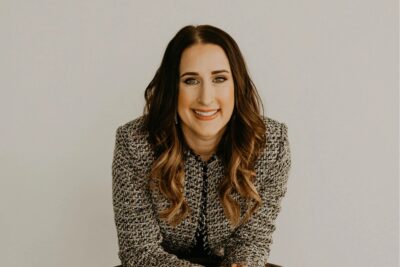
This is the full transcript for Episode #351 of the Wild Business Growth podcast featuring Fran Maier – BabyQuip, Match.com. You can listen to the interview and learn more here. Please note: this transcript is not 100% accurate.
00:00
Oh man, I can’t tell it in public.
00:19
Hiya, hello, welcome. Did that sound like my voice was AI? It’s not. Welcome back to Wild Business Growth. This is your place to hear from a new wild entrepreneur every single Wednesday morning, turning wild ideas to wild growth. I’m Max Branstetter of MaxPodcasting, and this is episode 351, area 351. Today’s guest is Fran Maier, the Founder & CEO of BabyQuip.
00:49
the number one baby gear rental service for traveling families. was also the Co-founder of Match.com, which in the 90s was the first online dating site. In this episode, we talk how Fran makes these seemingly complex, crazy complicated businesses as simple as possible, how to get really, really, really, really good at defining your target customer, and a little taste
01:19
of New Mexico. It is San Fran… Cisco. Enjoy the show!
01:33
Already we are here with Fran Maier, who’s done many, many things in the business world, but most recently founder, CEO of BabyQuip. Awesome. Close to home company as a new parent. Oh, right. Yeah. Yeah. So really, really excited to talk with you all things that and beyond today. Fran, thank you so much for joining. How are doing today? Great. Great. Better now that I know you’re a customer. Or are you a customer? We can’t say this on the record. I’ll say, okay. Yeah, we’ll say it on the record.
02:03
Not yet, but that’s because I just discovered your company. I think it would change how we do all our vacations, so we’ll have to try you out next time. Okay, for sure. I’ll send you a promo. Thank you. Appreciate that. Before Babyquip, have to start with match.com. I’m someone who…
02:23
funny to say growing up. I knew about Match.com and match group forever. when I moved to New York City was really the first time I’d use dating apps. And you know, there was all the like Tinder and Bumble and hinge. And I know many of those are still popular today. But I can’t imagine working on like the first ever dating site back in the 90s. Can you take us to like the the weird looks and laughs and questions you got in 1994? Oh, my God. Well, I can now we’re inventing a new category, right?
02:49
So we called it online matchmaking, and eventually it became online dating. And by the way, back in the mid-90s, we weren’t talking about dating on the apps, right? Apps weren’t even a thing. In fact, we had to, I’m not sure if you’ll get it, we had to deal with a 14-4 in a 28-8 environment. Do you know what I’m talking about?
03:18
Is that Pixel? That’s Pixels? No, it was Baud rate. Most people were dialing up. So, you know, a few things that if you really try and put yourself back into 1995 and were you born yet? I was, yes, I was 92. So I was not quite ready to date yet, but no, not quite. Right. So, and you weren’t a match.com baby. Nope. So back then most people didn’t have digital cameras.
03:47
because most people were doing dial-up, we had to have very light graphics. We didn’t have photos, okay? We only asked five questions when we first went out because we wanted to maximize the chances that somebody would match, but also, you know, we didn’t have a whole lot of room to ask a whole lot of questions. And a lot of the questions had to do with, you know, how you looked, right? Now, I’m famous for this. I’ll share it with you now.
04:17
Have you ever had to put your weight in pounds on a dating app? No, no, I’m sure that could cause all sorts of issues. That’s because of me. Okay. I mean, we knew that we want to target women and by targeting women, I knew that asking the weight question was a non-starter. That’s brilliant. That’s it. Well, you look at like
04:43
hinge today and some of these apps have gotten so good with conversation starters. Can you imagine if there was a line there? So how much do you weigh? Share your body metrics. Yeah, yeah, exactly. So we did body type, which did well enough. And some have suggested I shouldn’t have asked about men’s height, that that is a very sensitive thing, but I could only do what I could do. We also came up with a membership model. Now to be clear, there were a lot of online personals.
05:12
back in 1990, but they just followed what the newspapers were doing. And they didn’t have funding and they weren’t targeting women and they didn’t have somebody like me with a marketing background. So we very quickly became the number one. We were also so efficient that, and again, we were so early, which is sometimes a problem when you’re too early in a market. I had to show that all my advertising spend paid out.
05:42
Can you imagine for a social network essentially that’s based on having critical mass that I had to pay out all my ad spend? And guess what? We did. You’ve got this look on your face like what? Well, I have so many, I mean, we could do like hours and hours about this chapter of And we gotta talk about baby- Yeah, a little bit, no. Yeah, we will.
06:11
It’s fascinating to me like, like you were so far ahead of the curve. Like, like when I was using dating apps in like the mid 2010s, like, I had started using them when I lived in New York City, because that was like, it started to feel mainstream there. And before that, I was kind of like, it’s like a little strange, I don’t know. And now it’s like we get to the point. like, my wife and I met at a wedding. And now when we meet people, and they’re like, how do you meet? They’re like, oh, wow, you met the old school way.
06:38
You met the traditional way. Like now it’s so common to meet your partner on apps like this. It really did start to change with match in 1995. And now I mean, I hear about the blowback against the apps and people hate them and so on. And I have two sons who are still single and they, I know they go on and off the apps and I’m single and I go on and off the apps. And it’s just kind of the way it’s done nowadays. I mean,
07:08
Batch was accused, or online dating has been accused of increasing polarization, increasing income inequality, because fundamentally, with the apps, you tend to meet somebody who’s more like you in terms of their socioeconomic education and political status. I mean, that’s the truth. And maybe that makes for better marriages. I don’t know. I haven’t seen that research yet.
07:38
I would bet that there’s such a wide range. Some people are very similar to each other in all those things and make a great match. And then other times it’s the true opposites attract. There’s a whole world there. either way, you’ve been a big help in helping find love for so many. You’ve literally created families and generations that would not exist if not for your technology. So that’s got to be pretty rewarding. Yeah, it has been. Let’s go from
08:06
couples and marriages to babies. So real natural, you know, skipped a few steps, but natural career arc there. I think there was 20 years in between. Just skipped a couple decades. But yeah, I really, really want to talk about baby quit because this is something that when I found out about your company, it was such like a relief just thinking about it because you know, at the time of this recording, our daughter Jamie is about eight and a half months old. And, you know, we thought it was important to get some travels under a belt with her.
08:36
early on, so we’ve done some trips to visit the grandparents in Florida and some weddings. So we’ve done a few flights with her back and forth and the biggest stressor when traveling and my wife Dana is unbelievable with this, getting together the list of packing of all her clothes, of the strollers and pack and play and diapers and all that stuff. And it’s just such an endless list that it literally, when you become new parents, doubles or triples your time to prepare for anything.
09:06
And so when I heard that you can rent baby gear, I was like, where has this been my whole life? Which, you know, it has been around, I just was an idiot. So it’s a brilliant idea. how did you come up with this solution in the first place? The truth is I’ve been entrepreneur in many companies. I never have come up with the idea itself. I’ve been the one to say, oh, that’s a good idea and I can do something with it. So Match was…
09:36
a friend of mine from business school and he bought a bunch of URLs and started a classified advertising business of which Persoles was one. And then I was at TrustArk and that was privacy certification. I came in and I turned up from nonprofit to for-profit. again, wasn’t really my idea, but I was living in San Francisco. I had just left my last company. I had bought a house.
10:04
up the street from Airbnb and was renting rooms in my house. It started out as a lark on Airbnb. I’d even tell people I was embarrassed. All of a sudden though, I’m getting insight into this way that people are traveling. And I’m also getting insight into what it’s like to be a gig economy person and a host. And I started to think about what are the businesses that are going to evolve? And at that point, 2013, 2014,
10:33
You’re seeing property management companies and cleaning companies. And I happen to be advising a place called Women’s Startup Lab, kind of a pre-accelerator for entrepreneurs. And a gal from Santa Fe, which is my hometown, came to Women’s Startup Lab. So I said, yeah, I definitely need to talk to her. And she had the Baby Gear rental business. And it was called Baby Erge. And she…
11:02
started to talk about it. And before she finished her pitch, I said, well, I should be your CEO. And we joined forces and launched the company in 2016. And she left in 2017. Startups aren’t for everybody. My son Joe, who had spent five years at Accenture doing technology, he came in and became the CTO. So that’s how it started. But do you ever watch American Idol?
11:32
I used to growing up, my brother and mom were big fans of it. So I know the early years, all those big names. All right, that’s fine. And you know how sometimes they’d say good song choice for you or bad song choice. This was good song choice. I I looked at Baby Gear Rental for traveling families. I was like, hey, it’s a marketplace. It’s early stage. It’s going to depend on building a really trusted brand, which is really, again, what sort of
12:01
set match.com apart was, you know, we really thought through dating safety and what women wanted. And those were the kinds of things that would make Babyquip a big success. Well, kudos to you for seeing this as a giant opportunity and not a giant, well, maybe you saw it as a giant challenge too, but like an achievable challenge because I think.
12:25
So many of us out there would see this and be like, oh, that’s an awesome idea. But like, I don’t want to deal with the logistics and all that behind the scenes and creating a market and sharing economy in that world. So like, seems incredibly complicated. How have you, I guess, simplified the whole concept as best as possible on the backend? First of all, and I say this to entrepreneurs all the time, you can get very, very overwhelmed by everything that has to happen. And
12:53
The key thing is don’t worry about tomorrow’s problem today. And when we first started out, okay, for me, because I knew I’d have to put some money into it, not to mention time, I want to see how hard was it to get supply and how hard was it to get demand? Simple question. So let’s open a few markets. Let’s see what happens. It sort of reminds me as when I was a kid, I throw the ball down.
13:21
the playground and see what would happen. Ball business, same thing, yeah. Yeah, same thing, right? Just see what would happen. And what we found is there was pent up demand. As soon as we put supply in a market, there was pent up demand. I think the other thing that we recognize is moms were looking for gig economy jobs they could do with their kids. Okay. And that used their particular skill set.
13:50
At the beginning, getting supply was a big challenge, but over time, we kind of figured out what they needed, what they needed in the back end, what controls they needed. Basically, they have to be able to manage their calendar and manage their area and be able to adjust their inventory. One of the early hacks that we have, we still have it, so it’s not had, was we pay our quality providers, these are the people who own the baby care. Let me back up.
14:19
We’re a gig economy marketplace. So we have independent contractors who we call quality providers. And they are the ones who own the baby gear, deliver it, pick it up, clean it, et cetera. They are mostly moms. And this job, they could start with the gear they already have, but over time they build up their inventory. And the more inventory you have, the more orders you’re going to have because you could supply.
14:48
the demand. So we knew that that was going to be an issue and one of the things that we put in place early, early on, in fact, Kerry, the co-founder, came up with the idea was pay them right away.
15:03
Don’t wait until the order is complete. Pay them right away. There’s a little risk that they could take the money and run. But guess what? Moms don’t do that, okay? And that way they have the capital to go buy the gear. Now, that works for a lot of the gear. Maybe doesn’t work for a full-size crib or something fancy like a snu. But, you know, within a day or two, you can go to Target or Walmart or Amazon.
15:31
and get whatever you need. So that was a little growth hack that we had at the very beginning. No question. You have to have that. Like you have to take care of your people. And especially when it’s like people that aren’t tech. mean, I don’t know what the employment status, how that technically works out, but like those who contribute in terms of, and are thinking of it as more of like a gig thing. That’s really nice to know that they, I mean, they have that guaranteed money right away. How about on the, as far as how do you like.
16:02
physically, well, I guess hypothetically online created this gig economy. So like, how’d you go out and pitch these moms, if you will, on this could be a great opportunity for you. Especially at the beginning, most of them came because they were customers. And so they thought, hey, this is a good experience. I can make this work. And Niels would say they’d be traveling to let’s say Los Angeles, but they’d be traveling from somewhere else. So.
16:31
At the beginning, our map of where we had markets was all over the place. And I remember a bunch of VCs telling me, or you should just focus on one market and get it right. I’m like, no, we’re a travel brand. We’ve got to go wherever people are traveling. And guess what? People travel all over. I mean, we’re recording during the shutdown, which may or may not end. May or may not during this recording, we’ll never know.
16:59
Right, right. But right now, a lot of flights have been canceled and all that. It’s killing me. I mean, come on. Right before Thanksgiving, this is really kind of a bummer. But I mean, we’ll have a fine year. But the point I’m making is people travel all over in this country. I mean, I remember early on, we saw that we had like a storm of orders in Eastern Washington state. I’m like, what’s in Eastern Washington state?
17:30
never heard of this place, you know, sure enough, there’s this great resort, people go there all the time. And, you know, there’s places like that all over the place, middle of Oklahoma, certainly in New Mexico. It’s kind of funny. And of course, the big markets, Hawaii, Los Angeles, New York, Florida, Florida, Florida, really big. business is like, it reminds me back in business school of like a business we’d analyze as a case study, because like you have, you have like a
17:59
gold solution. But there’s a lot of parts involved in making it work. I think it’s like, there’s some awesome different routes you could go down in terms of like, do you keep it independent for, you know, the people that contribute to the equipment? Do you partner with others? And I know you guys have had a partnership with, I think I’m saying it right, VRBO. It’s not Verbo.
18:21
No, they say Verbo. Oh, they do. OK, see, I heard on a different podcast, VRBO, I always thought it was Verbo. So I just made myself look like an idiot. Well, it used to be VRBO. Oh, OK. Well, now I’m just further making myself look like an IDIOT. Yes. So for the very beginning, I wanted to have hospitality partnerships. But I also knew that we would have to get to a certain point in our brand development, in our reach, in our capacity before we really could do that.
18:51
And I’ve heard of so many startups like, we’re going to get the partnership and that’s how we’re going to grow. And it’s like, no, no, no, no, no. You got to build a brand, you got to build some customers. I mean, by the time we signed the deal with Virbo, we were in 20,000 plus zip codes. We covered all the markets that they needed us to cover. We had a mature trust and safety program. You know, we had liability insurance.
19:20
We had background checks. We had inventory management so we could pull recall. You know, we didn’t have those things six, seven years ago, right? I mean, and those things are also critical to a partnership, right? So it takes a while, but at this point too, especially for marketplace businesses, we absolutely dominate the category. And it would be very hard for anybody to come in and build a supply.
19:48
and build the Trust the Safety program and build the breadth of offerings that we have now. It’s kind of exciting to be sitting here in a catbird seat. It is. I keep wondering, like the terms cleanliness and safety have come up and so I want to explore that route a little bit because I was wondering like, you know, like as new parents, like you want everything your baby touches to be as clean as possible. You want everything they look at to be as clean as possible.
20:18
Yeah, now get it. There’s a couple dates I want to bring up that we actually that are kind of crazy dates. One today at the time of this recording is my wife and I’s anniversary. So love you, Dana. Okay. But I was just thinking of that because the date that you were on Shark Tank with baby quip was actually my birthday. March 6 2020. Yep, not my birth year, but birthday. And that was of course, crazy, crazy timing because you were on Shark Tank and then like
20:47
the world, the Western world as we knew it shut down like right after that. So how did that whole experience like impact how you guys view cleanliness and sanitation and kind of keeping that top of mind with customers? Yeah, so on that from the very beginning, like I said, I knew trust was important to match. I knew trust and safety was going to be important to babyquip. And we developed cleanliness standards and got during the pandemic sanitation standards.
21:16
and all of that. But like every marketplace, we have review systems, we have training systems, but when it comes right down to it, Max, these are moms serving other moms. We have served almost 400,000 orders, and I would say it’s well, well less than 1 % have we had issues with cleanliness. And we have a 90 plus net promoter score.
21:46
That’s like world class. Like Apple doesn’t have a 90 net promoter score. Especially, especially with them recalling their new design that didn’t do as well. I guess so. Okay. But you know, maybe one as big as Apple will be hard to have a 90 net promoter score. So we went into Shark Tank, super excited. March is usually a really great time for us because of religious holidays and spring break.
22:13
You know, our quality providers are ready with all this gear. We had told them, get ready. We certainly saw the spike in visits and then we saw the spike in cancellations. And I mean, the cancellations this week are sort of reminiscent of that. of all the flight stuff. Yep. Cause of all the flights. I mean, not nearly as bad. We were eight people now we’re 16, but our business has quadruped. mean, I can’t even remember.
22:42
how much we were doing in 2019 compared to, you know, we’ll do 125,000 orders this year. So we have a lot less to lose, right? We were able to scale back. We really focused on our insurance program during that time period. So was something we could really do. And I had already raised some money through a crowdfunding campaign. I’m doing a crowdfunding campaign, my third one now, in part because our customers love us.
23:11
and they want to contribute. So I had money. We got government money too, which was the first in my career. And by February of 2021, Florida kind of started to have a lot of vacationers and people using BapeClip. I mean, you hear about businesses that have seasonality and are impacted by a lot of things, but I guess I never really realized it until this interview, like how, how, how big of an impact travel and ability to travel has on your business.
23:41
And I think you’re so like your best friend. You’re basically a brand ambassador for every travel advisor and travel company and rental company out there. Cause you guys are, you know, two peas in a pod there. Travel is massive though. I mean, do you realize how big it’s massive? Yeah. What advice do you have for any fellow business owner out there who like, just dealing with the punches, like dealing with some of those macro factors that you can’t control. Right. You can’t control. So control what you can control. Like I said earlier,
24:10
Try not to get waylaid by all the things that could go wrong. Hire really good people who will stick with it through the ups and downs. I mean, looking back, I kind of wish I had spent more time thinking about the impact of seasonality. And I kind of wish I had spent more time thinking about how do you think about market size? Because early on, people thought we were a feature, not a company.
24:39
I think now we’ve taught them that we are a company and we’re going to be expanding into mobility and we’re already doing PET in beach gear. And these things are going to also really, I think, solidify our leadership. And I’m excited about them. If you, you stole the words out of my mouth while looking back, but I always like to ask about how, like, what do what do you think has been
25:07
overall in the lifetime of Babyquip, the biggest single driver of your growth. People love it. They tell us all the time. That’s a terrible thing for the business. I’m just kidding. Yeah. We saved the vacation. We came to the rescue. I hear this all the time, all the time. And then we deliver. We deliver against it. And that Net Promoter Score is basically saying people tell other people about us. Good things all the time.
25:36
And how do you build and trust a brand? I mean, sure, we have influencers that we do partnerships and spend money on advertising and, oh, AI loves us now. AI’s just, we’re all over. And it makes sense, we’re the market leader.
25:53
AIs, get their signal from our SEO and what people say and so on. So, of course, it’s fantastic. I’m not even paying them any money yet. Double, triple underline on that. Okay. So you’ve been, what do they call it? Answer engine optimization. You’ve been doing that well before AI was nearly as big as what it is now.
26:18
Well, speaking of love, I want to dive into a little bit more, some of the kind of compare and contrast some of those businesses, your businesses that we’ve talked about so far, because I think it’s like, obviously, your target customer is so important, no matter what business you’re in. But it’s really, really fascinating that you were, I guess, focused on single people. Like is that what you would say uh the match target customer was?
26:46
Oh, match, no, we were very specific. Yeah, how’d you describe it? We had Joanne. Joanne’s about 28 or 29. Shout out. My mom’s name is Joanne, by the way, so we got a lot in common. Okay. So she probably works in a tech company and she’s still single. And I mean, this is who the target was in 1995, right? And what does Joanne do? Well, yeah, maybe Joanne goes through the bars, but she’s really working hard. She’s trying to build a career.
27:16
How do we make Joanne feel safe using that? Our three brand words back then were safe, anonymous, anonymous is really important, and fun. Put a fun factor into it too. And for baby quip, it’s millennial parents, probably working, new babies, want to have those disgrunt moments, want to travel, it’s important to them, they really value convenience.
27:46
Do you guys have a name? Is there a name like a Joanne for this age? No, I could have made one up right now. What’s your last name? Branstetter, just call it Branstetter. know, Flo is as a first name. And we have a secondary target for big grandparents. Oh yeah? Grandparents are maybe 20, 25 % of the business. Well, my mom, Joanne, and I quote, she’s like, I just want to buy stuff for her. Like they want to buy stuff. Oh, I know, there’s that. There is that.
28:16
He’ll get over it by the time she gets to her third grandchild or something like that. That’s really cool. like you guys did, and this is even in, you know, early nineties, you had, you had like a detailed, I guess, exploratory work of who is our avatar, who is our customer like that? What can you share a little bit behind the scenes of like, what’s the process like for getting so exact with that? I had been working at Clorox company in brand management and really, you know, the idea was
28:43
Identify the bullseye and then you’ll get people around that bullseye. You know, we also knew who we’re targeting in terms of, of Max the guy. And I can’t remember his name. Yeah. I think Max is great. You got me here. Yeah. Yeah. You know, the process was really kind of thinking about what is she caring about? What is their journey? How will she even find out about match? I mean, early on in match, we were doing affiliate marketing and
29:11
spam and we were doing all kinds of, we would go, we’d show up to movies. Now for Match, it did make sense to focus on a geographic area. So at first we were the Bay area, so we focused on the Bay area. But it wasn’t long before we were everywhere. It was kind of amazing. Both Match and Babyquip had a real problem that needed to be solved or they solved a real problem rather. Yeah. I think it’s really hard to build a business without that piece there. What?
29:41
is a big difference you’ve noticed so far in working with the Joanne Target customer versus the millennial parent or grandparent for the baby space? Well, I think they’re pretty similar. They’re just a few years older. It’s a good way to put it. And probably a lot more frazzled. I think that since the pandemic, family travel is even more important.
30:10
I think the pandemic really told people that we learned that travel can’t be a nice to have, it’s a must have. Yeah, I completely agree. So I think there’s more intention about travel than when I was a young parent. I also think today’s parents are, and I could tell you’re probably like this, they’re very specific about the kind of gear that they want. Like my kids deal with the pack and play, but…
30:38
Like today’s parents like my child does not sleep well at back of late. I must have a snoo or must have a full-size trip. It depends on the budget for the snoo or some I’m not going to name it but I know someone who’s there’s some big, big, big, big, big, big companies that one of their benefits is giving a snoo for six months to new parents. like, that’s pretty nice. It is a nice perk but takes away from your business though. Yeah. Some families feel like it’s, um,
31:08
addictive and they’re stuck, which is why it’s great that we could offer snooze when families travel because otherwise there’s no way they can move the snooze around. Yeah. Well, for the record, we love the pack and play and that it is fun to evolution from like, you know, bassinet to crib and all that, but pack and play is on vacation have been like a lifesaver. Right. I think the need for sleep on vacation is something that we know new parents really care about.
31:38
Totally. It’s almost like you got essentials on essentials there. We need to have vacations. It’s super important and we need to sleep and we need to sleep on vacations. So this is a really, really important fun area and it’s easy to be energized by the work you’re doing. Yeah, great.
31:54
Let’s switch up with a couple quick, kind of more random goofy segments. This is kind of more to get you know your personality as a founder in and out of the business. So the first one I call the unusual. So quirks, pet peeves, weird talents. Doesn’t have to be tied to the business or any of your businesses at all, weird talents. What is a, you could think of it as like a party trick, something you’re really good at, but it really has no impact on the day to day. Oh man. I can’t, I can’t tell it in public.
32:22
Can you give us a hint? That’s great. Well, I mean, I just sold my last short term vacation rental property since 2012. I’ve been doing vacation rentals and I was super good at it and made lots of money. All my properties did very, very well. I was super host or premier host and I probably was the
32:52
Airbnb whisper to a couple of dozen people. In other words, I help them figure it out for themselves too. So I know that had I not done the internet, that I probably would have been really good at real estate. Cause I have been really good at real estate. Who knew? Right. Yeah. And there’s so many, all these amazing platforms. recently picked up Pickleball. So that’s kind of fun. That’s a good one. I don’t think that’s unusual anymore.
33:20
Now it’s almost as common as dating apps. yeah, right. I should have invested in that. Yeah. No one saw that one coming. All right. How about quirks? What’s something a little quirky about your personality? Maybe your boys, your team, somebody calls you out for, but it’s who you are. Oh, I’m direct as all hell. I tell it like it is and new employees at some point, I’ll offend them somehow. And I have to go back and apologize and say,
33:49
I really wasn’t that angry. I was just pointing out something. Yeah. I forgot about it. I haven’t held this as a, there’s no demerits on you. I have some long time clients, shout out Anna Napero, they, same sort of thing. They say they’re very forthright with their feedback and their direction. And so they literally name their business, forthright people and forthright business, because they’re like, Hey, it’s in the name.
34:16
Right, right, so like almost anything, you embrace it. And I think that probably what I don’t see that other people see about me is I do have a risk profile that extends beyond my startups. I was early on in expanding my vacation rental properties. I do things, buy things. I’ve been known to be called gadget girl, early adopter.
34:45
on all kinds of things. I experiment. Well dating websites slash even, you know, using the internet in 1994, I would say you’re pretty early adopter there. Yeah, but the thing is, it’s not confined to my business. I will do all kinds of things early or just to see. All right. And then what’s a pet peeve you have? Something that just ticks you off a little bit, but in the grand scheme of life, it’s not a big deal. People who are late.
35:15
Yeah, that’s what well, that’s when I always struggle with my wife is always on me for understandably. Yeah, and she’s a teacher. So she’s always early. It’s just an inconsiderate. Oh people who run stop signs. That’s bad. Oh my god. That’s just unsafe. Today. I was so pissed off and then then I was like, I shouldn’t be this angry about it, but I really was pissed. should. Yeah. Okay. I get that way when people don’t use their blinker. It’s like so common when people don’t use their blinker.
35:45
It’s like, oh my God.
35:50
before we offend any other drivers, let’s wrap up with some rapid fire Q and A. This is about all sorts of things. You ready for it? Oh no. Yeah, okay. Okay, and oh no in the same sentence. All right, let’s get wild. So it’s funny you mentioned your time at Clorox and joked that the uh target customer avatar is named Max because I saw that one of the brands you worked on is Hidden Valley Ranch and I am a huge fan of Hidden Valley Ranch. So like you were spot on with the name Max. You should actually use the name Max there, but.
36:19
What’s something about working on Hidden Valley Ranch that is kind of like a little fun fact most people don’t know? Oh gosh, this is going back a long time. All the different kind of varieties of Hidden Valley Ranch. But I have a better one for you. Okay, so I also worked on Kingsford Charcoal, which is mostly the target’s guys. Actually, this is a good story. So…
36:46
We were doing some market research on match light, which is kind of the instant. And what we found out is the guys who bought match light also bought more automatic cameras, did a whole bunch of stuff because they didn’t want to fuck up. No, you could swear. They didn’t want to mess up. OK, that led to a campaign called Just One Light. And we had this like animated figure. It’s pretty fun.
37:15
way back in the early 90s. So that was just a good example of where understanding your target can really make a difference. Ranch and charcoal. Yeah, it’s some fun, fun, fun gigs you had there. I also saw during your time there that you were an ABM assistant brand manager, which I started my career as a assistant brand manager. So I always thought, you know, we talked about it when we got to do some recruiting for them too. And we always talked about how like,
37:41
when you’re an ABM or you’re in brand management, it’s almost like you’re running your own mini business. And, yeah, that was really good experience. So many, you know, ABMs turn out to be entrepreneurs one day. So really, really cool. But in addition to like the avatars and the customer insights that you shared, what’s something that you learn like a skill from being an ABM that you still use today? Oh, I think it’s the discipline about target and unique, you know, who’s your target and the unique selling proposition. And,
38:10
all the different ways that you can really get to people. But between Clorox and Match, I did a stint at AAA and I was brand manager of membership for AAA in Northern California. And boy, did I learn membership and direct mail. And that turned out to be pretty good in the internet days too. Oh, totally. I mean, my parents started a business, family business, the year I was born, they still are rocking today, Hippo Direct that.
38:38
was started like on the foundation of direct mail and mailing lists. And then they evolved to add in, know, email lists as well. But there’s something about that, you know, now you’d call it traditional marketing that is still so powerful. Great insight. There’s a lot of emphasis on having, you know, technical skills, programming, et cetera. But a good marketing background is always valuable. Always. All right. So you mentioned Santa Fe, which your front, you know, hometown
39:08
which I wrote in my notes is SF and then you mentioned that you live in San Francisco too. So I don’t know which SF in my notes is which SF, but what is the, what’s the best thing to do as a visitor or a tourist to Santa Fe besides, you know, I’ve heard all about the whole Breaking Bad tourism stuff. Well, that’s Albuquerque. Yeah, but there’s some stuff in Santa Fe too I’ve heard. Yeah, no. I don’t think, I don’t think Breaking Bad or Better Call Saul, they make Santa Fe look very chic. It is.
39:37
a little bit more than it actually is. It depends on who you are. I think if you’re into outdoors, there’s world-class mountain biking, hiking, skiing to go to town, but San Francisco has a nice little mountain too. I think people think of it as a desert town and confuse New Mexico and Arizona, and it’s like, they are so different. Don’t even do that. I mean, that’s a pet peeve. I get crazy when people think New Mexico’s Arizona.
40:05
I’m sitting here at 7400 Elevation. Four seasons in May snow this weekend. Kind of exciting. So there’s that. I would be out of breath just talking. Yeah, right. oh The other thing that I think people very much enjoy is just the art. And it’s not just Southwestern art. It’s all kinds of art. But there’s a lot of Southwestern art, but it’s very beautiful. And a very unique cuisine that is not Tex-Max, not Cali-Max. It’s its own thing.
40:35
What’s the best dish that’s like unique to the area? Oh, God. Well, an enchilada, but a New Mexico enchilada often ordered Christmas style, which means half red chili and half green chili. Oh, I love that. That’s an insider. All right. And then last one, really hard hitting one. What do you miss most about dial-up internet?
40:58
Oh God, I don’t. Nothing. You don’t miss the… The tone? No, no man. At least we’ve gotten a little speedier in that aspect. Let me just tell you, I love ubiquitous high-speed wireless internet. Yes, give it to me all day long. Well Fran, thank you so much. Just really appreciate your time and the businesses that you’ve created and are creating over the years and problems you’re solving. So thanks for helping out all the Max’s and Joann’s and…
41:27
Oh, the other avatars out there. So really appreciate you coming on. know if people want to check out Babyquip, they can do so at babyquip.com. That’s baby q-u-i-p dot com, which I think I spelled something right for once. And where’s the best place if they want to connect with you online, Fran or anywhere else you want to shout out? Oh, they could find me on LinkedIn. Fran Meyer, M-A-I-E-R. Perfect. Awesome. Last thing. Stage is yours. It’s just final thoughts. It could be a quote or words to live by.
41:55
Whatever you want, take us home here. Live well.
42:02
I promise I am not eating anything during this outro. But you never know. Thank you so much, Fran, for coming on Wild Business Growth, sharing your wild story, wild stories, and all you do. And thank you, Wild Listeners, for tuning into another episode. If you want to hear more wild stories like this one, make sure to follow or subscribe to Wild Business Growth on your favorite podcast listening app. Or watch on YouTube. YouTube is @MaxBranstetter You can subscribe there.
42:28
You can learn all things Max Podcasting, the podcasting to the Max newsletter, anything else about the podcast at MaxPodcasting.com. And until next time, Let your business Run Wild…Bring on the Bongos!!
Related Posts
Rob Mattson – Wild Business Growth Podcast #360: Walking the Earth, Aircraft Carriers, 2ndLap Podcast
Kat Cole – Wild Business Growth Podcast #359: AG1 CEO, Cinnabon President, Hooters Girl