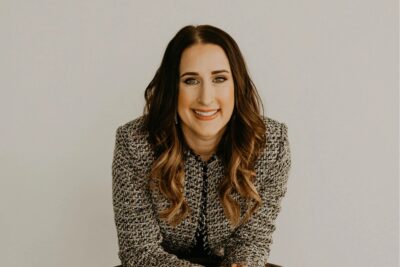
This is the full transcript for Episode #329 of the Wild Business Growth podcast featuring Shraysi Tandon – Kidsy Founder, Discounted Baby & Kids Gear. You can listen to the interview and learn more here. Please note: this transcript is not 100% accurate.
Shraysi Tandon 0:00
Everything you want is on the other side of fear.
Max Branstetter 0:17
How are ya? Welcome back to Wild Business Growth. This is your place for wild entrepreneurs every Wednesday morning, turning wild ideas into wild growth. I’m your host. Max Branstetter, founder and Podcast Producer at MaxPodcasting, and that is . And this is episode 329, today’s guest is Shraysi Tandon, the founder and CEO of Kidsy. You can think of them as the TJ Maxx of kids gear and baby gear. In this episode, we talk how Shraysi and team have been able to put together a company that offers amazing prices, while also helping out the environment. We also talk some fascinating stories from Shraysi’s time as a journalist, TV reporter and filmmaker, director, and even how to quiet a crying baby. It is Shraysi from Kidsy, Enjoyyyy the showwwww!
Aaaaalrightyyyyyyy we are here with Shraysi Tandon, the founder and CEO of Kidsy, something super duper, super close to home, having a kidzy in the house now see what I did there. But Tracy, absolutely love what you’re doing with your business. So excited to dive into it today. But thank you so much for joining this is actually the first interview recorded since we welcomed our daughter, Jamie into the world. So welcome. Thanks for joining
Shraysi Tandon 1:58
us today, and welcome Jamie. Thank you.
Max Branstetter 2:02
Thank you. Thank you so much. You know she’ll listen to this at some point, but before we get to kidsy, I saw in your background that you know, in addition to all your time on TV and reporting, from that standpoint, you also have a background in filmmaking and invisible hands, really, really powerful film that you put together and directed, what inspired you to dive into that topic in the first place?
Shraysi Tandon 2:28
Oh, gosh, I am one of those people that when I get obsessed about a subject or anything, I have to just I’m compelled to go deeper and with invisible hands. It was really through my work as a reporter and a journalist, I had coincidentally interviewed a Nobel Peace Prize winner whose name is Kailash Satyarthi. He famously shared his Nobel Peace Prize win with Malala Yousafzai of Pakistan. She got a ton of press. She’s got a phenomenal PR machine behind her, and he sort of is less so aggressive in the PR world. But nonetheless, I thought the work that he did was really inspiring, which is he had rescued 80,000 children from child trafficking and child slavery and child labor, predominantly in India, where I’m originally from. I was born in India, but his work was all across South Asia. As I was researching for my interview with him, I had one of those moments where I just kept getting goosebumps and chills all over my body. I was seeing some raw footage that he had put out into the world. I was sort of like tearing up, and I just could not wait for this interview to happen. We were doing it at the United Nations, and I’ve interviewed a lot of people in my life, like we would be on the floor picking up names if I were to just start rattling them out, you know. But I was just so incredibly excited for this interview like none other before, and I knew there was something there, like, what was it that was driving this like, wild excitement, and as I spent time with him after the interview wrapped and learning more, I just felt really compelled to do a logger piece, something that went beyond just five minutes. So those were like the early days of invisible hands brewing in my brain. Invisible
Max Branstetter 4:17
hands brewing in my brain sounds like a sequel, so that’s part two for you, but
Shraysi Tandon 4:22
you’ll produce it. I’m up for it, but
Max Branstetter 4:26
really powerful topic, and you hear that a lot, just like in the creative world in general, of like, that’s how movies and films and books and podcasts and, you know, videos get made, is like, when something really, like, grabs you by the heart and it’s just like, hey, I’m speaking to you. Can you make something of me? So that’s really inspiring. But more on the like behind the scenes there, what was involved for you? Going from like this is a really compelling something that’s calling me to actually going ahead and direct. Doing it.
Shraysi Tandon 5:00
Gosh, you know, there’s something to be said about the beauty of naivete. And sometimes the more ignorant you are, and the less you know I feel like, the better prepared you are actually to go do it. Because had I known when I started making the film, all the hoops and hurdles I would have to jump over, and all the things that needed to happen in order for this to come to life, I probably would have stopped dead in my tracks and really taken a good hard look at my life, and then maybe have never made it. But I think the ignorance and the naivete, which I think is also very true for the startup world, but we can get to that later, is really what I think is like the magic potion that so many people need. And it was a lot of pieces coming together, building a team, raising money for the film, which at that point we hadn’t even shot even any footage, and it was really sharing that vision and aligning people around and sort of rallying and getting a lot of permissions. And then we filmed in six countries around the world. And so at the peak of filmmaking, I was managing like 30 people across five six time zones, which was pretty wild. And so it was just a multitude of a million pieces coming together, but just knowing like which ones you had to do at what point in
Max Branstetter 6:18
the game. That’s a phenomenal Crash Course for entrepreneurship, which Crash Course for entrepreneurship? A lot, I threw in four extra H’s there. By the way, you, you’ve mentioned the word just impromptu. You’ve mentioned the word wild twice. So like you were, you were born to be on this podcast. So thank you. Yes, you know, before we get to your inspiring business story, this is gonna really, you know, kill the mood. But I have to ask, like, what? What’s one of the most just kind of shocking or unbelievable things that you learned about, you know, child labor, child trafficking, through, through that film, such
Shraysi Tandon 6:54
a great question. No one’s ever asked me that many shocking pieces throughout the course of, like, the four years I was doing it, I would say the biggest one is how complicit politicians and government agencies are in the allowing of the human rights abuses to take place. Because a lot of the times, they are contending against really big, powerful corporations who have trafficked children and enslaved children working in their supply chains. You have to understand, some of these companies, their market valuation is greater than even the GDP of the countries that they’re operating inside. So there’s tremendous power plays at work there, and it’s the government agencies really turning a blind eye. So it goes back to a lot of the onus falling on the companies as opposed to the governments, but just looking at how intertwined and complicit that web was, I think, was like the most shocking part for me.
Max Branstetter 8:01
So let’s talk about a shockingly cool and good company that was a wonderful segue. Thank you. Let’s talk kidsy, so obviously, like you’ve covered a wide range of topics in your background, and you know some scary and some hard to learn about, you also get to kind of this world now of baby products and baby toys like such a happy, positive, inspiring world to be in. So let’s talk all things kidzy, which love the name, by the way, it’s just super like bounces off the tongue. For anybody who’s not familiar, I would say kidsy is pretty different than any other baby toy or baby product company out there, do you have, like, a one liner of, like, what makes you different? Yeah,
Shraysi Tandon 8:45
absolutely. I mean, the one liner that everybody would resonate with and know instantly is what we’re building, is the TJ Maxx of the baby and kids world. And it’s actually a moniker that’s been given to us by a really large media Juggernaut, the motherly they actually called us that and and we’ve kind of been running with it because it’s such a great way to sum up, you know, reverse logistics, returns, liquidation, supply chain, and all of those pieces into like, just one bite size. But it’s a discount open box, excess inventory platform. Yeah, it’s
Max Branstetter 9:21
a phenomenal nickname, TJ Maxx that it includes a lot in as opposed to listing out all those long words, which I already forgot. But so really, really cool and unique company. How did you stumble into the like baby product space in the first place? It actually goes back to
Shraysi Tandon 9:37
my film. So when I was filming invisible hands, I would sign NDAs with some warehouses and farms and various like whether it was agricultural companies or clothing companies and so on and so forth. And I would go and visit their factories and their warehouses and their farmlands all across the world, including the United States, and in one of the warehouses that I visited was. We were there to sort of understand, like the supply chain mechanisms and their labor force and workforce. And I had seen pallets and pallets of product that were at the side of the warehouse. It looked brand spanking new, collecting dust, and it had a huge label across of it that said destroy. And so I just sort of it just caught my eye. And I asked the manager, what is that? And he said, Oh, those are our customer returns. And I said, okay, but it looks brand new. He goes, Yeah, maybe some of them are. And so what does destroy mean? He said, Well, it’s going to the landfill. I was like, what? He’s like, Yeah, that’s where most customer returns in this country go. And all of a sudden we were not talking about child labor. We were now talking about returns and excess inventory. And I left that meeting like still having a film to shoot and edit, but could not stop thinking about this thing that I had just seen, and I just started randomly searching and Googling, like, what is this returns crisis in the United States? Like, does inventory really go to landfill? And I’ve always known that, like, fashion is famous for wastage. And you know, you hear about, like, designers burning clothes, so on and so forth, because that’s a really sexy headline, like people want to click onto, like, you know, a Ralph Lauren or Zara or Valentino, potentially, like, not saying that they do it, but, you know, that’s a much more sexier headline to click into, rather than reading about, like, washing machines and strollers getting burnt. But it was one of those nuggets that never left me, and after filmmaking wrapped, I kind of went through the same journey again, like as a human like that, I went through with my film, and, you know, with that, before that, with my journalism career, where I couldn’t stop thinking about this thing, and I was just fascinated. And like, you know, and one of the things you get trained very early on, to do as a journalist is to dig really deep. Start investigating. You become very curious. Investigative. You start interviewing. You start poking around. We’re very nosy, curious people as humans, again, like never did anything about it. It just always stayed in the back of my mind until I became pregnant with my daughter. And as you as you know, you know from just recently, having had Jamie. You know, my daughter also starts with Jay Jayna. I was sort of pregnant with her. I was shopping for her, and I was like, holy moly, I need to acquire like, 200 items for her in the first year of her life, and she’s gonna outgrow everything by year two. Let me think of a really smart way of doing this. And so I called one of the warehouses. And I said, Do you have any strollers that are customer returns that you’re going to destroy or send to landfill? And they said yes. And I said, Well, I’d be interested in purchasing it from you. And they said, well, we can’t sell you the one, but we’ll sell you the 200 so those were the early days. Wow. Kids see,
Max Branstetter 13:01
well, shout out Jaina and Jamie future BFFs, all the J names. But what amazing way to start a business. Like, the roots of of entrepreneurship is just like, like, asking questions that nobody asked about, like, what can I do something with that? Sure enough, it worked out great that like, Hey, you can do this in bulk. What a way to start a business? What were the steps to bring it from like, that initial bulk order to like, you know, creating a brand, and turn this into a real company? A
Shraysi Tandon 13:35
lot of little, little, little, little steps, right? And I think baby the first thing was baby steps, right? Baby Steps to a hopefully a behemoth of a baby company, but the little steps were just trying to understand what was the supply side going to look like, and then what was the demand side going to look like? And then, how could I bring those two together, trying to understand like, is the supply side really strong and healthy is the demand side really strong and healthy could the scale? How big is the market? And then really starting off, I guess, to give someone who’s listening more tangible advice is do what you dream of doing at like the billion, 2 billion, $3 billion scale, but shrink it down to what it would look like at just $100 scale. And how do you execute on that $100 vision? And so can you take one open box, liquidated product, bring it in house, and sell it to a customer that’s looking for it. And then, now, can you do two of those and three of those and 10 of those. Now, what if you tried another category? Can you do 2345, and you try another category, and then you start kind of, that’s like the very early days of, you know, I mean, they call it the MVP, minimum viable product. That’s really what the MVP looks like. It’s like, how do you think of, like, the biggest vision of this? And just. Shrink it down into somewhat of like first principles.
Max Branstetter 15:03
My brain is ruined on MVP because the show Silicon Valley, I want to say it was the pilot was called MVP, which is a clever name for, like a startup show pilot. But I always think of that show when somebody says MVP, now, not even the like Kevin Durant meme. It’s a great analogy there. Dream big, but shrink it down at the same time. Shout out, Honey, I Shrunk the Kids. When you look at your business, as you were saying, similar to your, you know, the documentary, like you’re managing so many different parts, or so many, you know, people in relationships involved. How did you even start doing that for kidsy, like, who was, of all the people in the in the Kidz sphere, who was most important to start establishing and building relationships with, it
Shraysi Tandon 15:50
would have to be the supply side. Because, unlike other consumer companies, where you’re actually, you know, designing the product and then doing the r, d and then engineering it, manufacturing it, developing it for us. It was, in some ways, very much like a marketplace, right where we don’t create the inventory, but we source the inventory, and then we connect the inventory to the customers. Kidsey, of course, holds the inventory. So in that sense, we operate like, very much like a true blue consumer company where, you know, we buy it and it’s ours, but just ensuring, like you have product. And the way I sort of, I guess, whittle it down is, you know, if you think about if you’re building an online store, nobody wants to walk into an empty store. And so how do you start like populating that, that store with products and also an experience that really resonates with people and adds value. What
Max Branstetter 16:46
incentive is there for, like, all these different retailers or manufacturers to offer something to you that is ultimately sold at a discounted price, versus kind of going the more their more direct route? A
Shraysi Tandon 17:00
lot of retailers and brands actually do not restock customer returns and excess inventory. And the reason they don’t do that is because the way their business model and their supply chains are built out is really for their full price products. And so when an item comes back, like so many times, customers would go drop off an item you know to be returned to Amazon or to Kohl’s or to Walmart, and they just simply just drop it off in a mailbox or at a customer service queue, without really thinking about all the different steps and the journey of that return product. But it essentially hits about six or seven touch points as it makes its way back into the store shelf, and every touch point is associated with $1 amount. So by the time it’s ready to be restocked, it’s about 65 to 75% of the retail cost for any brand or retailer to restock the product. So just on a mathematical sense, it doesn’t make sense for them to do it. That’s number one. So it’s just sort of like on a pure like cost to revenue basis. It’s nonsensical. The second point is that it also is very cannibalistic to their full price business model. Here you are as a brand, as a consumer company that is constantly developing and putting out new products, new fashions, new lines, new styles, and you really just can’t have a whole line of products that were last season or last year, or a line that you’re phasing out, or customer returns that are open box or damage box live side by side to your full price model. And so there has to be another path for it. And so traditionally, a lot of these products would often end up in the landfill, or they would be broken down for parts and recycled, or they would be put in incinerators, and, you know, they would generate electricity out of out of the incinerated product, and then other times, they would be shipped and sold internationally. But sort of the the pathway for most of it was, was landfill. And so now what we’re doing is we’re rerouting it and giving it a second life. And 80% of everything we sell is actually brand new.
Max Branstetter 19:04
My wife, Dana, is the one who introduced me to Kidsy. And it was it was perfect, because way back when Jamie was two months old, now she’s three and a half months old, we went to Florida for a month and spent the month with all the grandparents, a lot on, you know, Dana’s parents side. And then we went over and saw my parents, and it was, I mean, it was the best time, and it was just amazing to be down there with, you know, our new grand. I mean, well, our new daughter, but their new granddaughter. But as part of it, what we realized is like, oh my god, we the grandparents are gonna need to order, like so much baby supplies and toys and stuff to to make it not quite baby proof, but baby livable, I guess, especially newborn livable. And Dana pointed out that, like they found this website, kidsy, where you can get, like, you know, like a bassinet, for example, we got, you know, on both sides, and it was, I don’t know, one or 200 bucks less than. Uh, if you were just to do everything at, you know, face value, at a different provider, and it was, it was either brand new or, like, it was on a, like, a show showroom floor, and had never been used before. And like, this is just absolutely brilliant. So we were so happy with the quality, you so happy with the price. It was perfect for that. And obviously, so many use cases as well. But word of mouth is obviously huge, but overall, like marketing is such a an important part, but also challenging part for so many brands out there. First off, Where did the name kids, you come
Shraysi Tandon 20:30
from? It is such a boring story, and so are inspiring. I’m just kidding. No, I can tell you. So I was thinking about a name for a while, and I had a couple of names that kept coming to me. But the way kids, he made it on the shortlist and on the running is I was thinking about a name, and I kept coming back to like, for some reason, Ka and K and kids. And I was like, How do I incorporate this as to kids? Because I don’t want it to be baby and I don’t want it to be children or toddler like, I don’t want it to define it by any age. I just wanted it to be, like, all encompassing kids. And children sounded too stuffy and too like very old school English. And I saw, I was, like, watching something on YouTube, I think a podcast or something, and I saw an ad for Etsy. I said, Oh, Etsy, that’s cute. I love how short it is, how it’s like two syllables, and it has like, the C at the end and the SY at the end. And I was like, what if it’s like, Kid Z, like Etsy, but kid Z, that’s how we got stuck with I then ran a survey monkey, so I put like, the four names that were in the running. Don’t even ask me what the other ones were. They were all like, just not that great.
Max Branstetter 21:42
We’re gonna need to find that list. Oh my gosh. I’m
Shraysi Tandon 21:44
sure one of my friends has it, and I, like, sent it to like, 50 friends, cousins, family members, people that were either, you know, had children or were about to become parents. And I let everybody vote and kids, he was, by far, like, the top pick.
Max Branstetter 22:00
Yeah, it’s perfect for, like, from the marketing standpoint, it’s so difficult just to do marketing in general. But also, you’re selling products that are not only competing with, you know, so many baby providers out there, but you’re in a really unique situation where you’re like, sometimes it’s the same exact product. What’s been like the main approach from a marketing standpoint, of, you know, developing kidsy as a brand, and actually like getting at So, so people actually pay attention like, hey, this, you know, we’re open for businesses. This is a place where you can buy really good stuff at a great price. I
Shraysi Tandon 22:35
think so much of it in the early days, like kids is not even two years old. It’s our two year anniversary in September of this year, September 2025 so we’ve come a really long way and grown really aggressively in such a short amount of time. And I think the number one thing is like, when you are launching a new company or new brand into the world, it’s like, how do you build trust? And you really do it by making sure that every single customer experience is as flawless and seamless as possible. And then you try to build trust signals and trust cues on queues along the way. So whether it’s like day one signing up to a review platform, because in the early days, you may only have like 1020, 3040, but after some time, like those reviews add up, and then actually sending product as well to some micro influencers in the space who perhaps, maybe you don’t know what their shopping habits are, necessarily or but they have a decent sized audience, and to be able to put product in their hand and say, hey, you know, this is what open box is, and this is how many pounds of like product, you say, from the landfill when you shop on Kitsy. So the whole mission around because Kitsy is actually, we’re not just a discount platform. Like, of course, like, cost savings is a huge reason why people come to Kitsy. But also we’re extremely sustainable and environmentally friendly. And so so many shoppers today want to shop from brands that have sustainability at their heart of their mission. If I had a choice between putting my dollars towards a brand who I knew had a very clear sustainability mission, and was, you know, low carbon footprint and environmentally friendly, I would opt to spend my money there. If, even if I had to spend an extra, like couple of bucks, I would put it there rather than if I knew that something was perhaps a little less unsustainable. But the beauty is, is that oftentimes, discount has long been associated with just being terrible for the environment, and I think a lot of that has been propelled by the rise of fast fashion, and sort of the consumption of fast fashion, the use and thorough use and thorough model that we see, I think such a such a joy to be able to like have the word discount and sustainability under the same umbrella? Yeah, it’s
Max Branstetter 24:46
this perfect umbrella. Rihanna would be proud. I hadn’t thought about that till you said it like that is gold that you are doing so much good for the environment. And I’ve heard the term like. Re, commerce, recycling, you’re doing all that good that you’re right. Typically, people are like, Oh, I you know, I would even pay a little bit more for that, and yet you’re still able to provide those prices that are so important, especially for new parents, who are adding so many new costs to their lives. Not to blame the kids, but adding so many new costs to their lives. So it’s a really, really unique angle you have there. And you hinted that skyrocketing growth have you had so far? And congrats on that. Like, that’s super impressive and inspiring. I’ve used the word inspiring a lot. It must be inspiring. But if you had to point to like, one thing besides the trust you’ve built, what’s something that you’ve done that is like, really work well for the business that maybe some other business owners out there can replicate in some form for their growth. I would
Shraysi Tandon 25:47
say it just boils down to one thing, just make sure that what, and it sounds really cliche, but just make sure that what you’re putting out into the world is actually of really great value. That’s the only thing that’s really going to resonate if you’re not providing tremendous value, whether it’s to your supply side or your brand partners, or to your retail partners or to the customers, it’s really, really difficult to continue growing and scaling, because the value that people receive and people feel and people get, they’ll suck the product right out of your hands and right out of your platform. And even in the early days when we had a really, like, shitty MVP, am I sorry? Am I
Max Branstetter 26:32
allowed to? Yeah, we’re explicit, so you can, you can even say the word MVP.
Shraysi Tandon 26:37
So what we had is really shitty MVP. We’re, like, really clunky that people had to jump through all these hoops and hurdles in order to get through the checkout. And the checkout was like, this really ugly page. I remember in the early days, it didn’t matter, because the product that we were offering and the price it was coming at, and the feel good nature of the purchase that was driven by the sustainability, like all of that was such an exciting experience for the customer that they were happy to use this, like, clunky website in the early days, just to yank the product out of our heads. And I think that’s like, the early signal of like people talk about, like, well, what does product market fit? What is bull? I think it’s less about what it is and what it’s more about what it feels like. And that’s what it feels like, is when you can’t list products fast enough, because every time you’re listing something, it’s just selling and you realize, like the customer or the UX experience isn’t even that hot, and yet it’s still working. So I think you know to answer your question like value like, what’s the value add?
Max Branstetter 27:45
I sincerely hope you find this next segment valuable, because I’ve poured my heart into, no, I’m just gonna, we’re gonna switch it up a bit, because, as you know, I love on the show to showcase the, you know, a genuine picture of the founder as a person as well, so both inside and out of the business. And so we’re gonna get to the unusual, which is a pretty usual set. No, it’s all over the place. But basically, this is about showing more your personality, who you are as a person doesn’t have to tie to the business at all. First thing quirks. What’s something a little quirky about your personality that maybe your family, team, somebody calls you out for, but it’s just who you are? Oh
Shraysi Tandon 28:28
my gosh, so many things you
Max Branstetter 28:31
can have it. Find the list of quirks, and we’ll put it up with the list of names that didn’t get chosen for kidsy, gosh, I
Shraysi Tandon 28:38
know that’s a great one. I feel like I’m the butt of all jokes in my family. My family used to always tease me that they thought, if I, you know, if I wasn’t a journalist, I should have become like part of the CIA or FBI. You know, I always like the the investigative work, and if I meet someone, or if I encounter something, or if it’s a topic or a person or a place for some reason. Like, I don’t know what it is about my personality, but I would just like investigate the heck out of it. You know, I think I also would get teased a lot. Like, here’s Miss FBI, like, you know, with her report, and here’s the official badge that you showed up for people. I really should have made one for myself or something, but yeah, and I guess if the journalism thing never worked out, maybe that’s a career path I should have. You know, I could have looked at
Max Branstetter 29:29
all right, how about pet peeves? What’s something that, just like, slightly annoys you a little bit, but in the grand scheme of life, it’s like, not important. Oh, okay,
Shraysi Tandon 29:37
that’s because when you say pet peeves I often think of like the usuals, which is, which, to me, feels really important, like I have no tolerance for people who are rude. Oh,
Max Branstetter 29:52
I love rude people. No, I’m just gonna Yeah, laziness,
Shraysi Tandon 29:56
I think is another one of my pet peeves. Yeah. Yeah, but, okay, that’s consequential. I feel rude, rude and lazy as concept. Okay, I have a good one. You know, toilet paper.
Max Branstetter 30:08
No, what is
Shraysi Tandon 30:11
this magical device that I will send you open box,
Max Branstetter 30:15
please, as long as it’s recycled, yeah, it’s gonna
Shraysi Tandon 30:19
be box customer returned, may or may not be gently used, as
Max Branstetter 30:25
long as it’s gentle. That’s all we’re asking for.
Shraysi Tandon 30:28
The toilet paper. I have this thing where the toilet paper has to go over the roll. Oh, me too. So to pull from over, not under. Yeah,
Max Branstetter 30:37
I’m the same way.
Shraysi Tandon 30:38
And so I would go into like people’s house, even, like people’s houses, I don’t know. And if the toilet paper was the other way around, where you pulled from under I would, I would fix the toilet paper rolls.
Max Branstetter 30:49
Yeah, I’m not saying I’ve done that before, but I’m not saying I have not done that before. I’m totally on the same page as same side of the role as you. And if anybody is a fan of the under which it is pretty common to do the under way as well. You know who you are. There are like, images online for how toilet paper was designed on a roll, and it does come over the top. Granted. Now, I mean, there’s probably like aI images for the other way too, so who knows. But that is, that is a great one. I feel
Shraysi Tandon 31:16
like when they do the personality test, there should be a personality test for, how do you like your toilet paper? Yeah,
Max Branstetter 31:23
exactly. Pull down or pull up, all right. And then what is a weird talent they I call them weird talents, but maybe it’s like a party trick, like something just like you’re really good at, but really it’s not a big deal.
Shraysi Tandon 31:35
I am really good at making babies and children stop crying.
Max Branstetter 31:43
Ooh, can you come baby?
Shraysi Tandon 31:44
Yeah.
Max Branstetter 31:47
What are your tricks? It
Shraysi Tandon 31:48
depends. Like, I often, like, feel out the child in front of me. I also do open heart meditation on the side. And so there’s a way that you can tap into, like, this feeling and this energy that you get without making it sound like too much, woo. But I’m really good at making children stop crying and consoling them, and so when a kid goes from like zero to 100 I can bring them back down to zero pretty quickly. I’m also very good at packing, so I can pack for an entire trip. It doesn’t matter if it’s a weekend, a week or month, in like 1012, minutes, done. Wow.
Max Branstetter 32:22
Can you come babysit and also come help pack please? Yes, those are, those are huge, huge skills to have that that’s awesome. Is there anything like not even considering, like, the meditation side of things, but like, for anybody who not of that, I’m in this bucket, but if anybody’s a new parent and a baby is crying pretty ferociously, inconsolably. Is there anything that you found like works like really quickly.
Shraysi Tandon 32:47
I often think the if it’s an infant, change of scenery. So so many times I see kind of people consoling exactly where they are in the same room, same space, same I often like one quick hack is like, just get up and move and move and change the location. That’s number one. Of course, there’s, like, so many other things, like, you know, are they hungry? Are they tired? Are they sleepy? Do they need to burp? Is the diaper dirty? But like, just the one quick thing that is, like, change the scenery. And I think for the toddler, if it is a meltdown, like, again, it’s six, seven different things you can quickly try, but the one quick thing is oftentimes just validating that feeling and telling them that it’s okay to cry, and actually being in full agreement with them, like, yes, this thing is terrible, and yes, this is awful that you don’t get that second piece of chocolate. And so just kind of meeting them where they are, and allowing them to have that full explosive emotion, oftentimes, will bring them back to base.
Max Branstetter 33:47
That’s super helpful. And people say, like, you need to, you need to rock them, you need to keep them moving. And, you know, we’ve seen that with Jamie, like, if she’s a little fussy or a lot fussy, you know, going out for a walk or carrying her to around the room, or, I guess, a different room. That’s exactly what you’re saying. Change the scenery. So that’s really, really appreciate the advice there, as if you haven’t provided enough, we’re gonna wrap up with another unfortunate No, with another segment. Rapid fire, Q, A, you ready for it? Okay, I’m ready. All right. This is, I’m nervous. This is even more all over the place. Let’s get wild. Okay, your background. As a TV reporter, I’m always fascinated about being on TV. Well, in general, it’s pretty cool. But to being on camera, like being on camera, like TV cameras, or like all the lights and everything, to me, it’s still so different than even if you have, like, a great video production set up for your podcast, for example. Like, what’s a tip you can share for getting more comfortable on camera?
Shraysi Tandon 34:47
The best tip I ever got was actually one of my news directors. Shout out to Bob Crawford at CGTN. Bob is, yeah, someone I care about and adore deeply. And still find myself very close to him. Bob was phenomenal leader, and one of the things he always said was, in a very high stakes breaking news environments, it didn’t matter at that point. I had done it for years, but sometimes when the story feels really big and it’s breaking news on live television, and maybe you don’t have all the information. I mean, you have to understand that when you are in front of a camera, broadcasting to millions of people around the world on a certain topic, I mean, it’s if you get anything wrong, the stakes are really high. There’s potential, like legal implications, there’s cancel culture at play, and so it can feel extremely overwhelming, especially given how sensitive the topic is, and I was a business journalist and covering business, finance, economics, so I think for us and the political reporters as well, it became very high stakes. Bob used to always say, Look at the camera, and just pretend that the lens of the camera is either your parent or your friend, and you’re conveying the story to them. And so in those moments when it would feel very intense, I could hear his voice in my head, and I would just pretend that the lens was not an audience of like, 567, million, but just a friend.
Max Branstetter 36:14
That’s really sweet advice, and it’s slightly different from, like, the old advice of Imagine your audience in their underwear. That would not work. Well, yeah, imagining your friends and family in their underwear. In their so glad. That’s a slight twist on that one. We’ll skip that. Yeah, speaking of that part of your career, so you actually, as you hinted at earlier, interviewed some of the most incredible people in the world. I mean, everyone from like world leaders to Matt Damon, basically a world leader in New England. Uh, what, what? Who’s somebody that like you came away from the interview and were just like, absolutely blown away by,
Shraysi Tandon 36:50
well, Kailash sapyarthi, the Nobel Peace Prize winner, who I ended up making a film with and film on. But I think other really more impressive people for me were, uh, Al Gore, Vice President Gore, I remember when we were filming our interview together. Firstly, he was extremely warm and gracious and just so sweet and kind and so generous with his time and his answers. Because there’s periods of time that you spend before you start filming, and then once the story wraps, you’re also together. You know, spending time wherever you are, and I remember very clearly, like we were doing all the lighting for the interview at the time, and one of the light bulbs that our someone on our lighting crew was setting up, the light bulb, burst and exploded right before we started filming. So we had the sound team, the camera team, the lighting team, and the light bulb exploded, and his secret service, everybody in the room jumped, and Secret Service was there, and they were very quick to sort of turn to the light. That was because, I mean, there’s been horror stories in the past where people have used cameras and equipment in interviews as weapons, right? But Al Gore was completely unflinched and just ended up like cracking jokes about it, and so I would say, like that was always very memorable to me. Another one was the Israeli president, Shimon Peres. Here is an extremely powerful leader. We I remember interviewing him at the World Economic Forum in Davos, and he was just again, like the warmest person there was his entire entourage and detail was all around us. And after the interview wrapped, I just started sharing with him how some of my closest friends are actually Jewish, and some of my best friends were Jewish. And I was telling him about all the Israeli food that I love, and I was very particular about sharing like details with him. And he was just so I don’t know, enamored by like this Indian woman talking about challah and all this. And so he says, Well, why don’t you join me for Shabbos dinner, or Shabbat dinner on Friday, and be my guest to Shabbat dinner. And I was like, this is such a surreal like out of body experience. And fast forward 48 hours later, I was at Shabbat dinner with the President of Israel. And then at that time, the Prime Minister of Israel, Benjamin Netanyahu, was also hosting and doing the prayer to bless the food, and it was one of those outer body experiences. Wow.
Max Branstetter 39:25
Those are absolutely incredible stories. Yeah, Dana’s gonna be embarrassed, but she actually hates how I say the word challah. I still don’t, I can’t, I can’t get the right or if you just say the H right through. But anyway, it’s delicious, but oh my god, that yeah, that part of your career, as if you’re not seeing interesting people now, that part of your career, as opposed to so many fascinating people in the world. And
Shraysi Tandon 39:49
I will tell you one thing that I noticed throughout that career, which is, there was always the same thing that happened again and again and again, which is, it didn’t matter how powerful the person. Person I was, who I was interviewing, didn’t matter how famous they were, didn’t matter how rich they were, how whatever, whatever, like all the superlative status, like adjectives that are often associated with these people. At the end of every single interview, all of them would turn to me and ask me, was I good? Was that good? Did you get what you needed? How did I look? How did I sound? And it showed me that at the end of the day, just how human and how vulnerable people are, and it doesn’t matter how many cameras you’ve spoken to or how many interviews you’ve done, everybody’s looking for some sense of like validation. Like, was that? Was that okay?
Max Branstetter 40:45
That’s incredibly refreshing and humanizing. Hard switch basketball. You play basketball lots of basketball, who was like your basketball idol that you say you modeled your game after.
Shraysi Tandon 40:57
It was never that deep honestly, like, I enjoyed watching the Chicago Bulls, I enjoyed watching the Lakers, but I was never one of those people that actually, like, looked and watched at a game. Jordan, obviously, like, is one of my favorite athletes of all time, and absolutely, like, just enamored by him, both like, on and off the court. I think he’s such a fascinating personality, but for me, it was mostly just being a part of it, like a sport that I really loved. And you know, I had lived in South Africa for a few years, and so in South Africa, I was on the basketball team and on the netball team as well, which is, again, a completely different sport, but similar, but different. So it was never modeling it after anybody else, but just really just going up there and just doing your best and showing up and like trying to be as good as everybody else on the team, trying to just be better than you were at the last practice or the last game. And what I love about, like sports in general, and being on a team sport is so much of it is about it’s focusing on your own growth as a player, but then also making sure that, like, every time you’re playing, like, how are you supporting the full team, and how are you bringing the team to win? And a lot of what I learned in my time, like playing basketball, which at the time, I had no idea I was even learning and absorbing has helped me so much today as an entrepreneur, as a founder, like all of these micro lessons and nuggets that were passed down to me on and off the court by team members, coaches, other players, they’re ringing like loud bells in my head now as I like, build a team and build a business, I
Max Branstetter 42:44
knew you were a basketball legend. I didn’t know you were a netball legend as well. I’m actually, I’m not as familiar with that. What’s like, the biggest difference between netball and basketball? The biggest one is,
Shraysi Tandon 42:53
with basketball, when you have the ball in your hand, you dribble and you move with the ball. With netball is when you have the ball in your hand, you’re not allowed to travel with the ball. And when you catch the ball, you have to not your feet. Can’t be touching the ground when you catch it, and you can’t travel with it. So you can pivot certain directions and then pass it, and once the next person, like you, just keep passing it in order to move it down to
Max Branstetter 43:16
to the goal. So you’re really good at passing, passing, shooting. Yeah. All right. Last one, you hinted at it with South Africa and India, but you grew up and have lived in many different countries and cities around the world. What is the best thing you can do to I guess, as they say, survive and thrive in like a completely new or foreign environment. I
Shraysi Tandon 43:41
think it depends for different people. For me, I always look at it as nothing is permanent, and I always look at it again, like my mentality is, is, like, it’s not that deep. So it feels really big, and it feels really and, yeah, granted, like moving is big, right? It is like uprooting your life and moving. But I also feel like everything that’s done can also be undone. So if you don’t like it, if you feel like this was not a good move, or this was not a good decision, there are ways in which you can sort of unravel it and get out of it. So that’s number one. Like, that’s been my attitude towards everything, like, it’s just a chapter, and if you don’t like the chapter, like, change the chapter.
Max Branstetter 44:21
Nobody ever says that. Nobody ever says change the chapter. It’s always like, oh, on to the next chapter. That’s exactly right. Yeah,
Shraysi Tandon 44:26
you can change, right? Like, and Change is the only thing that’s constant. And I think, I think it’s just as big as you make it out to be in your in your mind. For me, I just look at it as an adventure. And that being said, I think it really comes down to your personality. So for me as a person like I enjoy moving. I enjoy the challenge of, like, being in a different space or a different place. And I think I’ve done it like my whole life. So if I were to, I’m based in Chicago today, but if tomorrow I had to, like, uproot and move to like, no, no, I’m just it’s time for. Cisco, or New York or wherever, Evanston,
Max Branstetter 45:03
yeah,
Shraysi Tandon 45:04
or, you know, Columbus, Ohio, like, I could do it, you know, if I don’t like it, I can just undo it
Max Branstetter 45:12
exactly. And shadow, Ohio. I’m from Ohio originally, so, oh, really, we’ve come full circle. We’ve come home here. Well, Cleveland, not Columbus, but close. Close. Close. Tracy, thank you so much. This has been absolutely unbelievable. Just love everything you’re doing with kidsy and beyond, and your stories and insights. So thank you so much for joining and for all you do. I know if anybody wants to try out or buy anything on kids it’s kidzy dot well. So do you say kidzy.co or kidzy.co because I never know both
Shraysi Tandon 45:40
kidsey.co and the reason why we don’t have the calm is because there is a squatter in Hong Kong that’s asking for half a million dollars for the.com
Max Branstetter 45:51
no joke. Wow, I don’t blame you at all. So that’s the website, kidzy.co and then where’s the best place if anybody wants to connect with you or learn more about you online?
Shraysi Tandon 46:00
Yeah, the best place to reach me is LinkedIn. That’s probably the only platform I’m most active on. And if you want to shop on kidzsi or just even browse or follow us, you can sign up and subscribe to our email newsletters. You’ll get about three a week. And on Instagram as well, it’s @ShopKidsy Perfect,
Max Branstetter 46:20
and at thank you again, and final thoughts, stage shares. It could be a quote, just kind of one line where to live by whatever you want. This is just, you know, send us home here. My favorite
Shraysi Tandon 46:31
motto and mantra is, everything you want is on the other side of fear.
Max Branstetter 46:39
And everything you could ever want in an outro is right here. Thank you so much, Shraysi, for all you do. At Kidsy for coming on Wild Business Growth and thank you wild listeners for tuning in to another episode. If you want to hear more episodes of Wild Business Growth, make sure to follow Wild Business Growth on your favorite podcast platform and subscribe on YouTube for the video versions. YouTube is @MaxBranstetter for all things MaxPodcasting, the Podcasting to the Max newsletter, and Wild Business Growth, you can learn more at MaxPodcasting.com and until next time, Let your business Run Wild…Bring on the Bongos!!
Related Posts
Rob Mattson – Wild Business Growth Podcast #360: Walking the Earth, Aircraft Carriers, 2ndLap Podcast

Kat Cole – Wild Business Growth Podcast #359: AG1 CEO, Cinnabon President, Hooters Girl